PuniCodex

Extended Lore

ᚼᛁᚱᛘᚢᚦᚱ Hermóðr

Etymology · Orthography · Cult · Iconography · Reception · Sources

Tier 1 Hermóðr.com
Hermóðr — Messenger, Courage
01

Quick Facts

Essential information about Hermóðr, Messenger, Courage

Original Scriptᚼᛁᚱᛘᚢᚦᚱ
Unicode RestorationHermóðr
Reconstructed Pronunciation/ˈher.moːðr/
PantheonNorse
DomainMessenger, Courage
MeaningWar-spirit
ClassificationTier 1
Primary DomainHermóðr.com
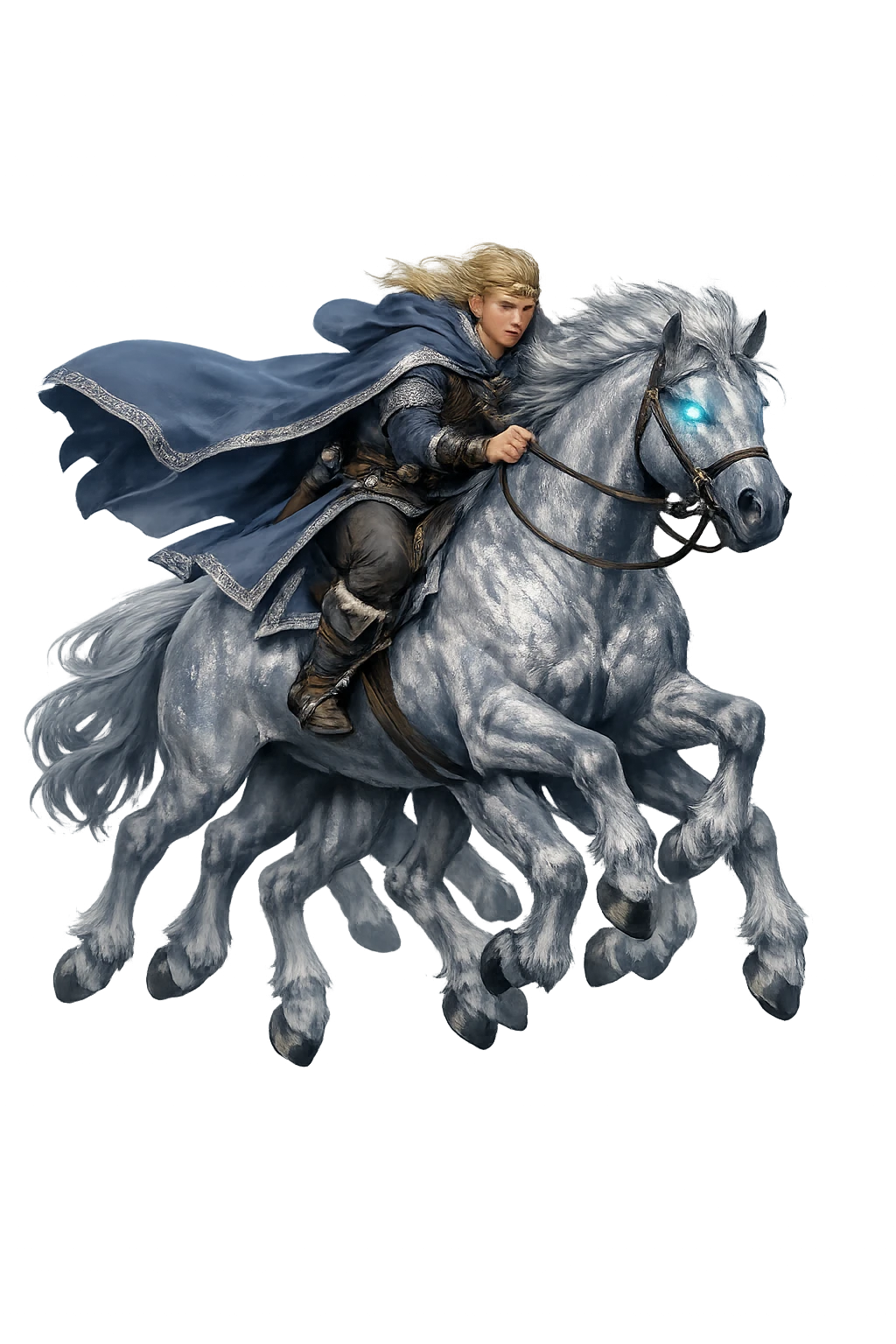
Sacred SymbolsSleipnir's eight legs, The ring Draupnir, The nine nights
02

Etymology & Word Family

From original script to Unicode restoration

Original Script ᚼᛁᚱᛘᚢᚦᚱ Hermóðr — "War-spirit"
Unicode Restoration Hermóðr Restored stress, length, and script
Modern ASCII hermod Plain-ASCII fallback

The name Hermóðr carries the orthographic signature of the norse tradition: ᚼᛁᚱᛘᚢᚦᚱ. Unicode restoration recovers what ASCII flattens.

03

Unicode Character Breakdown

Character-by-character philological analysis

CharacterUnicodeNameBlockPhonetic Role
HU+0048Latin Capital Letter HBasic LatinSame, capitalized
eU+0065Latin Small Letter EBasic LatinSame
rU+0072Latin Small Letter RBasic LatinSame
mU+006DLatin Small Letter MBasic LatinSame
óU+00F3Latin Small Letter O with AcuteLatin-1 SupplementLong ó (ON ó = /oː/)
ðrU+00F0Character U+00F0Latin-1 SupplementEth (ð) + nominative -r

The Tier 1 classification reflects how much of the original phonology this restoration preserves — stress and vowel length for Greek names, distinctive letters and diacritics for every other tradition.

04

Cult & Worship

How the sacred was kept — rites, sanctuaries, remains

The Cult

No ancient or medieval cult of Hermóðr is attested. He appears only in Snorri’s Prose Edda, preserved in manuscripts such as the Codex Regius, and in Hyndluljóðr, a literary creation of thirteenth-century Icelandic compilers working from older poetic fragments. There are no temple sites, no festivals, no votive inscriptions, and no modern pilgrimage under his name. His absence from the archaeological record marks him as a narrative messenger invented to link the death of Baldr with Óðinn’s eight-legged horse.

In the Earth

Hermóðr is a textual figure: his attestations are the Codex Regius and its sister manuscripts of the Prose Edda (13th–14th c.) and the Hyndluljóðr preserved in the Flateyjarbók. No cult sites, toponyms, or inscriptions name him securely. The Gotland picture stones are his nearest material kin: the rider on the eight-legged horse on stones such as Ardre VIII is conventionally read as Óðinn or a hero on Sleipnir, and scholars have long wondered whether the image tradition knew the descent-ride that Gylfaginning tells.

05

Iconography

How Hermóðr was imaged across the ages

The Image

Hermóðr has no independent iconographic tradition. The Gotland picture stones show a rider on an eight-legged horse, but scholars usually identify the figure as Óðinn or a generic psychopomp rather than Hermóðr himself. Medieval manuscripts and the margins of illuminated lawbooks illustrate Baldr’s funeral or Hel’s hall, sometimes inserting a nameless rider. Viking Age metalwork, Romantic-era paintings, modern Norse-revival art, woodcut illustrations, and popular games have visualized him as a youthful messenger, yet these images are projections rather than inherited types.

06

Reception & Transformation

The name after its own age — transmission, translation, survival

Afterlives

Hermóðr survives only because Snorri Sturluson used him as the envoy to Hel in the Prose Edda; the Anglo-Saxon poem Beowulf remembers a tragic Heremōd, but the connection is uncertain. Victorian medievalists and Romantic nationalists revived Norse figures, yet Hermóðr remained marginal compared with Óðinn, Baldr, or even Váli, and he left little trace in Wagnerian opera or high Victorian art. Today he surfaces mainly in fantasy novels, streaming television, role-playing games, comics, graphic novels, Scandinavian heavy-metal lyrics, and neo-pagan fiction, where his ride to Hel is retold as a minor episode in the larger Ragnarök cycle. His afterlife is almost entirely textual and derivative, a reminder of how many Norse names survive only because one thirteenth-century compiler found them useful.

Identifications Across Traditions

The temptation to compare Hermóðr with Hermēs is as old as philology itself — the divine messenger riding between worlds looks like the Greek god's portrait. The comparison has been argued and abandoned for a century: the name is transparently Germanic (herr + móðr), not a borrowing, and the errand-rider is a role the North could grow on its own. What the comparison gets right is the shape of the job: where Hermēs is a psychopomp by office, Hermóðr becomes one for a single night, by courage. His cognate in the heroic record is Beowulf's Heremōd, and his kin in the pantheon are the other sons Óðinn spends on impossible errands — none of whom rode farther.

Modern Legacy

Hermóðr left few traces outside the texts — no cult, no toponyms securely his — but the ride itself became one of the defining images of Norse myth: the nine nights, the golden bridge, the gate leapt in the dark. Modern retellings from Victorian mythographies to present-day novels and games cast him as the North's answer to Orpheus, the one who goes down to bargain with death and nearly wins. His name survives in the Icelandic given name Hermóður, and in scholarship as the standing example of the Edda's gift for making a minor god carry the grief of the whole world.

07

The Meditation

What Hermóðr means — beyond the dictionary

Hermóðr is the patron of the necessary errand — the message someone has to carry, the door someone has to knock on, the descent someone has to volunteer for. He does everything right: the right horse, the right words, the right tokens. And still the answer is no. The Edda keeps him for that: proof that courage is owed regardless of the outcome, and that the errand, not the result, is what a name is made of.

08

Frequently Asked Questions

Common questions about Hermóðr, Messenger, Courage, and Unicode restoration

01How do you pronounce Hermóðr?

In reconstructed pronunciation, Hermóðr is /ˈher.moːðr/ — approximately HAIR-mohthr — the ó is long; the ð is the soft 'th' of 'this'; the final -r is the nominative ending, lightly sounded.

02What does Hermóðr mean?

Hermóðr means War-spirit in the norse tradition.

03What are the symbols of Hermóðr?

Hermóðr is associated with Sleipnir's eight legs (The stride that crosses the boundary between worlds), The ring Draupnir (The token carried back from death as evidence and promise), The nine nights (The counted darkness of the road to Hel — the Edda's measure of a hero's patience).

04Why restore Hermóðr in Unicode?

Plain ASCII hermod strips the stress, length, and script that make the name specific. Unicode restoration returns the name to its original written dignity.

05What is the most important myth about Hermóðr?

“The Errand of the Nine Nights” — the Gylfaginning 49 story that anchors the mythology of Hermóðr, told in full on the lore page.

09

Scholarly Sources

The philological foundations of this restoration

Every claim on this page is grounded in established scholarship. The orthographic restorations follow disciplinary convention. The etymological chain follows the best available reference works. This is not invention — it is resurrection through scholarship.

◈

Lexicography & Philology

  • Cleasby-Vigfusson
◎

Primary Texts

  • Poetic Edda
  • Prose Edda (Gylfaginning 49)
  • Beowulf (Heremōd)
◉

Archaeology & Art History

  • Material evidence — iconography, inscriptions, and temple archaeology — for Hermóðr and related cults.
✦

Religious Studies

  • Hyndluljóðr
  • Cleasby-Vigfusson
  • Zoëga
Return

The Surface Awaits

You have traced the name from its earliest attestation to its Unicode restoration. Now return to the myth. The story is where the name lives.

Back to Lore
Hermóðr mascot