PuniCodex

Extended Lore

Ἡρακλῆς Hēraklēs

Etymology · Orthography · Cultural Legacy · Reception · Primary Sources

Tier 1 Hēraklēs.com
Hēraklēs — Strength, Labours, Heroism
01

Quick Facts

Essential information about Hēraklēs, Strength, Labours, Heroism

Original ScriptἩρακλῆς
Unicode RestorationHēraklēs
Reconstructed Pronunciation/hɛː.ra.klɛ̂ːs/
PantheonGreek
DomainStrength, Labours, Heroism
MeaningGlory of Hera (from Ἥρα + κλέος)
ClassificationTier 1
Primary DomainHēraklēs.com
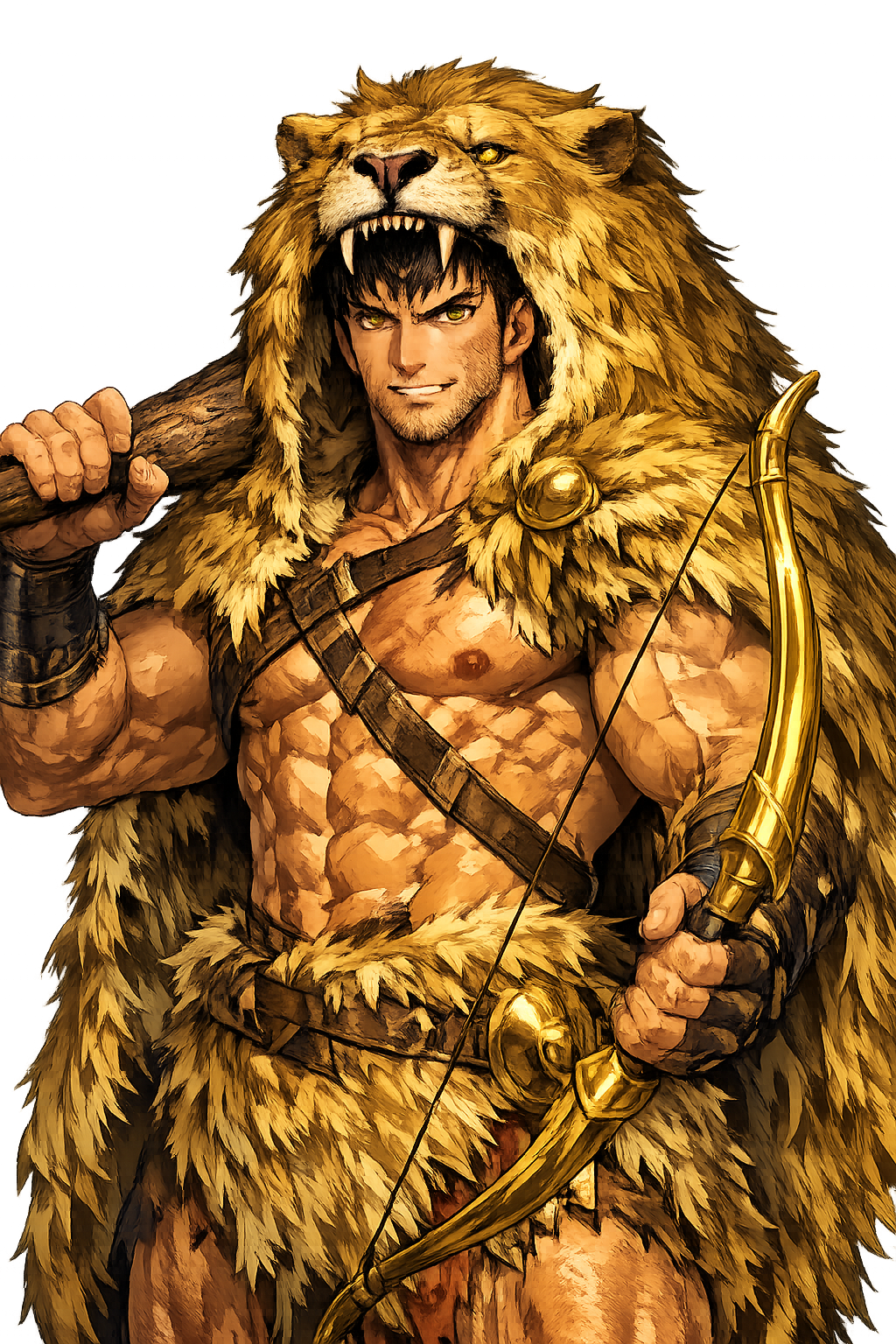
Sacred SymbolsClub, Lion skin, Bow, The Pillars, Golden apples
02

Etymology & Word Family

From original script to Unicode restoration

Original Script Ἡρακλῆς Hēraklēs — "Glory of Hera (from Ἥρα + κλέος)"
Unicode Restoration Hēraklēs Restored stress, length, and script
Modern ASCII herakles Plain-ASCII fallback

The name Hēraklēs carries the orthographic signature of the greek tradition: Ἡρακλῆς. Unicode restoration recovers what ASCII flattens.

03

Unicode Character Breakdown

Character-by-character philological analysis

CharacterUnicodeNameBlockPhonetic Role
HU+0048Latin Capital Letter HBasic LatinRough breathing
ēU+0113Latin Small Letter E with MacronLatin Extended-AEta: long epsilon
rU+0072Latin Small Letter RBasic LatinRho
aU+0061Latin Small Letter ABasic LatinShort alpha
kU+006BLatin Small Letter KBasic LatinKappa
lU+006CLatin Small Letter LBasic LatinLambda
ēU+0113Latin Small Letter E with MacronLatin Extended-AEta: long epsilon
sU+0073Latin Small Letter SBasic LatinSigma

The Tier 1 classification reflects how much of the original phonology this restoration preserves — stress and vowel length for Greek names, distinctive letters and diacritics for every other tradition.

04

Cultural Significance

From ancient cult to modern memory

Hēraklēs in Later Traditions

The Greeks themselves identified Hēraklēs with foreign heroes and gods. Herodotus (2.42–45) argues that the Greek Heracles is the youngest of three figures bearing the name: an Egyptian god, a Phoenician hero identified with Melqart, and the Greek son of Alcmene. The Phoenician Melqart of Tyre, worshipped from Spain to the Levant, was the closest parallel: a god of civic protection, colonization, and annual death-and-rebirth rituals. The Romans made him Hercules and emphasized his civilizing labors; his cult was among the earliest Greek imports to Italy. In Egypt he was sometimes identified with Khonsu or Heryshaf. Through Stoic and Cynic philosophy he became the model of virtuous endurance — the hero who chooses the difficult path of excellence.

Modern Legacy

Hēraklēs never left Western culture. The Roman Hercules gave us the word herculean; his Twelve Labours remain the archetype of the heroic quest, reused from medieval romance to modern video games. The constellation Hercules still dominates the northern summer sky. Renaissance and Baroque artists painted his choice between Virtue and Vice; Disney and Marvel recast him as a family-friendly strongman. Bodybuilding culture, military units, and even NASA have claimed his name. More deeply, Hēraklēs is the type of the suffering hero whose glory is earned through pain — a figure who answers the ancient question of how a mortal can matter in a world ruled by gods.

In the Earth

Thebes claimed Hēraklēs's birth and held games in his honor. Mycenaean Tiryns and Thebes have yielded palace remains that later Greeks associated with his legends. Nemea preserves the cave of the Nemean lion and the stadium of the Nemean Games. Olympia's Temple of Zeus displayed the Twelve Labours in its metopes. Athens maintained a prominent Herakleion and depicted him with Theseus on vase paintings. Mount Oeta in Thessaly was the traditional site of his funeral pyre and apotheosis.

05

The Meditation

What Hēraklēs means — beyond the dictionary

Hēraklēs is the most human of the great heroes because his strength is inseparable from his wounds. He kills what he loves, serves a king he despises, and is destroyed by the very violence he survived. His name prophesies glory, but the glory comes only after a lifetime of labour. In this he is the Greek answer to the problem of suffering: not that pain is meaningless, but that it can be transformed into renown.

The restoration of Hēraklēs is therefore fitting. His name contains the long vowels of endurance — the sustained η that opens and closes it — and the circumflex of a voice that falls only after it has risen. To say it correctly is to remember that glory is not given; it is wrestled from monsters, one labour at a time.

06

Screen & Culture

Where Hēraklēs echoes through film, television, and games — and how

07

Frequently Asked Questions

Common questions about Hēraklēs, Strength, Labours, Heroism, and Unicode restoration

01How do you pronounce Hēraklēs?

In reconstructed pronunciation, Hēraklēs is /hɛː.ra.klɛ̂ːs/ — approximately "hay-RAH-KLAYS" — first syllable deeper and longer than English 'hay'; the final syllable is held and falls in pitch, like 'klays' sung on a descending note.

02What does Hēraklēs mean?

Hēraklēs means Glory of Hera (from Ἥρα + κλέος) in the greek tradition.

03What are the symbols of Hēraklēs?

Hēraklēs is associated with Club (His primary weapon, cut from wild olive on Mount Helicon), Lion skin (The impenetrable pelt of the Nemean lion, his first labour), Bow (The gift of Apollo, used against the Stymphalian birds and Geryon), The Pillars (The western boundary of the world, sometimes said to bear the inscription 'Non plus ultra'), Golden apples (The fruit of the Hesperides, retrieved in his eleventh labour).

04Why restore Hēraklēs in Unicode?

Plain ASCII herakles strips the stress, length, and script that make the name specific. Unicode restoration returns the name to its original written dignity.

05What is the most important myth about Hēraklēs?

“A Hero Foretold” — Hēraklēs's mythology is enormous and contradictory, preserved in epic, lyric, tragedy, and handbook. What holds it together is the figure of a mortal strong enough to challenge gods and monsters, yet vulnerable enough to weep, rage, and die. Here are four of its load-bearing walls. The full telling lives on the lore page.

08

Scholarly Sources

The philological foundations of this restoration

Every claim on this page is grounded in established scholarship. The orthographic restorations follow disciplinary convention. The etymological chain follows the best available reference works. This is not invention — it is resurrection through scholarship.

Lexicography & Philology

  • Liddell, H. G., Scott, R., & Jones, H. S. A Greek-English Lexicon. Oxford: Clarendon Press, 9th ed. 1996.
  • Pape, W., & Benseler, G. E. Wörterbuch der griechischen Eigennamen. Braunschweig: Vieweg, 1884.
  • Beekes, R. S. P. Etymological Dictionary of Greek. Leiden: Brill, 2010.

Primary Texts

  • Hesiod, Theogony 950–955
  • Apollodorus, Library 2.4.8–2.7.8
  • Sophocles, Women of Trachis
  • Euripides, Heracles

Archaeology & Art History

  • Material evidence — iconography, inscriptions, and temple archaeology — for Hēraklēs and related cults.

Religious Studies

  • LSJ, s.v. Ἡρακλῆς
  • Herodotus, Histories 2.42–45 (Egyptian, Phoenician, and Greek Heracles)
Return

The Surface Awaits

You have traced the name from its earliest attestation to its Unicode restoration. Now return to the myth. The story is where the name lives.

Back to Lore
Hēraklēs mascot