PuniCodex

Extended Lore

Ἥφαιστος Hēphaistos

Etymology · Orthography · Cultural Legacy · Reception · Primary Sources

Tier 1 Hēphaistos.com
Hēphaistos — Fire, Forge, Craftsmen
01

Quick Facts

Essential information about Hēphaistos, Fire, Forge, Craftsmen

Original ScriptἭφαιστος
Unicode RestorationHēphaistos
Reconstructed Pronunciation/ˈhɛː.pʰaɪ.stos/
PantheonGreek
DomainFire, Forge, Craftsmen
MeaningUnknown; possibly pre-Greek
ClassificationTier 1
Primary DomainHēphaistos.com
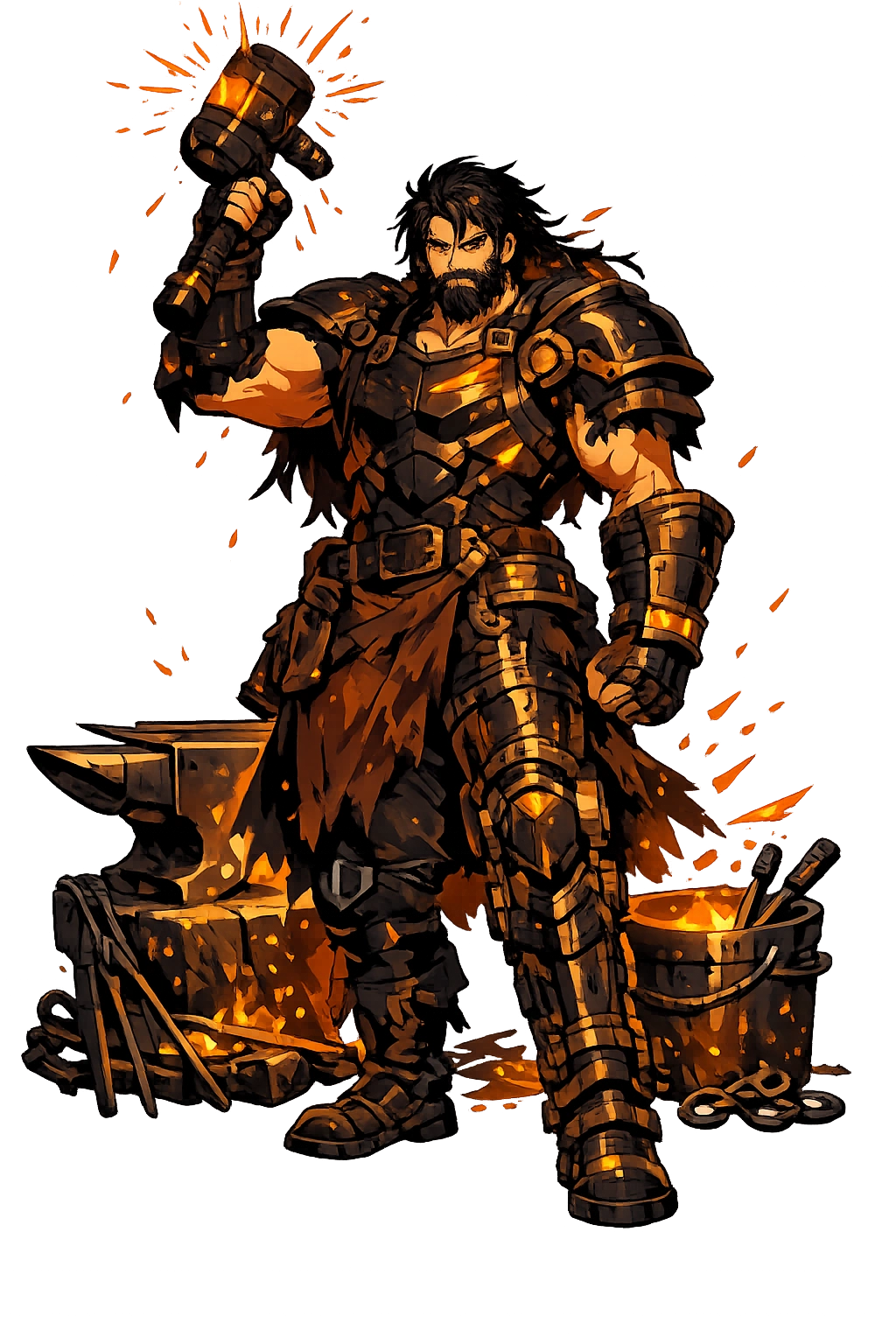
Sacred SymbolsHammer and tongs, Anvil, Volcano, Lame leg, Donkey
02

Etymology & Word Family

From original script to Unicode restoration

Proto-indo-european *h₁ep-h₂st- to bind, to forge
Original Script Ἥφαιστος Hēphaistos — "Unknown; possibly pre-Greek"
Unicode Restoration Hēphaistos Restored stress, length, and script
Modern ASCII hephaistos Plain-ASCII fallback

Pre-Greek or from Ἥφαιστος; possibly from φαίος "bright" + prefix. The smith god.

03

Unicode Character Breakdown

Character-by-character philological analysis

CharacterUnicodeNameBlockPhonetic Role
HU+0048Latin Capital Letter HBasic LatinRough breathing
ēU+0113Latin Small Letter E with MacronLatin Extended-AEta: long epsilon
pU+0070Latin Small Letter PBasic LatinPi
hU+0068Latin Small Letter HBasic LatinPhi
aU+0061Latin Small Letter ABasic LatinShort alpha
iU+0069Latin Small Letter IBasic LatinShort iota
sU+0073Latin Small Letter SBasic LatinSigma
tU+0074Latin Small Letter TBasic LatinTau
oU+006FLatin Small Letter OBasic LatinShort omicron
sU+0073Latin Small Letter SBasic LatinSigma

The Tier 1 classification reflects how much of the original phonology this restoration preserves — stress and vowel length for Greek names, distinctive letters and diacritics for every other tradition.

04

Cultural Significance

From ancient cult to modern memory

Hēphaistos in Later Traditions

The Romans identified Hēphaistos with Vulcanus, a god of destructive fire whose festival, the Vulcanalia of 23 August, propitiated the furnace-heat of late summer; the equation shifted emphasis from craftsmanship to volcano, and Etna became Vulcan's forge in Latin literature. The hypothetical intra-Mercurial planet 'Vulcan,' hunted by nineteenth-century astronomers, borrowed his fiery name. His automata — the self-moving tripods, the golden attendants of the Phaeacians' king, the bronze giant Talos who guarded Crete — made him retrospectively the patron of engineering and robotics: Hephaestus figures in the lineage of every manufactured servant in Western fiction, from the golem to modern science fiction.

Modern Legacy

Hēphaistos is the patron of everyone who makes things with fire and skill: blacksmiths, metalworkers, engineers — and today, roboticists and materials scientists, for whom his automata are the founding myth of their craft. The Shield of Achilles remains a foundational text for the idea of the world as a crafted artifact, and his forge beneath the volcano is the ancestor of every industrial image from the smithy to the steel mill. In disability studies he has become an important figure: rejected for his body, he becomes essential through his skill, and the Greeks, to their credit, never let either the mockery or the mastery go. Restoring Hēphaistos restores the name of the god who proved that the maker is as divine as the warrior.

In the Earth

Athens preserves his best-preserved monument: the Hephaisteion above the Agora (begun 449 BCE), whose fine Doric temple he shared with Athena Hephaistia — Pausanias saw their cult statues, by Alcamenes (1.14.6). The smiths' quarter of the city clustered below, and the Attic vases that picture him at his forge were made within sight of his temple. On Lemnos, the city of Hephaistia on the volcanic north coast carried his name, and the island's geologically active landscape underwrote the myth of his fall. The Aeolian islands — Lipari with its obsidian, Vulcano and Stromboli — gave the Greek imagination its working forges; Aetna's eruptions were read as the god's industry. At Olympia, the excavated workshop of Phidias, with its casting debris and a cup inscribed with the master's name, is the most tangible relic of divine-scale craftsmanship the ancient world offers — a forge worthy of the god himself.

05

The Meditation

What Hēphaistos means — beyond the dictionary

Hēphaistos is the god of the limp and the masterpiece. Thrown from heaven for being imperfect, he becomes the source of every perfect thing the gods possess. His disability is not erased; it is transformed into the patience that craft requires. The Greeks did not sentimentalize this — they made him ridiculous and indispensable at once.

In a culture that increasingly divides thought from making, Hēphaistos is a corrective. He thinks with his hands. The world is not given to us; it is forged, piece by piece, by those willing to labor at the anvil. The restoration of his name is a small recognition that intelligence and craft are not separate.

06

Frequently Asked Questions

Common questions about Hēphaistos, Fire, Forge, Craftsmen, and Unicode restoration

01How do you pronounce Hēphaistos?

In reconstructed pronunciation, Hēphaistos is /ˈhɛː.pʰaɪ.stos/ — approximately 'HEH-fye-stoss' — the first syllable carries the accent; the middle has a breathy 'ph' and a bright diphthong; the final syllable is crisp.

02What does Hēphaistos mean?

Hēphaistos means Unknown; possibly pre-Greek in the greek tradition.

03What are the symbols of Hēphaistos?

Hēphaistos is associated with Hammer and tongs (The tools of his trade; on vases he works them even at his feast-table, the only Olympian who never puts down his work), Anvil (The fixed point on which the world is beaten into shape — his emblem on coins of Hephaistia on Lemnos), Volcano (His forge beneath the earth: Aetna in Sicily and the fires of Lipari were his workshops in myth and in sailor's lore), Lame leg (His disability, source of both mockery and pity — the gods laugh when he limps into Olympus (Iliad 1.599–600), and the smithing of his thrones never stops), Donkey (The patient animal that bears him; in his Lemnian procession and in comedy the smith rides the beast that endures).

04Why are there different spellings of Hēphaistos?

Each form is a historically attested restoration rather than a mistake: Hḗphaistos is the ideal form (Stacked macron+acute on the stressed long vowel, matching Greek Ἥφαιστος; philologically ideal but often untypeable on phones.). PUNICODEX registers the full set so the tradition is preserved under every defensible spelling.

05Why restore Hēphaistos in Unicode?

Plain ASCII hephaistos strips the stress, length, and script that make the name specific. Unicode restoration returns the name to its original written dignity.

06What is the most important myth about Hēphaistos?

“Thrown from Olympus” — Hēphaistos's myths turn disability into mastery. Thrown from heaven for being imperfect, he returns to Olympus as the indispensable artisan — and exacts, one masterpiece at a time, the recognition he was denied. The full telling lives on the lore page.

07

Scholarly Sources

The philological foundations of this restoration

Every claim on this page is grounded in established scholarship. The orthographic restorations follow disciplinary convention. The etymological chain follows the best available reference works. This is not invention — it is resurrection through scholarship.

Lexicography & Philology

  • Liddell, H. G., Scott, R., & Jones, H. S. A Greek-English Lexicon. Oxford: Clarendon Press, 9th ed. 1996.
  • Pape, W., & Benseler, G. E. Wörterbuch der griechischen Eigennamen. Braunschweig: Vieweg, 1884.
  • Beekes, R. S. P. Etymological Dictionary of Greek. Leiden: Brill, 2010.

Primary Texts

  • Homer, Iliad 1.571–600; 18.368–617
  • Homer, Odyssey 8.266–366
  • Hesiod, Works and Days 60–104
  • Hesiod, Theogony 570–589, 927–929
  • Pseudo-Apollodorus, Bibliotheca 1.3.5
  • Pausanias 1.14.6

Archaeology & Art History

  • Material evidence — iconography, inscriptions, and temple archaeology — for Hēphaistos and related cults.

Religious Studies

  • Comparative studies of greek religion and the place of Hēphaistos within it.
Return

The Surface Awaits

You have traced the name from its earliest attestation to its Unicode restoration. Now return to the myth. The story is where the name lives.

Back to Lore
Hēphaistos mascot