
Helheimr in 2026: why scholars still care
Names are not only data points; they are cultural evidence. Helheimr shows why an ASCII spelling can still demand serious scholarship. The sources distinguish this name from every neighboring form, and the temple records that distinction without adding marks the evidence does not contain. What follows is the full picture — name, script, sound, myth, cult, and legacy — ending with the digital home that makes the record easy to reach.
At a Glance
- Canonical name: Helheimr
- ASCII form: helheimr
- Meaning: "Hel's home (from Hel + heimr)"
- Domain of influence: Realm of the Dead
- Pantheon: Norse
- Restoration: ASCII-equivalent form
- Reconstructed form: ᚼᛁᛚᚼᛁᛘᚱ (Younger Futhark)
- Live domain: helheimr.com
Overview
Helheimr (helheimr) — The Misty Hall of the Dead — belongs to the Norse tradition, where it is catalogued under the domain "Realm of the Dead". The name means "Hel's home (from Hel + heimr)".
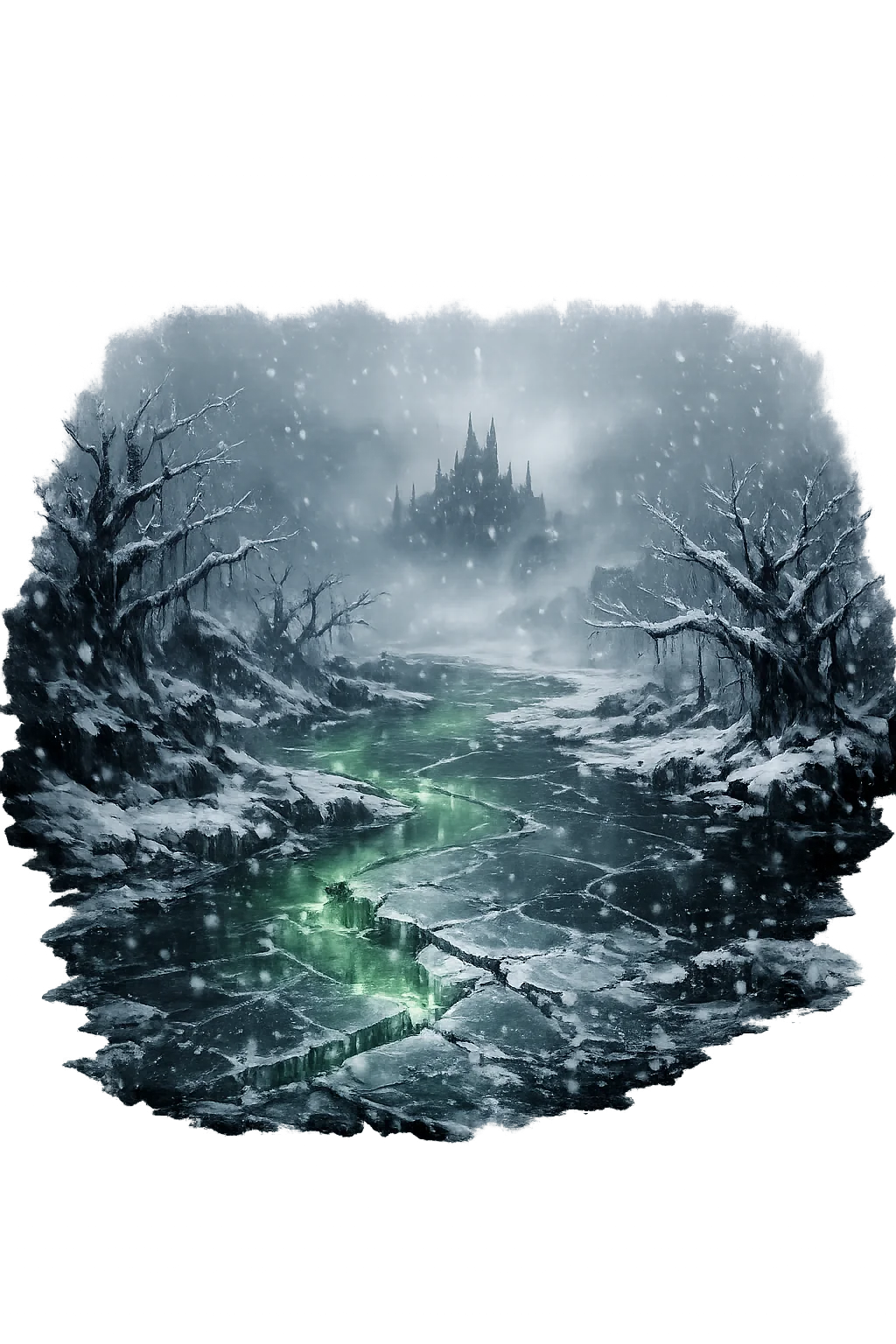
Helheimr — 'Hel's home' — is the grey underworld of Old Norse myth, ruled by the goddess Hel, daughter of Loki and the giantess Angrboða. Lying downward and northward, guarded by the hound Garmr and reached over the bridge Gjallarbrú, it receives the great majority of the dead: those who die of sickness, age, or accident rather than by the sword.
PuniCodex records the canonical scholarly spelling Helheimr and serves its temple at helheimr.com. The displayed form is ASCII-equivalent — a description computed from the displayed form itself. The plain ASCII form helheimr contains the same letters: no recovered diacritics or special encoding is claimed. The work here is consistent citation, capitalization, provenance, and cultural context.
The Name
The name is attested in Younger Futhark as ᚼᛁᛚᚼᛁᛘᚱ. Etymologically it means "Hel's home (from Hel + heimr)".
The reconstructed proto-form is haljō + haimaz (proto-indo-european, "hidden + home"). PGmc haljō "hidden one, underworld" + *haimaz "home". The realm of the dead.
The canonical spelling Helheimr matches the conventional scholarly romanization. The plain ASCII form helheimr contains the same letters, so no lost diacritics or encoding transition is claimed. The editorial work is to fix one reviewed reference spelling, preserve capitalization and provenance, and keep the original evidence visible. The displayed form is ASCII-equivalent — a description computed from the displayed form itself.
The letter-by-letter transformation runs:
- h → H — Same
- e → e — Same
- l → l — Same
- h → h — Same
- e → e — Same
- i → i — Same
- m → m — Same
- r → r — Same
The project holds the domain helheimr.com (helheimr.com) as the canonical home of this name.
Etymology & Roots
The recorded derivation reads: PGmc haljō "hidden one, underworld" + haimaz "home". The realm of the dead.
The reconstructed proto-form is *haljō + haimaz* (proto-indo-european), glossed as "hidden + home".
The reconstruction is classed as attested.
The Original Script
The name is preserved in Younger Futhark as ᚼᛁᛚᚼᛁᛘᚱ — Germanic runic, attested Viking Age, c. 800–1100 CE, in Scandinavia. The script is written left-to-right, top-to-bottom.
The scholarly transliteration is Helheimr (normalized Old Norse), giving the normalized reading /ˈhɛl.hɛi̯mr/.
The rendering proceeds step by step:
- The Younger Futhark form ᚼᛁᛚᚼᛁᛘᚱ provides a Viking-Age runic attestation or normalized reconstruction.
- Younger Futhark has only sixteen runes and does not distinguish short/long vowels or voiced/voiceless stops.
- The normalized Old Norse form is based on 13th-century manuscript tradition (Poetic and Prose Eddas).
- The canonical restoration Helheimr uses Thorn (Þ) and accented vowels registrable in .com.
The compound Helheimr — Hel's home — is a modern scholarly formation; the Old Norse sources say only that the dead are cast í Hel, 'into Hel', and the word is not attested as such in the Eddas. It is already plain ASCII, with no diacritic or distinctive letter for a restoration to recover. In a normalized Younger Futhark it would be carved approximately ᚼᛁᛚᚼᛁᛘᚱ — a scholarly normalization, not a surviving inscription. Because the name is pure ASCII, its domain was registered in the ordinary way: helheimr.com is held in the PuniCodex collection, the canonical address of the realm of the dead.
Pronunciation
The reconstructed pronunciation of the name is /ˈhɛlˌhɛi̯mr/ — Old Norse Reconstruction.
Phoneme by phoneme:
- Hel- — Voiceless glottal fricative [h], short [ɛ], and alveolar lateral [l]; Hel is the hidden goddess of death
- -hei- — Diphthong [ɛi̯] — the same rising glide as in heimr, meaning 'home, world'
- -mr — Bilabial nasal [m] plus tapped [r]; the compound shortens heimr to heim- before the final r
For the modern speaker, the closest approximation is: 'HEL-haymr' — a crisp initial h, then 'hell' and 'haymer' run together, with a light rolled r.
Kindred and historical forms of the name:
- Old English — hell, the Anglo-Saxon underworld, cognate with Norse Hel
- Gothic — halja, the feminine noun for the underworld in Wulfila's Bible
- Old Norse — Hel, the goddess whose name also names her realm
- Proto-Germanic — haljō, 'the hidden (place)' — the feminine abstract from helan-, 'to hide' (Kroonen, Etymological Dictionary of Proto-Germanic, s.v. *haljō-)
Helheimr is a transparent Old Norse compound of Hel + heimr. It is a simpler restoration because no vowel is marked long or stressed; the name relies on everyday Old Norse phonology. Modern English 'hell' descends from the same Germanic root but has lost the diphthong.
Mythology
Helheimr's lore survives chiefly in Snorri's Gylfaginning and in the poems of the Poetic Edda, and the two sources share a consistent picture: a fenced realm of halls and high gates where the dead continue a diminished existence — fed from Hunger, cut with Famine — until the world's ending and, for some, beyond it.
Hermóðr Rides to Bring Back Baldr (Gylfaginning 49)
When Baldr is slain by the mistletoe dart, the gods' grief is so great that Frigg asks for a volunteer to ride to Hel and ransom her son. Hermóðr takes Óðinn's horse Sleipnir and rides nine nights through valleys so deep and dark he sees nothing, until he comes to the river Gjöll and the bridge shining with gold. The maiden Móðguðr who guards it demands his name and lineage, and tells him that five companies of dead men crossed yesterday, yet did not make the bridge thunder as he does — the living ride heavier than the dead. Hermóðr rides on to Hel's gate, which Sleipnir clears at a leap, and finds Baldr seated in the highest seat of the hall. Hel's answer is conditional and exact: Baldr may return if every being in the nine worlds weeps for him. All weep — all but one giantess in a cave, Þökk ('Thanks'), widely taken to be Loki, who answers: let Hel hold what she has. The embassy fails by a single withheld tear, and the myth makes Helheimr a realm of law: even grief must be unanimous to undo death.
The Furnishings of Éljúðnir (Prose Edda)
Snorri describes Hel herself and then her household, and the household list is a small masterpiece of Norse understatement. The goddess is half the colour of living flesh and half corpse-blue — easily recognised, he notes, from a distance. Her hall is Éljúðnir, 'Sprayed-with-Sleet'; her dish is called Hunger and her knife Famine; her serving-man is Gangláti, her maid Ganglöt, names that shuffle like reluctant feet; her bed is Kör, 'sick-bed,' and its curtains Blíkandaböl, 'gleaming calamity' (Prose Edda, Gylfaginning 34, in Faulkes's translation). This is not the torture-chamber of later Christian imagination; nothing here is actively done to the dead. The furnishings of Helheimr describe instead existence at minimum maintenance — a household where the table is set with the absence of food, and even the bed is named for illness. The Norse underworld punishes the unheroic dead the way life itself does: by diminution, not by fire.
Garmr Howls Before Gnipahellir (Völuspá · Grímnismál)
Every underworld entrance in Norse verse has its guardian, and Helheimr's is a hound. Grímnismál (4) fixes his station at the cliff-cave Gnipahellir, fettered and baying; Völuspá rings the change at each stage of the world's ending with the same refrain — 'Garmr bays loudly before Gnipahellir; the rope will break and the wolf run free' (Völuspá 44) — so that a chained dog's howl becomes the countdown of Ragnarök. Snorri gives the hound his release and his duel: at the last battle Garmr comes loose and fights the one-handed Týr, and the two kill each other (Gylfaginning 51). Modern scholarship (Lindow, Simek) has long debated whether Garmr is a second wolf — a doublet of the bound Fenrir — or a distinct beast of the same apocalyptic kennel, and the sources themselves distribute the doom-signals freely among Garmr, Fenrir, and the pursuing wolves Skǫll and Hati without ever reconciling the roster. The image needs no reconciliation to work: in Norse cosmology every chain is a countdown, and the hound of Hel holds the first of them.
Náströnd, and the Ones Who Come Back (Völuspá · Vafþrúðnismál)
Not all of Helheimr is grey continuation. Völuspá (38–39) walks to the shore of Náströnd, the 'corpse-strand': there stands the hall of the faithless with its doors facing north, poison dripping from the roof, and into it wade the perjurer and the murderer and the man who lies with another's wife, while the dragon Níðhǫggr sucks the corpses of the dead. Here is a genuine Norse moral geography — the everyday dead continue quietly, but the oath-breakers get a shoreline. Yet the poems refuse to let even this realm be final. After Ragnarök, Vafþrúðnismál promises, the gods will find their golden gaming-pieces lying in the grass again (Vafþrúðnismál 51); and Snorri adds that Baldr and Höðr will come back from Hel and sit together in judgment in the reborn world (Gylfaginning 53). Even the grey hall empties at the end. The Norse underworld, for all its sleet, is the rare pagan underworld whose door was imagined opening both ways.
Symbols & Iconography
The iconography associated with Helheimr concentrates in a small set of recurring attributes, each a compressed statement about the name:
- Gjallarbrú — The resounding bridge crossed by the dead on the way to Hel's hall
- Hel's hall Éljúðnir — The hall named 'Sleet-Cold' where the goddess receives the dead
- Threshold knife (Famine) — One of the named thresholds of Hel's hall, personifying starvation
- Hooded or half-faced woman — Hel's own depiction, one side beautiful and one side corpse-pale
- Náströnd shore — The corpse-strewn strand within Hel where oath-breakers suffer
Archaeology & Evidence
Viking-Age burial practice gives Helheimr its material context. The Lindholm Høje cemetery at Aalborg preserves hundreds of stone-ship settings and cremations, while Gotland picture stones such as the Tjängvide and Ardre VIII stones depict afterlife journeys, valkyries, and the otherworld. Runestones across Denmark, Sweden, and Norway record the dead by name and kin.
Realm & Domain
Helheimr — 'Hel's home' — is the grey underworld of Old Norse myth, ruled by the goddess Hel, daughter of Loki and the giantess Angrboða. Lying downward and northward, guarded by the hound Garmr and reached over the bridge Gjallarbrú, it receives the great majority of the dead: those who die of sickness, age, or accident rather than by the sword.
Hel's Grey Hall
Éljúðnir is the hall of Hel, where the dead are fed from Hunger and cut with Famine.
Gjallarbrú
The bridge over the river Gjöll is guarded by Móðguðr, who tests every soul entering Helheimr.
Garmr
The bloody hound who guards the entrance to Helheimr waits at Gnipahellir for the end times.
Common Afterlife
Unlike Valhöll, Helheimr receives those who die of sickness, age, or accident—the quiet destiny of most mortals.
Across Cultures
Helheimr's afterlife begins with a translation problem: Christian missionaries preaching to converts for whom the underworld already had a Germanic name found that Hel was ready-made. English hell, German Hölle, and Gothic halja all descend from the same root as Hel's realm (Proto-Germanic *haljō, 'the hidden place'), so the medieval Christian hell and the Norse Helheimr literally share a name — one reason Snorri's Christian-era presentation is so hard to peel apart from the older strata beneath it. The structural parallel with Greek Hades is real and independent: as Hades is both a god and his house, so Hel is both goddess and realm. Modern Ásatrú has largely discarded the Christian colouring and recovered the older picture — a neutral receiving-hall rather than a torture-chamber — while popular culture has fixed Helheim as 'the Norse hell,' frozen, punitive, and often conflated with Niflheimr or set as Valhalla's opposite, a flattening the medieval sources never quite committed.
Within the Norse tradition, closely related names in the corpus include Álfheimr, Andvari, Angrboða, Auðhumla, Baldr, and Baugi.
Cultural Legacy
Helheimr's legacy runs through language first: every English speaker says the goddess's name weekly without knowing it — hell is hers, borrowed through Old English hel from the same Germanic root, and the sagas made 'to go to Hel' a plain idiom for dying. The medieval Christian sermons of the conversion era repurposed the name as they found it, and much of what modern readers assume is 'Viking belief' about the underworld is actually that later fusion. The modern visual afterlife is enormous: Helheim — usually spelled without the final r — is a stock location in games, comics, and film, from Marvel's Asgard cycle to God of War (2018), where it is imagined, un-medievally, as a frozen realm; Assassin's Creed Valhalla and a shelf of Viking fiction repeat it. Fantasy literature's underworlds — Tolkien's Halls of Mandos, which owe a documented debt to the Norse receiving-halls, chief among them — descend from Snorri's grey hall even when they do not know it. Restoring Helheimr in full Old Norse form preserves the name as the poems and Snorri actually wrote it, against a flattening that has already cost it its final letter.
The Scholarly Record
The account of Helheimr given in this edition rests on the witnesses and reference works listed below. Lexica and etymological dictionaries secure the form and meaning of the name; the literary and religious texts supply the narrative evidence.
- Poetic Edda: Völuspá 38–39, 44–45 (Náströnd; Garmr's howling); Baldrs draumar (Óðinn's ride to Hel); Grímnismál 4.
- Snorri Sturluson, Prose Edda: Gylfaginning 34, 49, 51 (Hel and her hall; Hermóðr's embassy; Ragnarök).
- Poetic Edda: Vafþrúðnismál 51 (the golden gaming-pieces after Ragnarök).
- Larrington, The Poetic Edda; Faulkes, Edda (translations).
- Lindow, Norse Mythology: A Guide; Simek, Dictionary of Northern Mythology — s.v. Hel, Helheimr, Garmr.
A Meditation
Helheimr is the afterlife of the unheroic — and that is its quiet profundity. The Norse did not promise most people a better world; they promised most people a grey hall, a dish named Hunger, a knife named Famine, and continuation without glory. Beside Valhöll's eternal tournament, Helheimr looks like a demotion. But the poems keep returning to it: it is the destination of Baldr, the best of the gods, and the only realm whose door both Óðinn and Hermóðr must knock on.
There is an honesty here that later traditions softened: death is not a verdict but an address. Most lives end in bed, not battle; most souls arrive as petitioners, not champions. The myth of Hermóðr's embassy even makes the grey hall a place where negotiation is possible — where death, for one unforgettable moment, held a door open. Helheimr means that the ordinary dead were never forgotten by the poets who sang for the warriors.
The Canonical Spelling
Helheimr is the canonical spelling used by this temple. The plain ASCII form helheimr contains the same letters, so there are no lost diacritics to recover and no special encoding transition to explain. What the temple preserves is the reviewed reference form: capitalization, conventional romanization, original evidence, and a stable place to inspect them. The value here is not added decoration; it is fidelity to the attested record.
The Domain Name
The canonical name has a working digital address at helheimr.com. Because the spelling already uses ordinary Latin letters, visitors and machines read the same address without a special encoding step. The important engineering fact is not transformation but continuity: the temple's public address preserves the reviewed spelling exactly as written.
Why This Record Matters
In 2026 the stakes are practical. Search indexes, language models, and localization pipelines inherit whatever spelling the web normalizes. Helheimr teaches the machinery that this reviewed form exists, that it is used, and that it points to a real scholarly record. That is why a project built on philology cares about digital infrastructure: the infrastructure decides which names the future sees, and this temple keeps the whole name visible.
Explore Further
This post is one doorway into the temple. The home page carries the full character breakdown and the ambient canvas; the lore page tells the myths in long form; the Scholarly Edition preserves the sources, pronunciation data, and revision history; and the patron wall supports the restoration directly. For the wider map, browse the Lexicon, explore the Pantheon, or return to the PuniCodex blog.
Related Names
Sources
The full scholarly apparatus — every citation, revision, and review — lives in the Scholarly Edition. Key references for this post:
- Poetic Edda: Völuspá 38–39, 44–45 (Náströnd; Garmr's howling); Baldrs draumar (Óðinn's ride to Hel); Grímnismál 4.
- Snorri Sturluson, Prose Edda: Gylfaginning 34, 49, 51 (Hel and her hall; Hermóðr's embassy; Ragnarök).
- Poetic Edda: Vafþrúðnismál 51 (the golden gaming-pieces after Ragnarök).
- Larrington, The Poetic Edda; Faulkes, Edda (translations).
- Lexicon authorities for this entry: Cleasby-Vigfusson, Zoëga.