PuniCodex

Extended Lore

ᚼᛁᛚ Hel

Etymology · Phonology · Orthography · Cultural Legacy · Primary Sources

Tier 2 Hel
Hel — Death, Underworld, Souls
01

Quick Facts

Essential information about Hel, Death, Underworld, Souls

Original Scriptᚼᛁᛚ
Unicode RestorationHel
Reconstructed Pronunciation/ˈhel/
PantheonNorse
DomainDeath, Underworld, Souls
MeaningHidden one (from *heljan)
ClassificationTier 2
Primary DomainHel
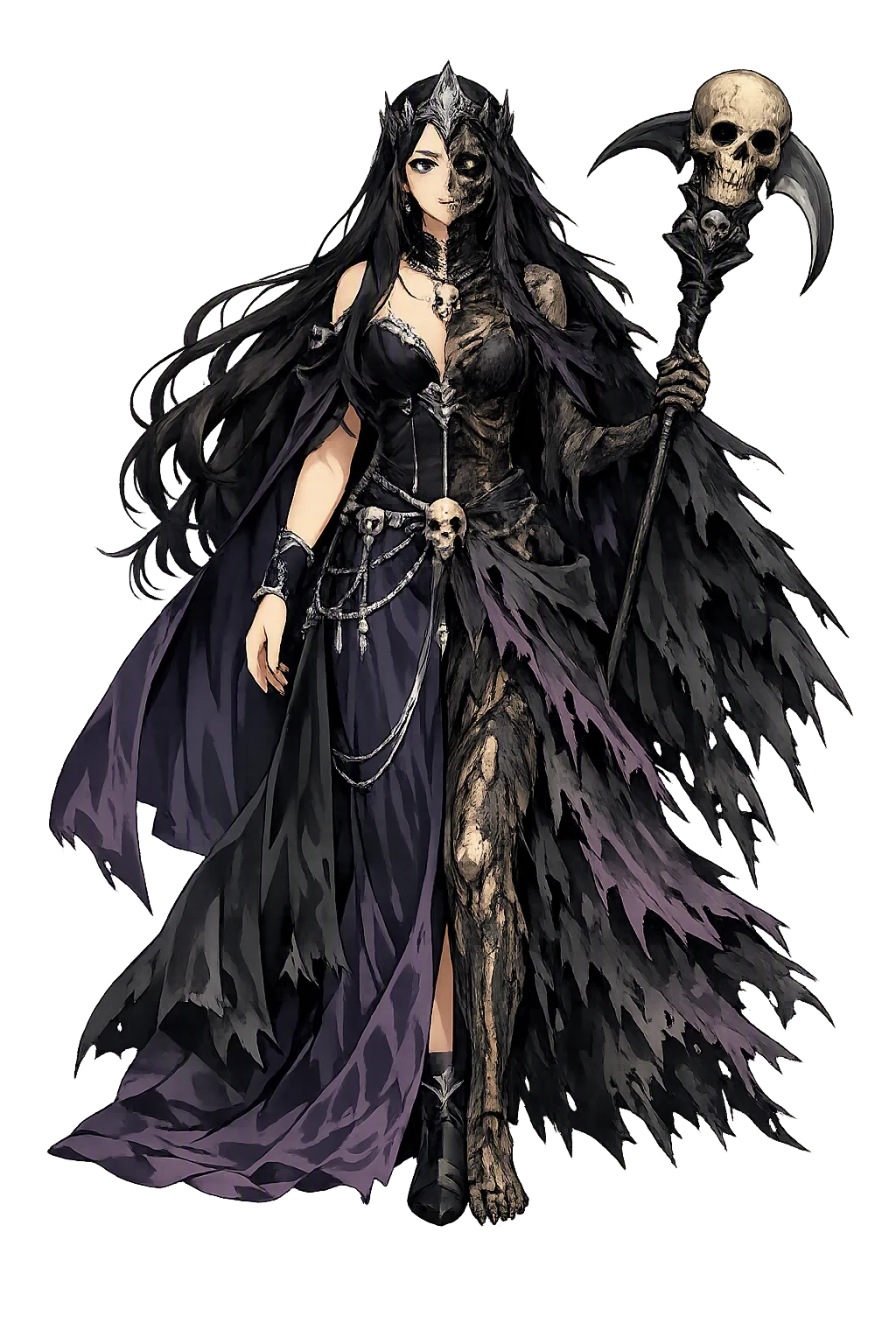
Sacred SymbolsThe half-blue, half-flesh face, Éljúðnir, Hungr the dish and Sultr the knife, Fallanda Forað and Kǫr, Ganglati and Ganglǫt
02

Etymology & Word Family

From original script to Unicode restoration

Proto-indo-european *heljan Hidden one
Original Script ᚼᛁᛚ Hel — "Hidden one (from *heljan)"
Unicode Restoration Hel Restored stress, length, and script
Modern ASCII hel Plain-ASCII fallback

Hel is Tier 2 by the mechanical rule: the normalized Old Norse form is already plain ASCII — no diacritic, no distinctive letter, no vowel length for the restoration to rescue. Only the capital distinguishes the restored form from the input. The goddess's gravity vastly outruns her name's orthography; three letters carry the whole underworld.

03

Unicode Character Breakdown

Character-by-character philological analysis

CharacterUnicodeNameBlockPhonetic Role
HU+0048Latin Capital Letter HBasic LatinSame
eU+0065Latin Small Letter EBasic LatinSame
lU+006CLatin Small Letter LBasic LatinSame

The Tier 2 classification reflects how much of the original phonology this restoration preserves — stress and vowel length for Greek names, distinctive letters and diacritics for every other tradition.

04

Cultural Significance

From ancient cult to modern Unicode

Ancient Domain

Hel is the daughter of Loki and Angrboða whom Óðinn cast down into Niflheimr and set over the dead: half blue-black and half the colour of living flesh, she rules Éljúðnir, where those who die of sickness and old age — the vast, unburned majority of humankind — are sent to her keeping.

Hel in Later Traditions

The oldest syncretism is the one the sources perform on themselves: Saxo Grammaticus, writing Latin for a Danish court, cannot say 'Hel' and so writes Proserpina — in Gesta Danorum Book 1 the goddess appears to Balderus in a dream as Proserpina, promising the dead man her embraces, the interpretatio latina folded directly into the plot. The Greek comparison runs deeper than the name-swap suggests: like Hades, Hel is both a person and a place, and the Old Norse word does the same double duty — one goes til Heljar, to Hel, as one goes to Hades. Jacob Grimm projected the goddess backward onto the continent as *Halja, citing the Gothic and Old High German words; current scholarship (Simek, Lindow) is cooler, noting that the continental languages attest the realm but never the ruler, and that the goddess may be a Scandinavian personification of an older common noun — the hidden place given a face. The largest syncretism is the one history performed without asking: Christianity took the word itself and made it 'hell', the punitive fire of the damned, recolouring the goddess's quiet hall of the sick-dead into the most feared address in the language. Her name survived by being emptied of her.

Modern Legacy

Hel's afterlife is the English language's own: every speaker of English, German, or the Scandinavian tongues still pronounces her name every time they say hell — the commonest relic any Norse deity has left behind, carried out of the temple and into the swear-word. The word's journey is her biography in reverse: the goddess faded, the place-name endured, and the place darkened from a hall of the age-dead into a prison of fire. Modern reception has restored the person, if not the theology: she returns in Wagnerian and Victorian mythography, in Neil Gaiman's retellings, and most visibly in Marvel's Hela, whose half-shadowed iconography reaches back past the comics to Snorri's two-coloured face. Modern Heathenry keeps her as the keeper of the ordinary ancestors — the goddess for everyone who will not die in battle, which is to say, for nearly everyone.

Unicode Restoration as Cultural Act

Restoring Hel in a domain name is more than orthographic accuracy. It is a statement that the internet should recognize the full range of human writing — not only the ASCII keyboard.

05

Frequently Asked Questions

Common questions about Hel, Death, Underworld, Souls, and Unicode restoration

01How do you pronounce Hel?

In reconstructed pronunciation, Hel is /ˈhel/ — approximately 'HEL' — one crisp syllable: a fully sounded h, a short bright 'e' as in 'get', a single clean l. The English word 'hell' is the name's own descendant and nearly its own pronunciation..

02What does Hel mean?

Hel means Hidden one (from *heljan) in the norse tradition.

03What are the symbols of Hel?

Hel is associated with The half-blue, half-flesh face (The two states of being worn on one head — life and corruption divided by a single line), Éljúðnir (The hall of the dead who were not burned in battle — architecture for the ordinary ending), Hungr the dish and Sultr the knife (Hunger and famine as table-service — the realm named out of what it takes away), Fallanda Forað and Kǫr (The plunging threshold and the sick-bed, hung with Blíkjanda Bǫl, 'Gleaming Bale' — the dead received as the sick received to bed), Ganglati and Ganglǫt (Her serving-man and serving-maid, both named for the slow walk — time in Hel moves at a dying pace).

04Why restore Hel in Unicode?

Plain ASCII hel strips the stress, length, and script that make the name specific. Unicode restoration returns the name to its original written dignity.

05What is the most important myth about Hel?

Loki got three children on the giantess Angrboða in Jötunheimr: the wolf Fenrir, the serpent Jǫrmungandr, and Hel. When the gods learned that this brood was being raised, and read in the prophecies that great harm would come of them, Óðinn sent for the children and disposed of each: the serpent he threw into the deep sea that circles all lands, the wolf the Æsir kept to bind, and Hel he cast down into Niflheimr. There he gave her authority over nine worlds, that she should apportion all dwellings among those sent to her — and those are the sickness-dead and the age-dead.Snorri then gives the strangest inventory in the Edda. Her hall is called Éljúðnir; her dish Hungr, Hunger; her knife Sultr, Famine; her serving-man Ganglati and her serving-maid Ganglǫt, the slow-walking pair; the threshold she steps over is Fallanda Forað, Plunging to Destruction; her bed is Kǫr, the sick-bed, and its hangings Blíkjanda Bǫl, Gleaming Bale. And of Hel herself: she is half blue-black and half the colour of living flesh, and therefore easily recognized — rather downcast and fierce of countenance. The goddess of death is furnished out of the slow deaths she rules: her household is a ward, and she is its matron with a corpse's half-face.

06

Scholarly Sources

The philological foundations of this restoration

Every claim on this page is grounded in established scholarship. The orthographic restorations follow disciplinary convention. The etymological chain follows the best available reference works. This is not invention — it is resurrection through scholarship.

Lexicography & Philology

  • Cleasby-Vigfusson
  • Zoëga

Primary Texts

  • Poetic Edda: Vafþrúðnismál 43 (the nine worlds below Niflhel; men dying out of Hel), Grímnismál 31 (Hel dwelling beneath one root of Yggdrasill), and Baldrs draumar (the benches strewn and the mead brewed for Baldr)
  • Snorri Sturluson, Prose Edda: Gylfaginning 34 (Loki's children; Hel cast into Niflheimr; the hall Éljúðnir and its named fittings; her half-blue appearance) and 49 (Hermóðr's errand and the weeping condition)
  • Saxo Grammaticus, Gesta Danorum, Book 1 (Proserpina's promise to Balderus; Hading's journey under the earth), trans. Peter Fisher, ed. Hilda Ellis Davidson

Archaeology & Art History

  • Material evidence — iconography, inscriptions, and temple archaeology — for Hel and related cults.
  • Hel is a textual figure: no runestone invokes her, no votive deposit names her, and no Scandinavian place-name can be securely tied to her cult — a silence she shares with the goddess's whole chthonic stratum. Her attestation is manuscript evidence: the Codex Regius of the Poetic Edda (Vafþrúðnismál, Grímnismál), the fourteenth-century AM 748 I 4to that alone preserves Baldrs draumar, and the early codices of Snorri's Edda, composed about 1220. The word beneath her is far better attested than the goddess: Gothic halja appears in Ulfilas's fourth-century Bible translation, and Old English helle and Old High German hella fill the continental record as the name of the dead's place — but nowhere outside Scandinavia does the place carry a person. That distribution is itself the central datum for the scholarly debate over whether Hel the goddess is an old figure or a late personification of the grave-word, a question Simek and Lindow keep open. Saxo's Proserpina in Gesta Danorum Book 1 is the nearest thing to an independent witness: a Danish historian, a generation before Snorri's Edda reached its final form, already translating her for Latin readers.

Religious Studies

  • Cleasby–Vigfusson, An Icelandic-English Dictionary, s.v. hel (death, the grave, the goddess) and heljan
  • Zoëga, A Concise Dictionary of Old Icelandic, s.v. Hel, hel
  • Simek, Dictionary of Northern Mythology; Orchard, Dictionary of Norse Myth and Legend; Lindow, Norse Mythology: A Guide — s.v. Hel (the etymology, the personification debate, and the realm-versus-ruler problem)
Return

The Surface Awaits

You have traced the name from its earliest attestation to its Unicode restoration. Now return to the myth. The story is where the name lives.

Back to Lore
Hel mascot