PuniCodex

Extended Lore

𓎛𓂓𓏛 Ḥkꜣ

Etymology · Orthography · Cult · Iconography · Reception · Sources

Tier 1 Ḥkꜣ.com
Ḥkꜣ — Magic, Medicine
01

Quick Facts

Essential information about Ḥkꜣ, Magic, Medicine

Original Script𓎛𓂓𓏛
Unicode RestorationḤkꜣ
Reconstructed Pronunciation/ħaˈkaːʕ/
PantheonEgyptian
DomainMagic, Medicine
MeaningMagic, first work
ClassificationTier 1
Primary DomainḤkꜣ.com
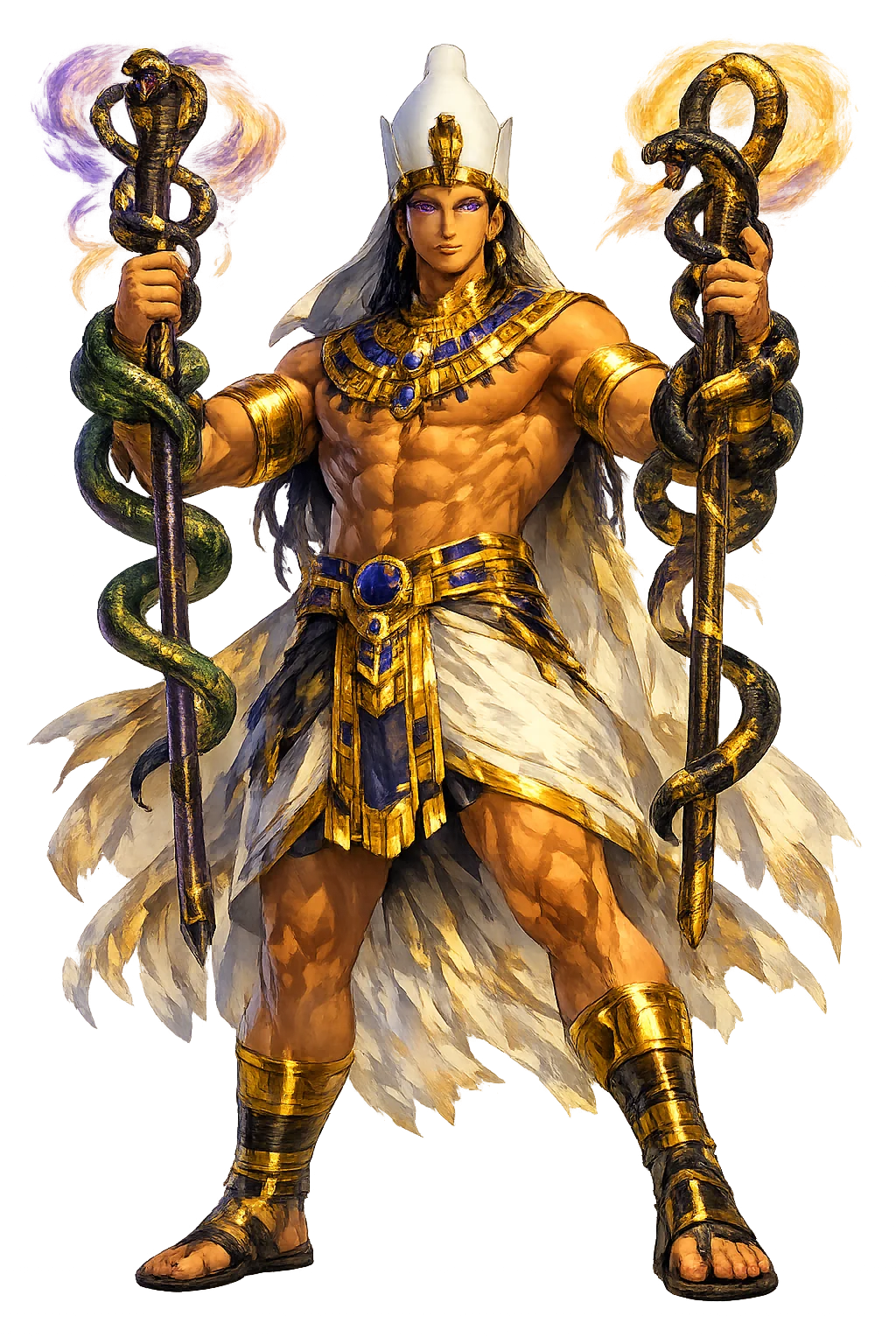
Sacred SymbolsSerpent staff, Wedjat eye, Ankh, Papyrus scroll, Open mouth
02

Etymology & Word Family

From original script to Unicode restoration

Original Script 𓎛𓂓𓏛 Ḥkꜣ — "Magic, first work"
Unicode Restoration Ḥkꜣ Restored stress, length, and script
Modern ASCII heka Plain-ASCII fallback

From Egyptian ḥkꜣ 'magic, first work', the power of effective speech; the hieroglyphic spelling records consonants only.

03

Unicode Character Breakdown

Character-by-character philological analysis

CharacterUnicodeNameBlockPhonetic Role
ḤU+1E24Latin Capital Letter H with Dot BelowUnknownH with dot: voiceless pharyngeal
kU+006BLatin Small Letter KBasic LatinSpecial phonetic character
ꜣU+A723Latin Small Letter Egyptological AlefLatin Extended-DSpecial phonetic character
—N/ADropped characterEgyptian orthographyDropped: vowel not written

The Tier 1 classification reflects how much of the original phonology this restoration preserves — stress and vowel length for Greek names, distinctive letters and diacritics for every other tradition.

04

Cult & Worship

How the sacred was kept — rites, sanctuaries, remains

The Cult

Ḥkꜣ was not worshipped through a temple network but embedded in every Egyptian rite of healing, protection, and curse. Execration figurines and inscribed bowls from Saqqara and Mirgissa were bound and broken to turn heka against enemies. The Harris Magical Papyrus in the British Museum and the Leiden-London papyri preserve liturgies in which Ḥkꜣ appears as a divine personification assisting Isis and Horus. Medical papyri such as Edwin Smith and Ebers fold spells into clinical prescriptions, while magical wands and ivory clappers incised with protective figures were deployed in birth and funerary chambers. As a god, Ḥkꜣ had no priesthood of his own; every lector-priest, doctor, and embalmer exercised heka as a professional technique.

In the Earth

Ritual implements of heka include execration figurines and inscribed bowls from Saqqara and Mirgissa, bound and broken to neutralize enemies. The Harris Magical Papyrus (British Museum EA 10042) and the Leiden-London papyri preserve heka-spells for protection and healing; the Edwin Smith and Ebers medical papyri show spells embedded in clinical practice. Magical wands and ivory clappers incised with protective figures come from Middle Kingdom tombs at Lisht and Harageh, and temple reliefs at Karnak and Edfu depict the daily ritual of Overthrowing Apophis — state heka performed in open court.

05

Iconography

How Ḥkꜣ was imaged across the ages

The Image

Ḥkꜣ never developed a large independent iconographic cycle. The emblem of heka is the twisted wick hieroglyph, which appears in spelling and as an amuletic sign; in temple reliefs the god is shown as a bearded man holding a staff or as a child, often beside Isis and Horus in healing scenes. Magical wands and ivory clappers carry protective animals—cats, lions, turtles—rather than a portrait of the god. Papyrus illustrations such as the Harris Magical Papyrus favor hieratic text and vignettes of Isis and Horus, with Ḥkꜣ named rather than depicted. Modern fantasy art has supplied a robed wizard image, but that is a post-Enlightenment invention.

06

Reception & Transformation

The name after its own age — transmission, translation, survival

Afterlives

The concept of heka passed from pharaonic Egypt into the Greek and Roman magical papyri, where Egyptian spells were translated, syncretized with Jewish and Greek names, and reused across the Mediterranean. Coptic Christians condemned heka as pagan sorcery yet preserved some of its techniques in monkish amulets and exorcisms. Medieval Arabic writers inherited Greek discussions of Egyptian magic rather than the native term, so ḥkꜣ dropped out of circulation until Champollion’s decipherment. Modern Egyptology restored the word as a technical category—used in museum labels and academic studies of medicine, religion, and state power—while Theosophists and stage magicians gave “heka” a romantic afterlife. Today it appears in fantasy games and neopagan Egyptomania, but its most important reception remains scholarly: the study of heka has reshaped understanding of ancient rationality and ritual efficacy.

Identifications Across Traditions

In the Late and Greco-Roman periods, Heka was identified with the ibis-headed Thoth as 'lord of heka' and with Isis, who bears the title Weret-hekau, 'Great of Magic'. The Coptic word hik survived to mean magic or sorcery, now carrying darker connotations under Christian influence; some scholars have suggested the Greek goddess Hecate's name and associations may owe something to Egyptian Heka, though the connection is philologically contested. The Greek Magical Papyri, composed in Egypt centuries after the temples closed, are the late heirs of the heka tradition — spells still composed of true names, persuasive analogies, and the confident grammar that the right words compel reality. Modern occult and Hermetic movements have embraced Heka as the paradigmatic 'word of power'.

Modern Legacy

The Egyptian understanding of magic as a natural, creative force — rather than as supernatural fraud — shaped the ancient Mediterranean world. Greece and Rome acknowledged Egypt as the premier school of the magical arts; the Greek Magical Papyri claim Egyptian authority for their incantations, and medieval grimoires, Renaissance ceremonial magic, and modern chaos magic all preserve the premise that words, correctly spoken, can compel reality. The famous Hermetic formula 'as above, so below' is a later restatement of the older conviction that heka aligns human speech with divine creation. Heka reminds us that 'magic' was once a respectable technology of the soul — and that medicine's oldest surviving documents, the Egyptian medical papyri, prescribe a spoken spell beside every herbal remedy.

07

The Meditation

What Ḥkꜣ means — beyond the dictionary

We moderns tend to separate magic from medicine, prayer from spell, psychology from ritual. The Egyptians did not. For them, heka was the continuous field in which all these activities took place — the power to make something happen because it was named, imagined, and performed with right knowledge. A prescription without a spoken formula was incomplete; efficacy was holistic.

To restore the name Ḥkꜣ is to remember that creativity is not a private feeling but a force. The word that heals, the word that binds, the word that calls the world into shape — these are not metaphors. They are the inheritance of a civilisation that believed the first act of creation was a speaking, and that human beings, made in the image of the gods, could still learn the grammar of that speaking. Heka is the reminder that language is older than matter, and that the right name spoken at the right time is a kind of making.

08

Frequently Asked Questions

Common questions about Ḥkꜣ, Magic, Medicine, and Unicode restoration

01How do you pronounce Ḥkꜣ?

In reconstructed pronunciation, Ḥkꜣ is /ħaˈkaːʕ/ — approximately 'heh-KAH' — start with a strong, throaty h, then a sharp ka held slightly longer at the end.

02What does Ḥkꜣ mean?

Ḥkꜣ means Magic, first work in the egyptian tradition.

03What are the symbols of Ḥkꜣ?

Ḥkꜣ is associated with Serpent staff (The wand or papyrus-scepter entwined with cobras, symbolising the power to strike or heal), Wedjat eye (Restoration through magical means; the eye healed by Thoth, reassembled word by word), Ankh (Life activated and sustained by heka), Papyrus scroll (The written spell, the physical vehicle of magical efficacy), Open mouth (The 'Opening of the Mouth' ritual, which reanimates the deceased through heka and breath).

04Why restore Ḥkꜣ in Unicode?

Plain ASCII heka strips the stress, length, and script that make the name specific. Unicode restoration returns the name to its original written dignity.

05What is the most important myth about Ḥkꜣ?

“Spell 261: Before the Gods” — the Coffin Texts story that anchors the mythology of Ḥkꜣ, told in full on the lore page.

09

Scholarly Sources

The philological foundations of this restoration

Every claim on this page is grounded in established scholarship. The orthographic restorations follow disciplinary convention. The etymological chain follows the best available reference works. This is not invention — it is resurrection through scholarship.

◈

Lexicography & Philology

  • Faulkner, R. O. A Concise Dictionary of Middle Egyptian. Oxford: Griffith Institute, 1962.
  • Wb
◎

Primary Texts

◉

Archaeology & Art History

  • Material evidence — iconography, inscriptions, and temple archaeology — for Ḥkꜣ and related cults.
✦

Religious Studies

  • Papyrus Vandier, The Legend of Isis and the Name of Ra
  • Book of the Heavenly Cow (Sia and Hu)
  • Allen, Genesis in Egypt
  • Ritner, The Mechanics of Ancient Egyptian Magical Practice
Return

The Surface Awaits

You have traced the name from its earliest attestation to its Unicode restoration. Now return to the myth. The story is where the name lives.

Back to Lore
Ḥkꜣ mascot