PuniCodex

Extended Lore

𐬵𐬀𐬊𐬨𐬀 Haoma

Etymology · Orthography · Cult · Iconography · Reception · Sources

Tier 2 Haoma
Haoma — Sacred Plant, Immortality
01

Quick Facts

Essential information about Haoma, Sacred Plant, Immortality

Original Script𐬵𐬀𐬊𐬨𐬀
Unicode RestorationHaoma
Reconstructed Pronunciation/ˈha.o.ma/
PantheonZoroastrian
DomainSacred Plant, Immortality
MeaningThe pressed one
ClassificationTier 2
Primary DomainHaoma
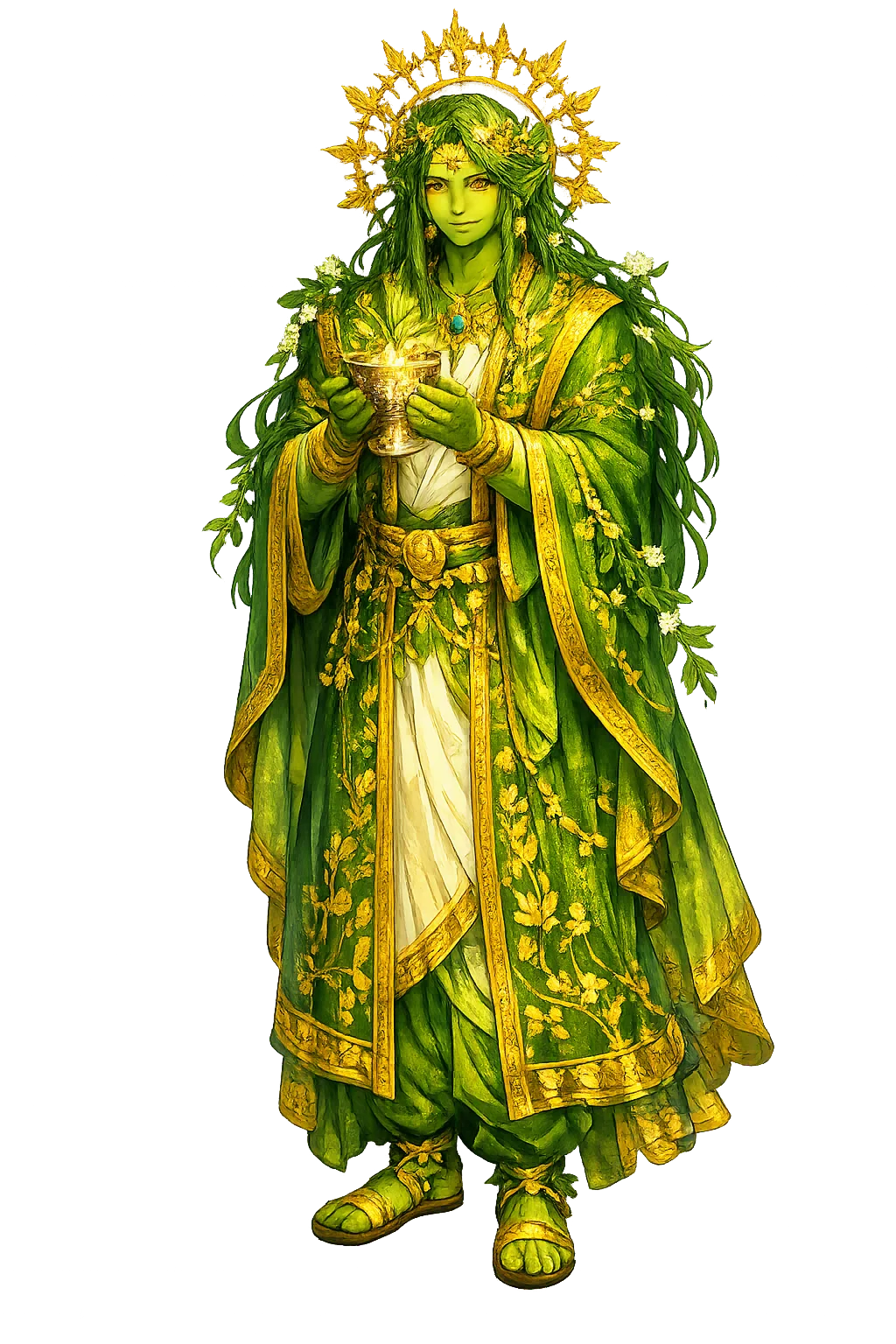
Sacred SymbolsThe green stalk with golden eyes, The mortar and pestle, The white haoma (parahōm), Spring water and milk, Mount Hara (Alborz)
02

Etymology & Word Family

From original script to Unicode restoration

Original Script 𐬵𐬀𐬊𐬨𐬀 Haoma — "The pressed one"
Unicode Restoration Haoma Canonical scholarly spelling — ASCII-identical
Modern ASCII haoma Plain-ASCII fallback

The name Haoma reaches the modern world through scholarly transliteration of the zoroastrian tradition. Because the conventional spelling uses only Latin letters, its Unicode and ASCII forms coincide — the tradition it carries is in the name itself, not in diacritics.

03

Unicode Character Breakdown

Character-by-character philological analysis

CharacterUnicodeNameBlockPhonetic Role
HU+0048Latin Capital Letter HBasic LatinSame, capitalized
aU+0061Latin Small Letter ABasic LatinSame
oU+006FLatin Small Letter OBasic LatinSame
mU+006DLatin Small Letter MBasic LatinSame
aU+0061Latin Small Letter ABasic LatinSame

The Tier 2 classification here reflects fidelity to the attested tradition, not recovered diacritics: every character of Haoma already survives in ASCII. What the restoration preserves is the canonical spelling itself — the form scholarship standardised.

04

Cult & Worship

How the sacred was kept — rites, sanctuaries, remains

The Cult

Haoma was not worshipped in a temple but prepared on an altar. The central Zoroastrian liturgy is the Hōmāst, the pressing of the haoma plant described in Yasna 9–11: stalks are pounded, juice is filtered, and the draught is offered to fire and consumed by the officiant. This rite was performed by magi and hereditary priests from the Avestan period onward and remains central to Parsi ritual in India and Iran. No sanctuary was dedicated to Haoma as a person; his cultus is the plant, the press, and the recited verse.

In the Earth

Haoma leaves no temple — his monument is the liturgy. But the soma–haoma debate ties him to material evidence: ephedra remains and pressing apparatus from Bronze Age Bactria–Margiana (the BMAC complex) have been read as soma/haoma paraphernalia, though the identification is contested. Avestan manuscripts from Iran and India transmit the ninth Yašt and the pressing chapters with their directions; Sasanian seals and silverwork show the ritual mortar and the banquet cup in aristocratic use. The modern fire temples of Yazd, Mumbai, and Karachi, where the pounding still sounds, are the cult's living site.

05

Iconography

How Haoma was imaged across the ages

The Image

Haoma is almost never personified in surviving art. His presence is emblematic: the mortar and pestle of the haoma-press, the sacred twigs or barsom, the strainer through which the juice runs, and the fire-altar that receives the libation. Sasanian and later Zoroastrian iconography foregrounds fire, water, and the priestly utensils; Avestan manuscripts illuminate the ritual implements rather than a human plant-god. The visual tradition is therefore liturgical and aniconic, a divine presence known chiefly by the tools that press him.

06

Reception & Transformation

The name after its own age — transmission, translation, survival

Afterlives

Haoma's afterlife is inseparable from the Indo-Iranian soma–haoma problem. Vedic soma and Avestan haoma share a name, a pressing ritual, and a plant whose botanical identity—ephedra, Peganum harmala, or another stimulant—has been argued since the nineteenth century. The Avesta reached medieval Zoroastrian priests through manuscript transmission in Iran and India; colonial philology rediscovered it in the eighteenth and nineteenth centuries, making Haoma a test case for comparative Indo-European religion and the psychedelic-origins debate of the later twentieth century. In modern Parsi practice the ritual continues on consecrated temple grounds, while scholars debate whether Haoma is primarily a deity, a plant, or a sacramental presence. His reception is thus at once living liturgy, philological puzzle, and flashpoint in the study of ancient ritual pharmacology.

Identifications Across Traditions

Haoma's double is the Vedic soma — the same root, the same deified press, the same golden-eyed herb sung as a god in the Rigveda's ninth maṇḍala. The parallel is so close that some verses translate almost line for line, and it anchors the soma–haoma problem: which plant? The Rigveda praises soma's mountains and rivers; the Avesta, haoma's; both press at dawn for a draught that grants vigor, cattle, and light to the mind. Yet the theologies diverge: Vedic soma is ambrosia for gods and poets, while the Avesta subjects haoma to an ethical audit — Zarathuštra himself reproaches the plant for its abuse by false priests. In Sasanian and later tradition Hōm retained his liturgical kingship; in Manichaean Iran his memory survived as the ritual cup's own name.

Modern Legacy

The pressing never ended. Parsi priests in India and Zoroastrians in Iran still perform the Yasna nightly, pounding ephedra where the original mountain plant cannot be had; the botanical identity remains debated — the 'soma–haoma problem', argued from ephedra to harmel to psychoactive candidates. The name lives on as Hōm and Hom, a boy's name from Tehran to Mumbai, and in the month and day dedications of the Zoroastrian calendar. Few religious words travel further than this one: a plant-god pressed at dawn four millennia ago still answers at roll call.

07

The Meditation

What Haoma means — beyond the dictionary

Haoma asks what a sacrament is. Not a symbol, exactly — the plant is eaten; not a drug alone — the ethics police it; not a metaphor — the god answers back. The rite's deepest claim is that matter can be holy without ceasing to be matter: water, twigs, milk, prayer, a mortar, a morning. In an age that splits body and meaning into separate compartments, Haoma's nightly chemistry lesson endures: what you take in shapes what you are, and a tradition that has blessed its breakfast for four thousand years knows something about slow transformation.

08

Frequently Asked Questions

Common questions about Haoma, Sacred Plant, Immortality, and Unicode restoration

01How do you pronounce Haoma?

In reconstructed pronunciation, Haoma is /ˈha.o.ma/ — approximately HAH-oh-mah — three light syllables, the stress on the first; no English vowel is exactly right for the 'ao' glide.

02What does Haoma mean?

Haoma means The pressed one in the zoroastrian tradition.

03What are the symbols of Haoma?

Haoma is associated with The green stalk with golden eyes (His Avestan self-description — the mountain herb that is simultaneously a god (Yašt 9.19)), The mortar and pestle (The pounding-stone of the Yasna, where god, offering, and congregation meet nightly (Yasna 9–11)), The white haoma (parahōm) (The paradisal plant of the renovation, drunk by the resurrected that they shall not die again (Bundahišn 30)), Spring water and milk (The two companions of the pressing — purity and nourishment joined in the consecrated draught), Mount Hara (Alborz) (The cosmic axis where the first pressing happened and Mithra keeps his watch — the sacrament's original altar (Yašt 9.16; 10.13)).

04Why restore Haoma in Unicode?

Haoma is written entirely in ASCII letters, so its restoration is about canonical fidelity rather than recovered diacritics: the temple fixes the name in its scholarly standard spelling, attested in the source tradition, instead of leaving it to drift.

05What is the most important myth about Haoma?

“Haoma Who Was First Pressed” — the Yašt 9 story that anchors the mythology of Haoma, told in full on the lore page.

09

Scholarly Sources

The philological foundations of this restoration

Every claim on this page is grounded in established scholarship. The orthographic restorations follow disciplinary convention. The etymological chain follows the best available reference works. This is not invention — it is resurrection through scholarship.

◈

Lexicography & Philology

  • Lexical and philological sources for Haoma.
◎

Primary Texts

  • Avesta
  • Gathas
  • Avesta, Yasna 9–11 (the Hōmāst, the pressing liturgy)
  • Avesta, Yašt 9 (Hōm Yašt); Yašt 10.13 (Mount Hara)
◉

Archaeology & Art History

  • Material evidence — iconography, inscriptions, and temple archaeology — for Haoma and related cults.
✦

Religious Studies

  • Flattery & Schwartz, Haoma and Harmaline (1971)
  • Bartholomae, Altiranisches Wörterbuch, s.v. haoma
  • Boyce, Zoroastrians: Their Religious Beliefs and Practices
  • Skjærvø, The Spirit of Zoroastrianism
Return

The Surface Awaits

You have traced the name from its earliest attestation to its Unicode restoration. Now return to the myth. The story is where the name lives.

Back to Lore
Haoma mascot