
The Cult
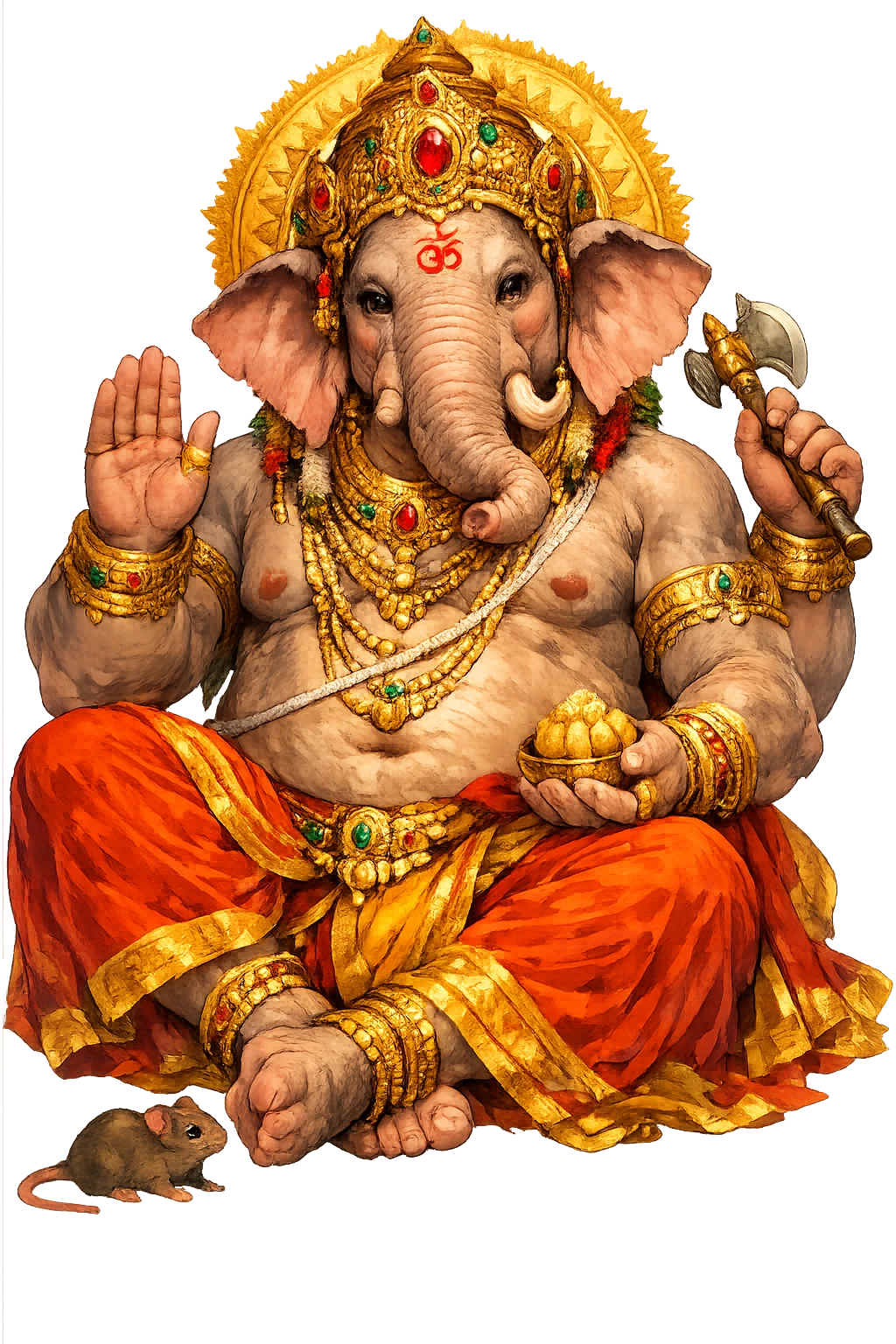
Every rite begins with him. The rule is old and textual as much as customary: the tradition insists that no sacrifice, wedding, journey, or new venture commence without Gaṇeśa being honored first, and that single requirement makes his cult the widest and least exclusive in Hinduism — he is worshipped at household shrines by lay families, at thresholds by shopkeepers, and in great temples by hereditary priests. His oldest pilgrimage circuit is the aṣṭavināyaka, eight temples scattered across Maharashtra, Morgaon's Moreśvar the first of them, whose mūrtis are held to be svayambhū, self-manifested rather than made. His festival falls on the fourth day of the bright fortnight of Bhādrapada, and the moon-taboo his own myth explains — do not look at the moon that night — survives in observance today. Votive practice is intimate and precise: modak dumplings, red hibiscus, durva grass offered in twenty-one blades, sandalwood paste on his forehead. From the Gupta caves to the terracotta hoards of Ahichchatra, his images surface exactly where the texts say his worship belongs — at the beginning of things.