PuniCodex

Extended Lore

Γαῖα Gaîa

Etymology · Orthography · Cult · Iconography · Reception · Sources

Tier 1 Gaîa.com
Gaîa — Earth, Mother of All
01

Quick Facts

Essential information about Gaîa, Earth, Mother of All

Original ScriptΓαῖα
Unicode RestorationGaîa
Reconstructed Pronunciation/ɡaɪ.a/
PantheonGreek
DomainEarth, Mother of All
MeaningEarth (from γαῖα)
ClassificationTier 1
Primary DomainGaîa.com
Sacred SymbolsThe globe or earth, Cornucopia, Sickle, Serpent, Oak tree
02

Etymology & Word Family

From original script to Unicode restoration

Original Script Γαῖα Gaîa — "Earth (from γαῖα)"
Unicode Restoration Gaîa Restored stress, length, and script
Modern ASCII gaia Plain-ASCII fallback

Earth (from γαῖα)

03

Unicode Character Breakdown

Character-by-character philological analysis

CharacterUnicodeNameBlockPhonetic Role
GU+0047Latin Capital Letter GBasic LatinGamma
aU+0061Latin Small Letter ABasic LatinAlpha
îU+00EELatin Small Letter I with CircumflexLatin-1 SupplementCircumflex on iota
aU+0061Latin Small Letter ABasic LatinAlpha

The Tier 1 classification reflects how much of the original phonology this restoration preserves — stress and vowel length for Greek names, distinctive letters and diacritics for every other tradition.

04

Cult & Worship

How the sacred was kept — rites, sanctuaries, remains

The Cult

Gaia was worshipped everywhere and housed almost nowhere. Her great cult was oracular: at Delphi she held the earth-navel before Apollo — Aeschylus' Eumenides stages the succession of Themis, Phoebe, and Apollo upon her seat — and Pausanias records her oracle near Olympia, where the priestess of Ge drank bull's blood before prophesying, as did the priestess at Aigeira in Achaea with her bronze chamber. At Athens the Boule honored Ge Kourotrophos, earth the child-nurturer, beside Demeter, and oath-takers swore by the ground that hears. Votive reliefs show her as a seated woman with phiale, cornucopia, and climbing children, receiving the thanks of families she fed. There was no panhellenic Gaia-festival and no priestly clan: her priestesses served local earth-oracles, and her altar was any field that answered hunger.

In the Earth

At Delphi the stone Omphalos marked the 'navel' of Ge before Apollo's arrival; the goddess's sanctuary lies beneath the later Apollo precinct. Pausanias describes altars of Ge at Olympia, including the oracle of Ge, and at Athens the Boule honored Ge Kourotrophos and Demeter Chloe. Votive reliefs from the Athenian Agora and Eleusinion show worshippers approaching a seated Mother Earth with cornucopia and phiale.

05

Iconography

How Gaîa was imaged across the ages

The Image

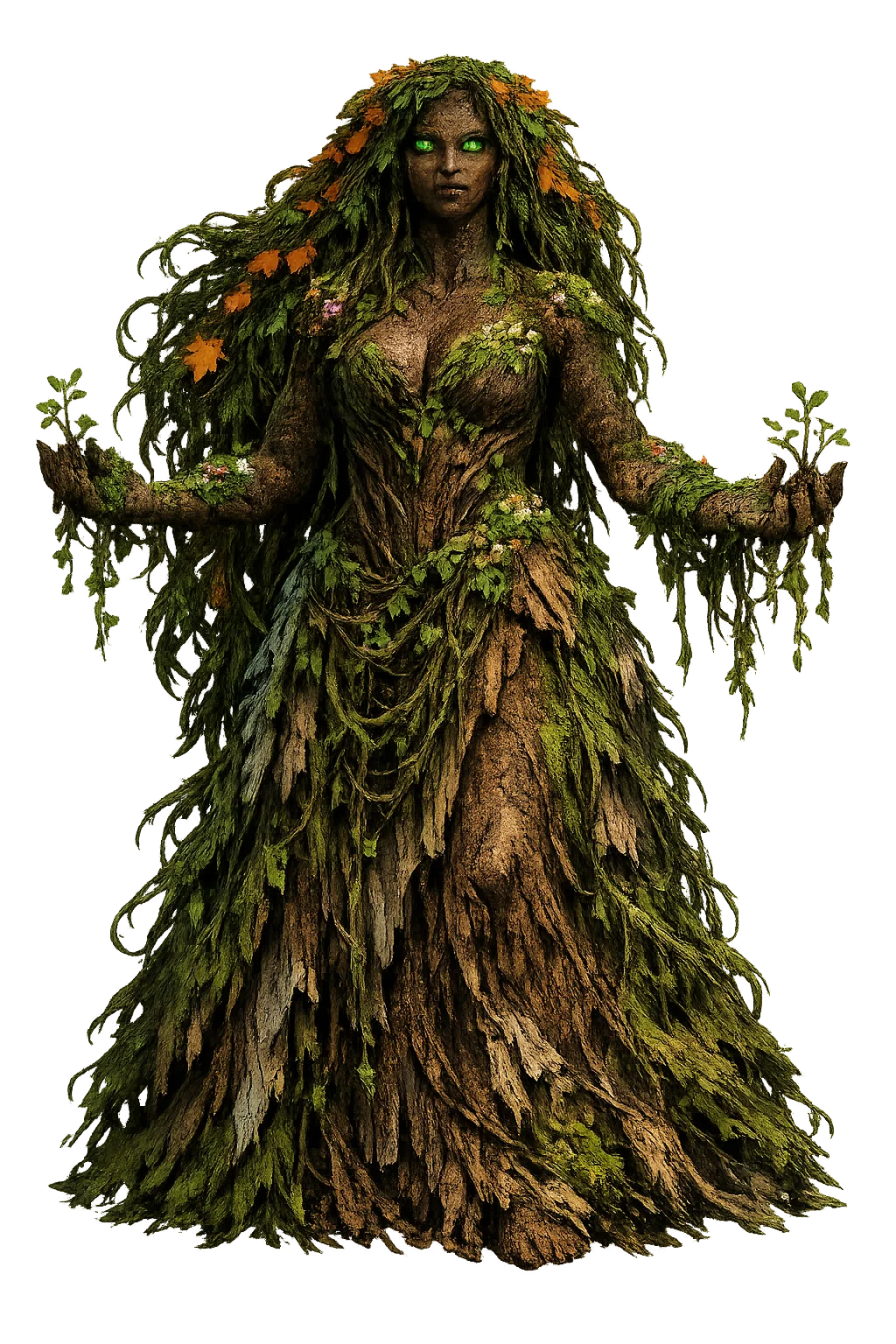
Gaia is strangely faceless for the oldest goddess. Archaic and high Classical art rarely personifies her; the earth appears as ground, not figure, until the late fifth century, when a great Attic relief cut her portrait — Ge half-risen from the soil, handing the infant Erichthonios up to Athena, fragments split between the Acropolis Museum in Athens and the Louvre. From then on the seated mother with cornucopia and phiale became standard on Hellenistic votive and document reliefs, and Roman sarcophagi carved her reclining, fruit spilling from her lap beneath the heroes she bore. The turreted crown that Renaissance iconography fastened on Earth belongs properly to city-goddesses, not to her. A people who swore by the ground and ploughed her body kept their ultimate deity almost image-free: her true likeness was the landscape itself.

06

Reception & Transformation

The name after its own age — transmission, translation, survival

Afterlives

Gaia's reception is the biography of a Greek word. Gē, 'earth,' passed into every European schoolroom through geography, geometry, and geology — terms coined in the Latin West from the Renaissance on, Escholt's Geologia Norvegica (1657) already carrying her name in its title. The goddess had the quieter road: Hesiod's Theogony survived in Byzantine manuscripts, Stoic allegorists read her as matter itself, and Neoplatonists refined the reading. Medieval Europe met her mainly as Terra in Ovid and in cosmography; Renaissance iconographers codified her look — Cesare Ripa's Iconologia (1593) dresses Earth with cornucopia and turreted crown — while Thomas Burnet's Telluris Theoria Sacra (1681) made the earth's body a theological problem once more. Modern geology then secularized her without remainder: the planet's deep time dissolved the goddess into data. Her name returned as personification only at the edges of science — the last stage of the journey from goddess to common noun that Greek had already begun.

Identifications Across Traditions

The Romans identified Gaia with Terra Mater, the earth mother, though Terra never achieved the philosophical and cosmological prominence of her Greek counterpart. In later antiquity Gaia was syncretized with Cybele, the Phrygian mountain mother, and with various Near Eastern earth goddesses. In the Scientific Revolution, her name was revived for the Gaia hypothesis — James Lovelock's theory that the earth functions as a self-regulating living system. Modern environmental movements have made Gaia the personification of the planet itself, though this is a philosophical rather than strictly ancient usage.

Modern Legacy

Gaia is the oldest and most persistent name for the earth as a living whole. Geology, geography, and geometry all derive from her root gē. The Gaia hypothesis gave her name to modern ecological thought; 'Mother Earth' in many languages translates the same image. In feminist spirituality, Gaia represents the primordial feminine principle and the sanctity of nature. Restoring Gaia restores the first name the Greeks gave to the ground beneath their feet.

07

The Meditation

What Gaîa means — beyond the dictionary

Gaia is the only Greek deity who needs no temple because she is the temple. Every mountain, every field, every cave is her body. The Greeks did not worship her by escaping nature but by recognizing that they were already inside her.

Modernity has largely forgotten this. We speak of 'the environment' as if it were a surrounding thing, separate from us. Gaia's name reminds us that we are not on the earth but of it. The restoration of her name is more than philology; it is a statement that the planet is not a resource but a presence.

08

Frequently Asked Questions

Common questions about Gaîa, Earth, Mother of All, and Unicode restoration

01How do you pronounce Gaîa?

In reconstructed pronunciation, Gaîa is /ɡaɪ.a/ — approximately 'GUY-ah' — the diphthong glides like the earth yielding; the final vowel is simple and vast.

02What does Gaîa mean?

Gaîa means Earth (from γαῖα) in the greek tradition.

03What are the symbols of Gaîa?

Gaîa is associated with The globe or earth (The planet as living body), Cornucopia (The endless fertility of the soil), Sickle (The weapon of adamant used to castrate Ouranos), Serpent (The earth's chthonic, regenerative power), Oak tree (The deep-rooted tree sacred to her oracle at Dodona).

04Why restore Gaîa in Unicode?

Plain ASCII gaia strips the stress, length, and script that make the name specific. Unicode restoration returns the name to its original written dignity.

05What is the most important myth about Gaîa?

“First After Chaos” — the The Birth story that anchors the mythology of Gaîa, told in full on the lore page.

09

Scholarly Sources

The philological foundations of this restoration

Every claim on this page is grounded in established scholarship. The orthographic restorations follow disciplinary convention. The etymological chain follows the best available reference works. This is not invention — it is resurrection through scholarship.

◈

Lexicography & Philology

  • Liddell, H. G., Scott, R., & Jones, H. S. A Greek-English Lexicon. Oxford: Clarendon Press, 9th ed. 1996.
  • Pape, W., & Benseler, G. E. Wörterbuch der griechischen Eigennamen. Braunschweig: Vieweg, 1884.
  • Beekes, R. S. P. Etymological Dictionary of Greek. Leiden: Brill, 2010.
◎

Primary Texts

  • Hesiod, Theogony 116–210
  • Aeschylus, Eumenides 1–8; Prometheus Bound 755–770
  • Pindar, Isthmian 8.26–47
  • Pausanias, Description of Greece 10.5
◉

Archaeology & Art History

  • Material evidence — iconography, inscriptions, and temple archaeology — for Gaîa and related cults.
✦

Religious Studies

  • Burkert, Greek Religion
  • Lovelock, Gaia: A New Look at Life on Earth
Return

The Surface Awaits

You have traced the name from its earliest attestation to its Unicode restoration. Now return to the myth. The story is where the name lives.

Back to Lore
Gaîa mascot