
The Cult
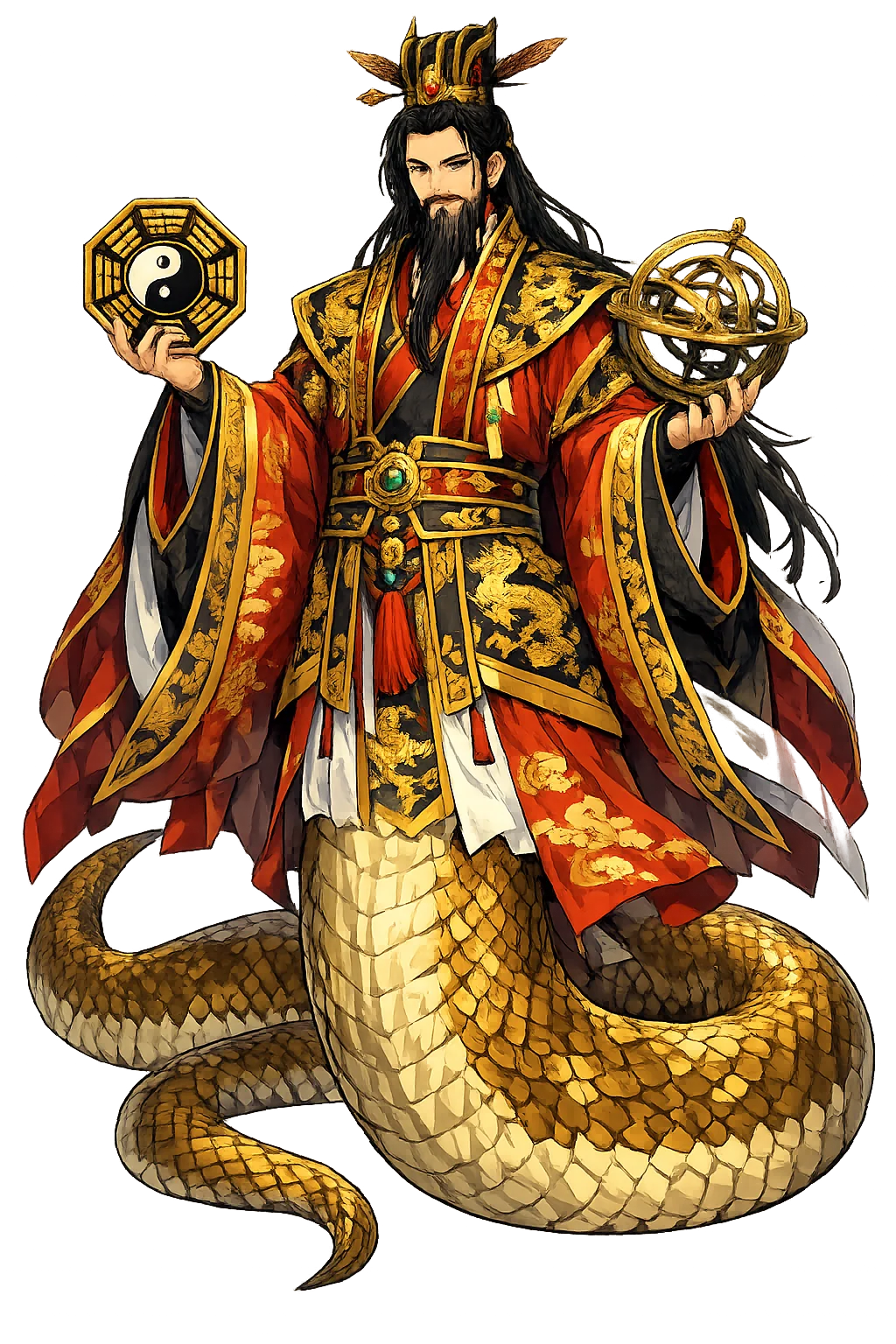
Fúxī's cult grew from the diviner's mat outward. No shrine of him is attested in the early strata — the Warring States and Han texts venerate him as the first sage, not a resident god — but the rite he invented became one of China's most practised: yarrow-stalk divination with the Yìjīng is his act of reading pattern, repeated by every generation of consultants for two thousand years. The temple cult arrived by accretion. Tianshui in Gansu keeps his birthplace temple and a great annual public memorial rite; grander still is the Taihao Mausoleum at Huaiyang in Henan — palace upon palace over his traditional tomb, its second-month temple fair described in imperial gazetteers and now on China's national register of intangible cultural heritage. There the offering is addressed to the First Ancestor: incense, opera, dragon lanterns, and trigram banners flying from his halls. The votive logic is unique in this catalog: his pilgrims come less to ask favors than to thank the inventor — of pattern, of nets, of marriage — at the source.