PuniCodex

Extended Lore

ᚠᚱᛅᚢᚱ Freyr

Etymology · Phonology · Orthography · Cultural Legacy · Primary Sources

Tier 2 Freyr
Freyr — Fertility, Sunshine, Rain
01

Quick Facts

Essential information about Freyr, Fertility, Sunshine, Rain

Original Scriptᚠᚱᛅᚢᚱ
Unicode RestorationFreyr
Reconstructed Pronunciation/ˈfrœy.r̩/
PantheonNorse
DomainFertility, Sunshine, Rain
MeaningLord (from *frawjaz)
ClassificationTier 2
Primary DomainFreyr
Sacred SymbolsGullinbursti, Skíðblaðnir, The self-wielding sword, The hart's antler, Álfheimr
02

Etymology & Word Family

From original script to Unicode restoration

Proto-indo-european *frawjaz Lord
Original Script ᚠᚱᛅᚢᚱ Freyr — "Lord (from *frawjaz)"
Unicode Restoration Freyr Restored stress, length, and script
Modern ASCII freyr Plain-ASCII fallback

Old Norse Freyr descends from Proto-Germanic *frawjaz 'lord' — the same word as Gothic frauja and Old English frēa — and is the masculine counterpart of Freyja, from *frawjōn 'lady'. The ey is the Old Norse diphthong born from an earlier au, which is why a normalized Viking-Age carving reads ᚠᚱᛅᚢᛦ, frauR: the runes keep the older shape of the word. The normalized Old Norse form is plain ASCII — no diacritic, no thorn or eth — so the name is Tier-2 by the mechanical rule: nothing distinctive is lost in transit, a statement about orthography, never about the god.

03

Unicode Character Breakdown

Character-by-character philological analysis

CharacterUnicodeNameBlockPhonetic Role
FU+0046Latin Capital Letter FBasic LatinSame
rU+0072Latin Small Letter RBasic LatinSame
eU+0065Latin Small Letter EBasic LatinSame
yU+0079Latin Small Letter YBasic LatinSame
rU+0072Latin Small Letter RBasic LatinSame

The Tier 2 classification reflects how much of the original phonology this restoration preserves — stress and vowel length for Greek names, distinctive letters and diacritics for every other tradition.

04

Cultural Significance

From ancient cult to modern Unicode

Ancient Domain

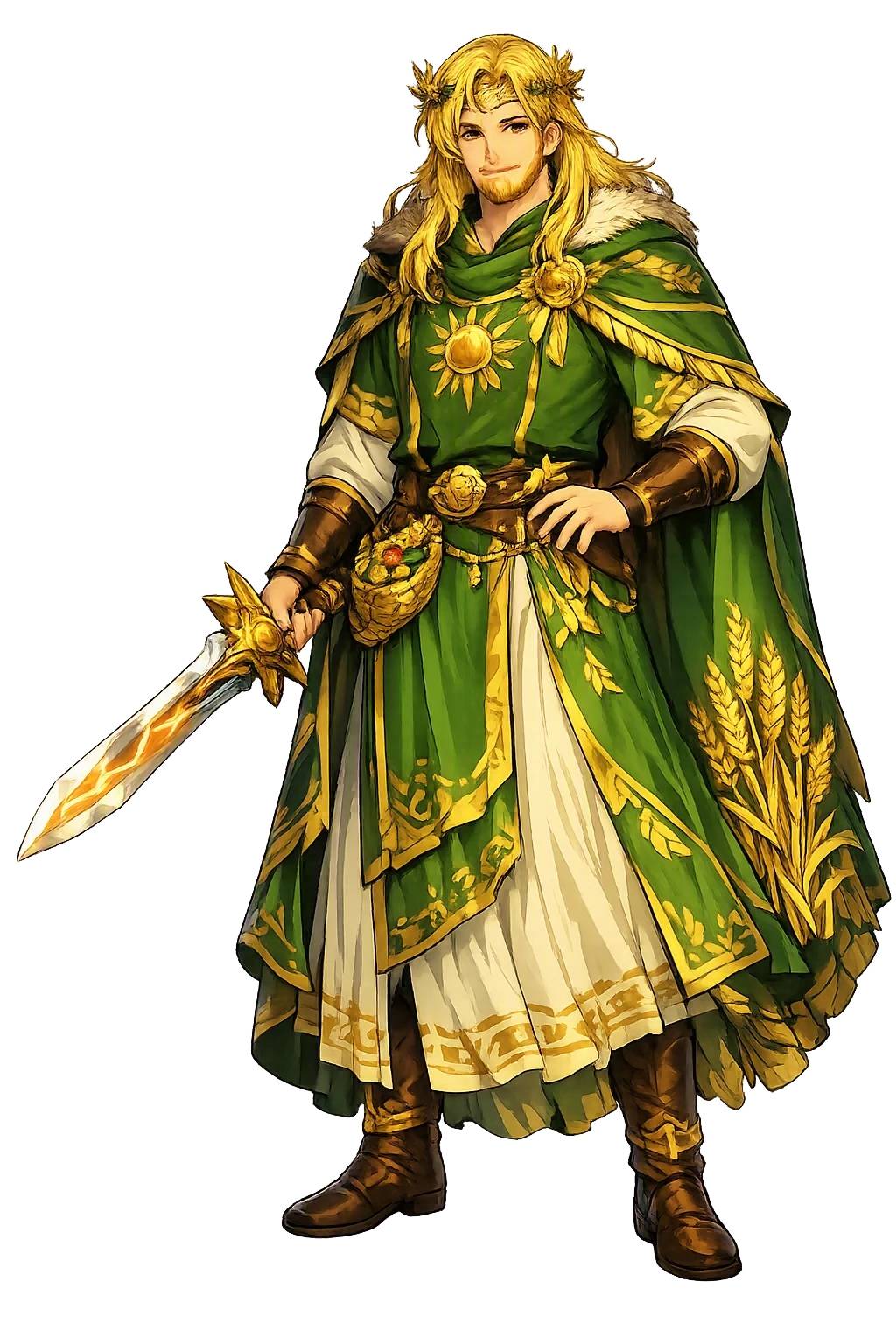
Freyr is the Vanir god the Æsir received in the hostage-exchange and never gave back: son of Njǫrðr, brother of Freyja, lord of Álfheimr, the ruler of rain and sunshine and the fruit of the earth — the god Snorri says it is good to call on for harvest and peace, and who governs the wealth of men.

Freyr in Later Traditions

Freyr's name is a title, and titles travel. His Proto-Germanic *frawjaz 'lord' is the Gothic frauja — the very word Ulfilas uses for the Lord (from *frawjaz) in his Bible — and the Old English poetic frēa, 'lord' of kings and of God. His other name opens the oldest debate: Lokasenna calls him Ingunar-Freyr, Ynglingatal names the dynasty from Yngvi-Freyr, and scholars since Grimm have linked that Ing-element to the Inguaeones, the peoples Tacitus says descend from Mannus through Ing — the same Ing the Old English Rune Poem remembers as first seen among the East Danes before he went east over the wave. The equation Ing = Yngvi = Freyr is argued, not proven, and Simek counsels the usual caution; what is certain is the shape of the god: a lord whose name is 'Lord (from *frawjaz)', worshipped at the fountainhead of a royal line. Adam of Bremen gives the interpretatio from the outside: at Uppsala the Swedes called him Fricco, granted him peace and pleasure, and carved him ithyphallic between Thor and Wodan — a Germanic Priapus in a triad of his own.

Modern Legacy

Freyr never left the North. His cult geography is written across the map in hundreds of Norwegian and Swedish place-names — Frøysland, Frøsvoll, Frösåker, Fröslunda — the densest theophoric landscape of any god after Þórr and Óðinn. The name itself survives as a living given name: Freyr in Iceland, Frej in Denmark and Sweden. His historical afterlife is the Yngling one: Norwegian and Swedish kings traced their lines through the Ynglings to Yngvi-Freyr, and Snorri's peace-years king became medieval Scandinavia's standing image of the good reign. Modern Heathenry keeps him at the centre of its harvest and fertility blóts under the old formula ár ok frið — harvest and peace — and the golden boar still runs through modern fantasy, games, and jewellery as the sun-animal of the Vanir.

Unicode Restoration as Cultural Act

Restoring Freyr in a domain name is more than orthographic accuracy. It is a statement that the internet should recognize the full range of human writing — not only the ASCII keyboard.

05

Frequently Asked Questions

Common questions about Freyr, Fertility, Sunshine, Rain, and Unicode restoration

01How do you pronounce Freyr?

In reconstructed pronunciation, Freyr is /ˈfrœy.r̩/ — approximately FRAY-ur — the ey is a single falling diphthong (between the 'ay' of 'day' and the 'oy' of 'boy'), and the final -r is the nominative ending, lightly syllabic as in modern Icelandic Freyr..

02What does Freyr mean?

Freyr means Lord (from *frawjaz) in the norse tradition.

03What are the symbols of Freyr?

Freyr is associated with Gullinbursti (The golden-bristled boar whose glow turns night to day — the sun and the sowing made animal), Skíðblaðnir (The ship that always has a fair wind and folds into a pouch — prosperity that travels), The self-wielding sword (The weapon given away for love — the price of desire, paid at Ragnarök), The hart's antler (The improvised weapon of the swordless god — he killed Beli with one, and faces Surtr with none left), Álfheimr (The tooth-gift realm of the elves — light's homeland as a god's first possession).

04Why restore Freyr in Unicode?

Plain ASCII freyr strips the stress, length, and script that make the name specific. Unicode restoration returns the name to its original written dignity.

05What is the most important myth about Freyr?

Snorri's portrait is the tradition's fixed formula: Freyr is the most glorious of the Æsir, son of Njǫrðr, and 'he rules over rain and sunshine, and therewith the fruit of the earth; it is good to call on him for harvest and peace — ár ok frið. He also governs the prosperity of men.' Grímnismál adds the deed that seats him: Álfheimr, the world of the elves, was given to Freyr by the gods in ancient days as a tooth-gift — the present made to a child when its first tooth comes. The Vanir hostage becomes the Æsir's own lord of the growing world.

06

Scholarly Sources

The philological foundations of this restoration

Every claim on this page is grounded in established scholarship. The orthographic restorations follow disciplinary convention. The etymological chain follows the best available reference works. This is not invention — it is resurrection through scholarship.

Lexicography & Philology

  • Cleasby-Vigfusson
  • Zoëga

Primary Texts

  • Poetic Edda: Skírnismál (the wooing of Gerðr); Grímnismál 5 (Álfheimr as tooth-gift); Lokasenna 42–43 (the sword sold, Ingunar-Freyr); Vǫluspá 52–53 (Freyr against Surtr); Vafþrúðnismál 38–39 (Njǫrðr the Vanir hostage)
  • Snorri Sturluson, Prose Edda: Gylfaginning 23–24 (the Vanir, rain and sunshine, ár ok frið), 37 (Beli slain with the hart's antler), 44 (Skíðblaðnir), 49 (Gullinbursti at Baldr's pyre), 51 (Ragnarök); Skáldskaparmál (the dwarfs' gifts; Úlfr Uggason's Húsdrápa)
  • Snorri Sturluson, Heimskringla: Ynglinga saga 10–13 (King Freyr at Uppsala, the Fróði-peace, the three-year mound); Þjóðólfr of Hvin, Ynglingatal (the Ynglings)

Archaeology & Art History

  • Material evidence — iconography, inscriptions, and temple archaeology — for Freyr and related cults.
  • Freyr is one of the few Norse gods with a plausible cult-image in the ground: the Rällinge statuette, a small seated Viking-Age bronze from Lunda in Södermanland, Sweden — cross-legged, bearded, and unmistakably ithyphallic — has been identified as Freyr since its discovery in 1904, and it matches Adam of Bremen's eyewitness description of Fricco at Uppsala with uncanny economy. Uppsala itself anchors the cult: Adam describes the great temple and its triad around 1075, and the royal mounds of Gamla Uppsala still stand where Ynglinga saga sets King Freyr's own mound. The theophoric place-name record — hundreds of Frøy-/Frö- names across Norway and Sweden, many compounded with 'grove', 'field', and 'meadow' — is the densest evidence of a working fertility cult. Against this, the runic corpus is silent: no inscription invokes the god by name, and the normalized Younger Futhark rendering ᚠᚱᛅᚢᛦ (frauR) is a reconstruction of how the name would have been carved. The literary witnesses are the Codex Regius (Skírnismál, Grímnismál, Lokasenna, Vǫluspá) and, for the carved-panel evidence, Úlfr Uggason's Húsdrápa (c. 983), preserved in Skáldskaparmál, which shows the boar-riding Freyr already a fixture of pre-Christian hall art.

Religious Studies

  • Adam of Bremen, Gesta Hammaburgensis ecclesiae pontificum IV.26–27 (the temple at Uppsala; Fricco with the immense phallus, granter of peace and pleasure)
  • Cleasby–Vigfusson, An Icelandic-English Dictionary, s.v. Freyr; Zoëga, A Concise Dictionary of Old Icelandic, s.v. Freyr; de Vries, Altnordisches etymologisches Wörterbuch, s.v. Freyr (*frawjaz 'lord')
  • Simek, Dictionary of Northern Mythology; Orchard, Dictionary of Norse Myth and Legend; Lindow, Norse Mythology: A Guide — s.v. Freyr (the Ing question, sacral kingship, cult geography)
Return

The Surface Awaits

You have traced the name from its earliest attestation to its Unicode restoration. Now return to the myth. The story is where the name lives.

Back to Lore
Freyr mascot