PuniCodex

Extended Lore

ᚠᚱᛅᚢᛁᛅ Freyja

Etymology · Phonology · Orthography · Cultural Legacy · Primary Sources

Tier 2 Freyja
Freyja — Love, Fertility, Seiðr
01

Quick Facts

Essential information about Freyja, Love, Fertility, Seiðr

Original Scriptᚠᚱᛅᚢᛁᛅ
Unicode RestorationFreyja
Reconstructed Pronunciation/ˈfrœy.jɑ/
PantheonNorse
DomainLove, Fertility, Seiðr
MeaningLady (from *frawjōn)
ClassificationTier 2
Primary DomainFreyja
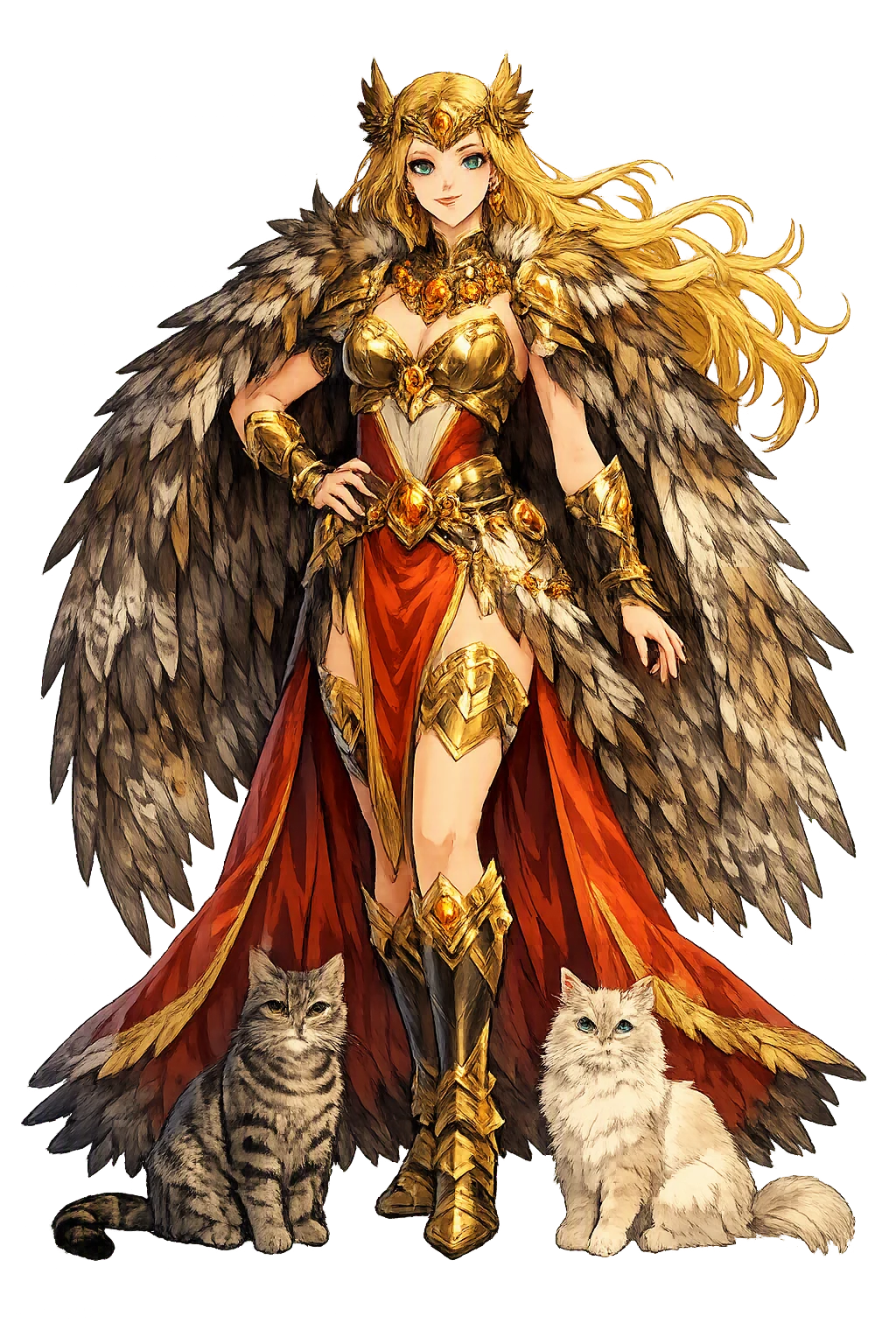
Sacred SymbolsBrísingamen, The cats, The falcon-feather cloak, Tears of red gold, Hildisvíni
02

Etymology & Word Family

From original script to Unicode restoration

Proto-indo-european *frawjōn Lady
Original Script ᚠᚱᛅᚢᛁᛅ Freyja — "Lady (from *frawjōn)"
Unicode Restoration Freyja Restored stress, length, and script
Modern ASCII freyja Plain-ASCII fallback

Old Norse Freyja is the common noun freyja, 'lady', used as a proper name — the feminine counterpart of her brother's name Freyr, 'lord'. Both descend from Proto-Germanic *frawjǭ, and the cognate line runs through Old High German frouwa to the modern German Frau. Freyja is Tier 2 by rule: the normalized Old Norse spelling is plain Latin letters, so the ASCII form loses nothing — there is no diacritic, no thorn, no eth to restore. The temple form differs from the lowercase entry only by capitalization.

03

Unicode Character Breakdown

Character-by-character philological analysis

CharacterUnicodeNameBlockPhonetic Role
FU+0046Latin Capital Letter FBasic LatinSame
rU+0072Latin Small Letter RBasic LatinSame
eU+0065Latin Small Letter EBasic LatinSame
yU+0079Latin Small Letter YBasic LatinSame
jU+006ALatin Small Letter JBasic LatinSame
aU+0061Latin Small Letter ABasic LatinSame

The Tier 2 classification reflects how much of the original phonology this restoration preserves — stress and vowel length for Greek names, distinctive letters and diacritics for every other tradition.

04

Cultural Significance

From ancient cult to modern Unicode

Ancient Domain

Freyja is the preeminent goddess of the Norse pantheon: a Vanir among the Æsir, mistress of seiðr magic, owner of the necklace Brísingamen, rider of a chariot drawn by cats, and chooser of half the slain — for she keeps a hall, Sessrúmnir in the field Fólkvangr, and divides the battle-dead with Óðinn himself.

Freyja in Later Traditions

Freyja's most consequential kinship is internal: her relationship to Frigg. Both are chief goddesses, both own a falcon cloak, both weep for an absent husband (Óðr's name is one consonant from Óðinn's), and scholarship from the nineteenth century onward has debated whether the two were originally one goddess split by the traditions that recorded them — a question the sources leave open and handbooks like Simek and Orchard still mark as unsettled. The interpretatio latina equated her with Venus, and the Germanic week keeps the trace: Friday, dies Veneris, 'the Lady's day' — though whether the day was named for Freyja or for Frigg is itself part of the same debate. Beyond Germania there is no borrowing to claim: the Vanir package — fertility, wealth, magic, and a share of the dead — is the North's own construction, and the goddess who taught seiðr to the Æsir has no exact counterpart anywhere else.

Modern Legacy

No Norse goddess has a longer afterlife. Wagner fused Freyja with Iðunn into Freia, the goddess of youth whose ransom opens the Ring cycle, and the Victorian mythographies made her the Venus of the North. In the twentieth century she became central to modern Heathenry and Ásatrú, where she is honored as mistress of seiðr and patron of the half of the slain — and to the revival of seiðr practice that scholars and practitioners alike trace to her teaching in Ynglinga saga. Her name never died in Scandinavia: Freyja is a living, and increasingly popular, girls' given name in Iceland and across the North. And the week still speaks her cognate every Friday — the Lady's day, whichever goddess the chronology finally credits.

Unicode Restoration as Cultural Act

Restoring Freyja in a domain name is more than orthographic accuracy. It is a statement that the internet should recognize the full range of human writing — not only the ASCII keyboard.

05

Frequently Asked Questions

Common questions about Freyja, Love, Fertility, Seiðr, and Unicode restoration

01How do you pronounce Freyja?

In reconstructed pronunciation, Freyja is /ˈfrœy.jɑ/ — approximately FRAY-ya — the first syllable is the diphthong ey, close to English 'ay' in 'say' with rounded lips; stress falls on the first syllable, and the -ja sounds like English 'ya'..

02What does Freyja mean?

Freyja means Lady (from *frawjōn) in the norse tradition.

03What are the symbols of Freyja?

Freyja is associated with Brísingamen (The necklace that is worth any price — beauty, desire, and the things a goddess will not be commanded to trade), The cats (Her chariot-team: the household animal elevated to divine harness, love and independence in one pair), The falcon-feather cloak (The garment of flight — the power to cross worlds that others must borrow from her), Tears of red gold (The weeping for the absent Óðr — the myth the skalds built into the kenning 'Freyja's tears' for gold), Hildisvíni ('Battle-swine', the boar she rides in Hyndluljóðr — the Vanir animal of fertility under a warrior's name).

04Why restore Freyja in Unicode?

Plain ASCII freyja strips the stress, length, and script that make the name specific. Unicode restoration returns the name to its original written dignity.

05What is the most important myth about Freyja?

Snorri places Freyja beside Frigg as foremost among the goddesses, and gives her what no other goddess has: a share of the battle-dead. 'Her hall is called Sessrúmnir, and it is large and fair. Whenever she rides to battle, she takes half of the slain, and half belong to Óðinn.' Her field is Fólkvangr, the folk-plain; her hall is 'seat-roomy'. The Grímnismál preserves the same division in verse — Freyja chooses the half of the slain each day, Óðinn the other — so the doctrine is older than Snorri: the Lord of the Slain does not keep them all. The Lady keeps a war-dead of her own.

06

Scholarly Sources

The philological foundations of this restoration

Every claim on this page is grounded in established scholarship. The orthographic restorations follow disciplinary convention. The etymological chain follows the best available reference works. This is not invention — it is resurrection through scholarship.

Lexicography & Philology

  • Cleasby-Vigfusson
  • Zoëga

Primary Texts

  • Poetic Edda (Grímnismál, Þrymskviða, Hyndluljóðr, Lokasenna)
  • Prose Edda (Gylfaginning, Skáldskaparmál)
  • Ynglinga saga (Heimskringla)

Archaeology & Art History

  • Material evidence — iconography, inscriptions, and temple archaeology — for Freyja and related cults.
  • Freyja's attestations are textual — the Codex Regius of the Poetic Edda and the Prose Edda's codices (13th-14th c.), with skaldic verse centuries older — but her world has a material record. The theophoric place-names of Sweden and Norway are dense with the Frö-/Frøy- element, though most are assigned to her brother Freyr; a smaller set (Norway's Frøya island among them) is argued either way. The seiðr she taught the Æsir is the best-attested ritual complex in the graves: the 'völva burials' of Viking-Age Scandinavia, with their iron staffs, high-status grave goods, and in some cases mind-altering seeds, are the material context Neil Price's The Viking Way reads as the practice's archaeology. Small silver pendants of standing female figures, once loosely called valkyries, have been reinterpreted in the same frame — the tradition's seeress and its Lady overlap in the metal as they do in the verse.

Religious Studies

  • Cleasby-Vigfusson
  • Zoëga
  • Simek, Dictionary of Northern Mythology
  • Orchard, Dictionary of Norse Myth and Legend
  • Lindow, Norse Mythology: A Guide
  • Price, The Viking Way
Return

The Surface Awaits

You have traced the name from its earliest attestation to its Unicode restoration. Now return to the myth. The story is where the name lives.

Back to Lore
Freyja mascot