PuniCodex

Extended Lore

Ẹ̀ṣù Ẹṣù

Etymology · Phonology · Orthography · Cultural Legacy · Primary Sources

Tier 1 Ẹṣù.com
Ẹṣù — Trickery, Crossroads, Messenger
01

Quick Facts

Essential information about Ẹṣù, Trickery, Crossroads, Messenger

Original ScriptẸ̀ṣù
Unicode RestorationẸṣù
Reconstructed Pronunciation/ɛ̀.ʃṹ/
PantheonYoruba
DomainTrickery, Crossroads, Messenger
MeaningDivine trickster
ClassificationTier 1
Primary DomainẸṣù.com
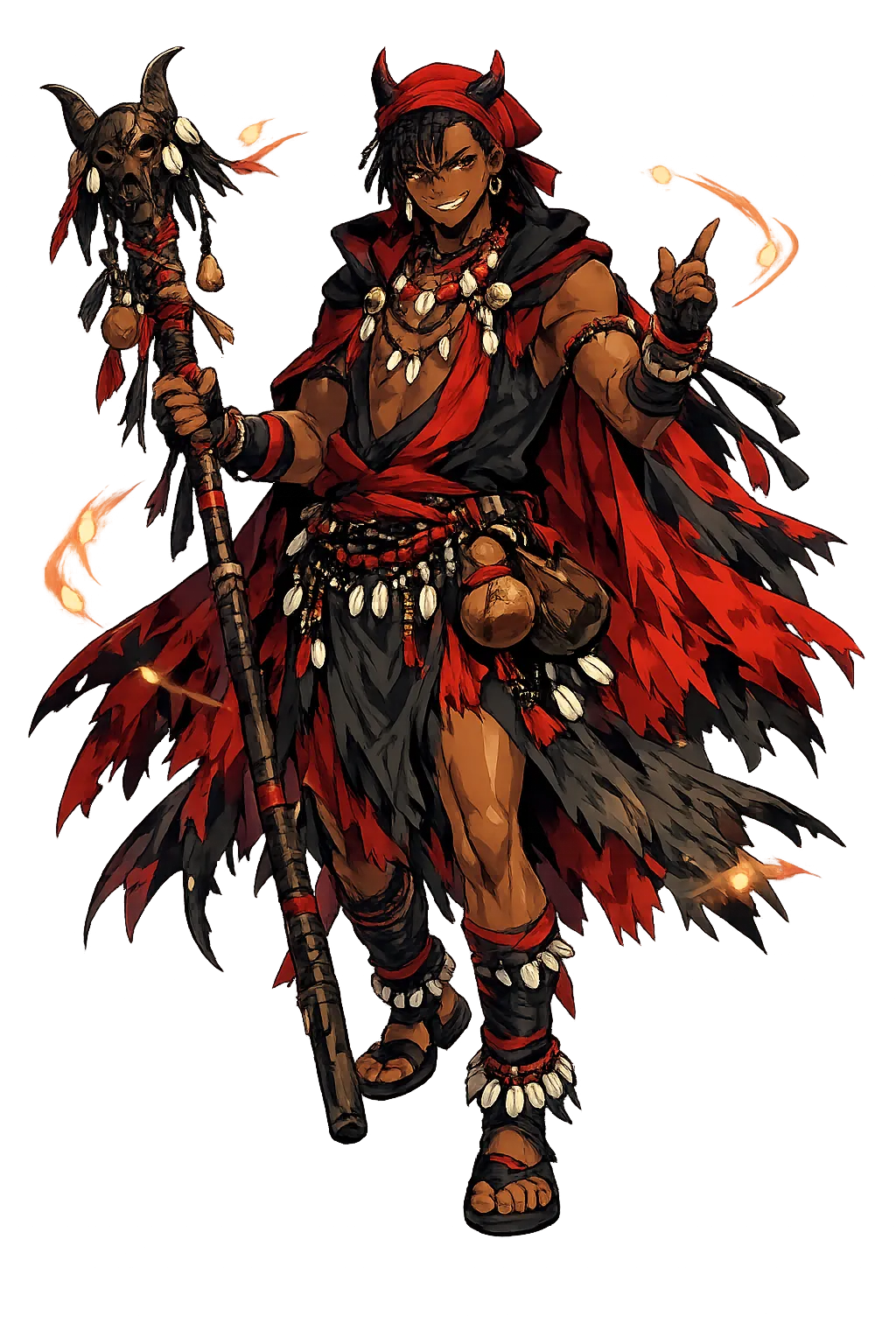
Sacred SymbolsCrossroads stone, Red and black beads, Cigar and rum, Phallus or trickster stick
02

Etymology & Word Family

From original script to Unicode restoration

Original Script Ẹ̀ṣù Ẹṣù — "Divine trickster"
Unicode Restoration Ẹṣù Restored stress, length, and script
Modern ASCII eshu Plain-ASCII fallback

Ẹṣu is Tier 1: the dots below ẹ and ṣ are distinctive features the ASCII form loses, the dot below ẹ marking the open [ɛ] vowel. The name is often wrongly conflated with the Christian devil; in Yoruba religion he is a necessary divine functionary, not an evil being. Tone conventions for the name vary between dictionaries (Èṣù / Èṣú); written Yoruba routinely omits tones.

03

Unicode Character Breakdown

Character-by-character philological analysis

CharacterUnicodeNameBlockPhonetic Role
U+1EB8Latin Capital Letter E with Dot BelowUnknownE with dot below: open /ɛ/
U+1E63Latin Small Letter S with Dot BelowUnknownS with dot below: /ʃ/
N/ADropped characterYoruba orthographyNot written in Yoruba orthography
ùU+00F9Latin Small Letter U with GraveLatin-1 SupplementGrave: low tone

The Tier 1 classification reflects how much of the original phonology this restoration preserves — stress and vowel length for Greek names, distinctive letters and diacritics for every other tradition.

04

Cultural Significance

From ancient cult to modern Unicode

Ancient Domain

Ẹṣu is the divine linguist, the trickster who stands at the crossroads where choices divide. He is the messenger who carries sacrifices from humans to the orishas, and the one who tests the proud by showing them the consequences of their own words. Without Ẹṣu, no prayer reaches the gods; with Ẹṣu, no promise is safe from misinterpretation.

He is neither good nor evil in the Christian sense. He is the principle of indeterminacy — the moment before a choice, the pun that undoes a contract, the road not taken.

Ẹṣù in Later Traditions

Colonial missionaries and enslavers misunderstood Ẹṣu as the devil, an equation that has caused centuries of distortion. In Brazilian Candomblé he became Exu, syncretised with devils and trickster saints but still honoured as essential to ritual. In Cuban Santería he split into Eleguá, the child-like road-opener, and Exú, the more dangerous trickster. The Yoruba original is not demonic; he is the necessary principle of ambiguity that makes choice, language, and sacrifice possible.

Modern Legacy

Ẹṣu's legacy is complex. On one hand, he is one of the most misunderstood African deities in the world, repeatedly equated with Satan by outsiders. On the other hand, he is indispensable to Afro-Atlantic religion and a powerful symbol in African diaspora literature and philosophy. Writers from Léopold Sédar Senghor to Henry Louis Gates Jr. have used Ẹṣu / Esu / Eshu as a figure for hermeneutics, signification, and the multiplicity of meaning. In ritual, he remains the first orisha honoured in every ceremony.

Unicode Restoration as Cultural Act

Restoring Ẹṣù in a domain name is more than orthographic accuracy. It is a statement that the internet should recognize the full range of human writing — not only the ASCII keyboard.

05

Frequently Asked Questions

Common questions about Ẹṣù, Trickery, Crossroads, Messenger, and Unicode restoration

01How do you pronounce Ẹṣù?

In reconstructed pronunciation, Ẹṣù is /ɛ̀.ʃṹ/ — approximately eh-SHOON — start low on 'eh', rise to a bright, slightly nasal 'SHOON'..

02What does Ẹṣù mean?

Ẹṣù means Divine trickster in the yoruba tradition.

03What are the symbols of Ẹṣù?

Ẹṣù is associated with Crossroads stone (A small cement head or stone placed at doorways and intersections as his dwelling.), Red and black beads (The colours of danger, desire, and the boundary between life and death.), Cigar and rum (Pleasures of the threshold; he accepts what others deny.), Phallus or trickster stick (Vital force, mischief, and the disruptive energy that starts change.).

04What is the difference between Ẹṣù.com?

Each is a historically defensible restoration. Ẹ̀ṣù.com is the alt form: Fully tone-marked dictionary form (Abraham). Written Yoruba routinely omits tone marks; the underdots are the obligatory phonemic marks.; Èṣù.com is the alt form: English/Wikipedia convention: tone-marked without underdots.

05Why restore Ẹṣù in Unicode?

Plain ASCII eshu strips the stress, length, and script that make the name specific. Unicode restoration returns the name to its original written dignity.

06What is the most important myth about Ẹṣù?

Two farmers who were close friends swore they would never quarrel. Ẹṣu, walking between their fields, wore a hat that was red on one side and black on the other. After he passed, one friend said the hat was red; the other insisted it was black. The argument grew so fierce that they came to blows. Ẹṣu then appeared and turned his hat around, showing that both were right and both were wrong. The story is a lesson in perspective and the dangers of certainty.

06

Scholarly Sources

The philological foundations of this restoration

Every claim on this page is grounded in established scholarship. The orthographic restorations follow disciplinary convention. The etymological chain follows the best available reference works. This is not invention — it is resurrection through scholarship.

Lexicography & Philology

  • Abraham

Primary Texts

  • The Ifá divination corpus; ọ̀rọ̀ àṣà and oríkì traditions; Abraham’s Dictionary of Modern Yoruba.

Archaeology & Art History

  • Material evidence — iconography, inscriptions, and temple archaeology — for Ẹṣù and related cults.
  • Ẹṣu is represented materially by small cement or stone heads placed at crossroads, doorways, and market entrances throughout Yoruba regions and the diaspora. Red-and-black bead necklaces, cigars, rum bottles, and phallic staffs appear in Candomblé and Santería collections. The crossroads figure is one of the most ubiquitous African diaspora religious icons, though colonial and missionary accounts often misidentified it as diabolical.

Religious Studies

  • Bascom, Ifa Divination
  • Gates, The Signifying Monkey
  • Idowu, Olódùmarè: God in Yoruba Belief
  • Mason, Four New World Yoruba Rituals
  • Verger, Notes sur le Culte des Orisa et Vodun
  • Murphy, Santería: African Spirits in America
Return

The Surface Awaits

You have traced the name from its earliest attestation to its Unicode restoration. Now return to the myth. The story is where the name lives.

Back to Lore
Ẹṣù mascot