PuniCodex

Extended Lore

Ἔρεβος Érebos

Etymology · Orthography · Cult · Iconography · Reception · Sources

Tier 2 Érebos.com
Érebos — Darkness
01

Quick Facts

Essential information about Érebos, Darkness

Original ScriptἜρεβος
Unicode RestorationÉrebos
Reconstructed Pronunciation/é.re.bos/
PantheonGreek
DomainDarkness
MeaningDarkness
ClassificationTier 2
Primary DomainÉrebos.com
Sacred SymbolsMist and cloud, Consort of black Night, Cavern mouth, Shadow
02

Etymology & Word Family

From original script to Unicode restoration

Original Script Ἔρεβος Érebos — "Darkness"
Unicode Restoration Érebos Restored stress, length, and script
Modern ASCII erebus Plain-ASCII fallback

The name Érebos carries the orthographic signature of the greek tradition: Ἔρεβος. Unicode restoration recovers what ASCII flattens.

03

Unicode Character Breakdown

Character-by-character philological analysis

CharacterUnicodeNameBlockPhonetic Role
ÉU+00C9Latin Capital Letter E with AcuteLatin-1 SupplementAcute on e
rU+0072Latin Small Letter RBasic Latinr same
eU+0065Latin Small Letter EBasic Latine same
bU+0062Latin Small Letter BBasic Latinb same
oU+006FLatin Small Letter OBasic LatinSpecial character
sU+0073Latin Small Letter SBasic Latins same

The Tier 2 classification reflects how much of the original phonology this restoration preserves — stress and vowel length for Greek names, distinctive letters and diacritics for every other tradition.

04

Cult & Worship

How the sacred was kept — rites, sanctuaries, remains

The Cult

Érebos was never worshipped, and the honesty of that sentence matters: no altar, priesthood, festival, or sanctuary of the primordial darkness is attested anywhere in the Greek or Roman world. He is a genealogy, not a cult. What the evidence offers instead is atmosphere — the darkened consultation passages of the Nekromanteion at Ephyra, where visitors groped through corridor-dark toward the dead, and the night-journeys laid out on gold tablets buried with Orphic initiates, which treat darkness as terrain to be crossed rather than a power to be placated. Only late antiquity gave the name a ritual job: the Greek magical papyri invoke Erebos as a word of power, borrowing the primordial's gravity for spells. That is the whole dossier — a personification honored by being named, never fed.

In the Earth

Érebos had no independent cult, but his presence is pervasive in Greek and Roman imaginings of the underworld. The Nekromanteion at Ephyra on the Acheron and the Ploutonion at Hierapolis were entered through passages of darkness and mist. Orphic gold tablets from Thessaly and southern Italy describe the soul's journey through night and shadow toward light. Cosmogonic hymns and astrological papyri from Egypt invoke Érebos as one of the primordial powers. Roman sarcophagi and wall paintings depict the underworld as a realm of deep shadow, often labeled with the names of its Greek precincts.

05

Iconography

How Érebos was imaged across the ages

The Image

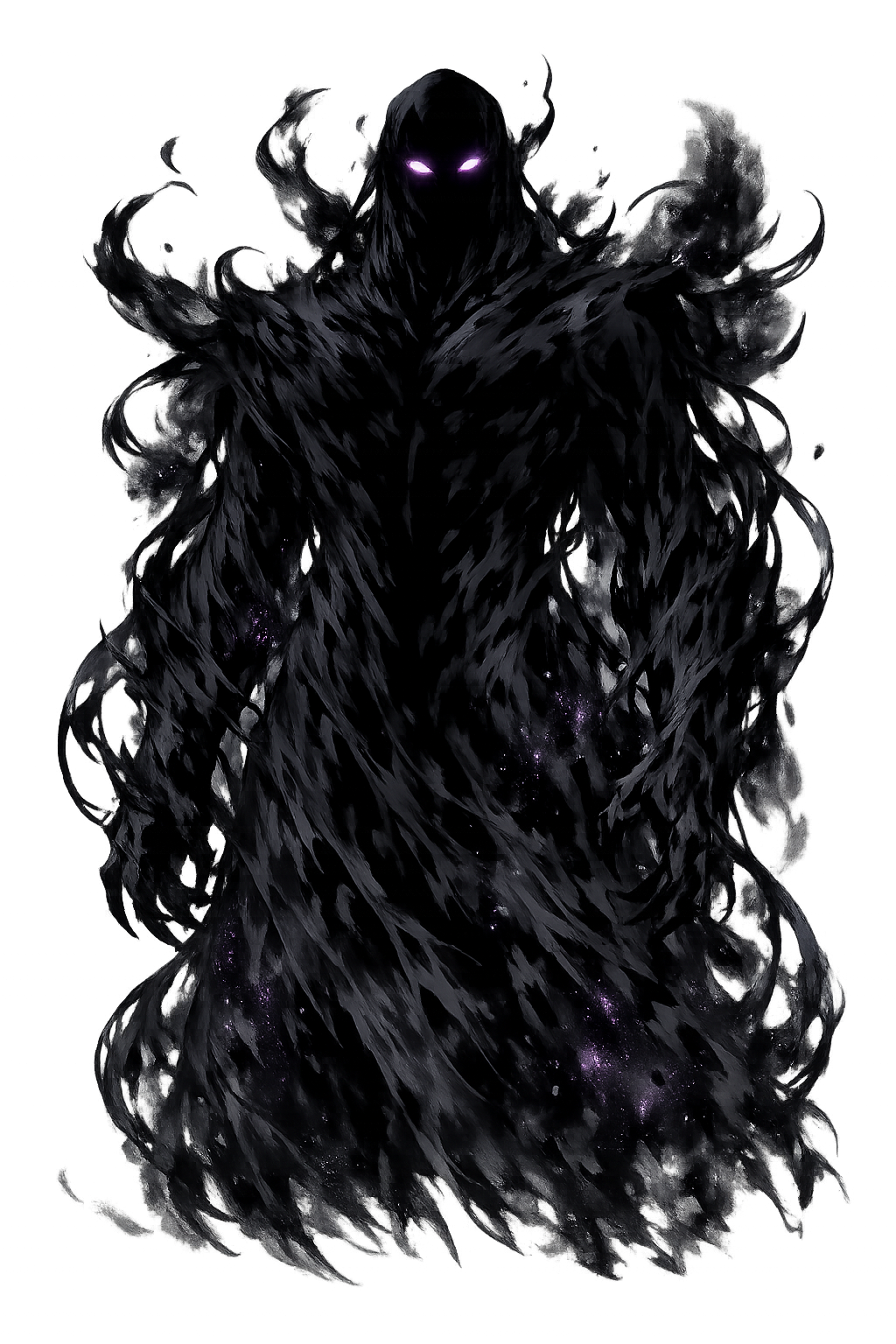
No surviving work of Greek or Roman art shows Érebos as a figure, and the silence is nearly total: vase-painters loved his sister Nyx, striding veiled and star-flecked across South Italian pots, but the brother never joins her. His portrait had to be written. Homer supplies the features — the land of the Cimmerians wrapped in mist and cloud, where the sun never looks down (Odyssey 11.13–19) — fog as his face, the underworld's gate as his frame. Hesiod gives him no body at all, only a birth-order. Later centuries painted Night as a woman and reassigned the male name to the pit beneath the world. Readers searching for his image should look to the Odyssey's fog: it is the only canvas the tradition ever offered him, and it renders him perfectly.

06

Reception & Transformation

The name after its own age — transmission, translation, survival

Afterlives

Érebos was carried forward by the most conservative vehicle in antiquity: the school text. Hesiod's Theogony crossed the Middle Ages in a handful of Byzantine codices — above all the tenth-century Laurentian manuscript — with ancient and medieval scholia framing the primordial's two lines of biography, and the Odyssey's Cimmerians rode the same manuscript road. Printing multiplied him from the late fifteenth century, and Renaissance mythographers such as Natale Conti sorted the primordials into pedigrees that Europe's poets and painters mined for two centuries. His second journey was linguistic: nineteenth-century comparative philology connected Érebos with Sanskrit rájas and a reconstructed root *h₁regʷos, turning a Greek personification into evidence for an Indo-European word for the dark. That afterlife continues in Beekes's etymological dictionary and in every classroom where the kinship of Greek, Sanskrit, and Armenian darkness is diagrammed. Modern classical scholarship — West's edition of the Theogony, structural readings of the primordial succession — keeps Érebos exactly where Hesiod put him: second of all things, still generating interpretation.

Identifications Across Traditions

The Romans adopted the Greek name directly as Erebus and deepened it: Virgil places the guilty dead in Tartarus and lets the surrounding darkness swallow the light (Aeneid 6.126–129, where the path into the underworld 'plunges into the darkness, into Erebus's vast gulf'), and Statius makes Erebus a standing synonym for the infernal depths. Christian writers took the word as a classical name for Hell and its antechamber — Milton's Chaos and 'dark Erebus' stand at the threshold of Paradise Lost — and the vocabulary of esotericism later reused Érebos for the primal darkness from which manifestation arises, a notion with deliberate echoes of Kabbalistic tohu wa-bohu and of Neoplatonic accounts of the One beyond being. The name thus travelled from cosmogony to demonology to metaphysics, keeping its spelling and its office: the first dark, in whatever system needs one.

Modern Legacy

Érebos survives as the archetype of primordial darkness. James Clark Ross named Mount Erebus, the active volcano on Ross Island in Antarctica, after one of his ships in 1841 — and the HMS Erebus later became immortal in the disastrous Franklin expedition of 1845, freezing the name into English literature as the emblem of oblivion. Fantasy and science fiction mine it for spaceships, demons, and dark dimensions; astronomy has used it for features on distant moons; heavy metal and horror invoke it as the original shadow. Few Greek names have travelled so far from their cosmogonic origin while keeping the same spelling — and in every stop of the journey, Érebos has meant the same thing: the dark that was there first.

07

The Meditation

What Érebos means — beyond the dictionary

Érebos is the darkness that is not evil. It is simply first. Before light, before form, before the gods begin their quarrels, there is the shadow that makes bright things visible. We moderns tend to moralize darkness — we call it ignorance, despair, or danger — but the Greek primordial is more neutral and more necessary. Without Érebos there is no contrast, no outline, no day.

To restore the acute accent on Érebos is to hear the name as a rising note out of silence. It is the sound of darkness being named rather than feared. Every creation myth needs such a moment: the first word spoken into the void, the first recognition that absence is also a kind of presence.

08

Frequently Asked Questions

Common questions about Érebos, Darkness, and Unicode restoration

01How do you pronounce Érebos?

In reconstructed pronunciation, Érebos is /é.re.bos/ — approximately "EH-reh-BOSS" — first syllable pitched high like 'EH'; second like 'reh'; third like 'boss' with a clear b.

02What does Érebos mean?

Érebos means Darkness in the greek tradition.

03What are the symbols of Érebos?

Érebos is associated with Mist and cloud (The mist and cloud that wrap the Cimmerian land at the edge of the world, where the sun never shines (Odyssey 11.13–19)), Consort of black Night (Born together with black Nyx, he fathers Aithḗr and Hēméra upon her (Theogony 123–125)), Cavern mouth (The entrance to the underworld, often identified with volcanic or marshy places), Shadow (The absence of light as a positive, generative power).

04Why restore Érebos in Unicode?

Plain ASCII erebus strips the stress, length, and script that make the name specific. Unicode restoration returns the name to its original written dignity.

05What is the most important myth about Érebos?

“The Second Primordial” — the Theogony story that anchors the mythology of Érebos, told in full on the lore page.

09

Scholarly Sources

The philological foundations of this restoration

Every claim on this page is grounded in established scholarship. The orthographic restorations follow disciplinary convention. The etymological chain follows the best available reference works. This is not invention — it is resurrection through scholarship.

◈

Lexicography & Philology

  • Liddell, H. G., Scott, R., & Jones, H. S. A Greek-English Lexicon. Oxford: Clarendon Press, 9th ed. 1996.
◎

Primary Texts

  • Hesiod
  • Hesiod, Theogony 116–125, 748–757
  • Homer, Odyssey 10.504–540; 11.13–19
  • Virgil, Aeneid 6.126–129
◉

Archaeology & Art History

  • Material evidence — iconography, inscriptions, and temple archaeology — for Érebos and related cults.
✦

Religious Studies

  • Allen, Vox Graeca
  • Milton, Paradise Lost
  • Orphic fragments
  • West, The Orphic Poems
Return

The Surface Awaits

You have traced the name from its earliest attestation to its Unicode restoration. Now return to the myth. The story is where the name lives.

Back to Lore
Érebos mascot