
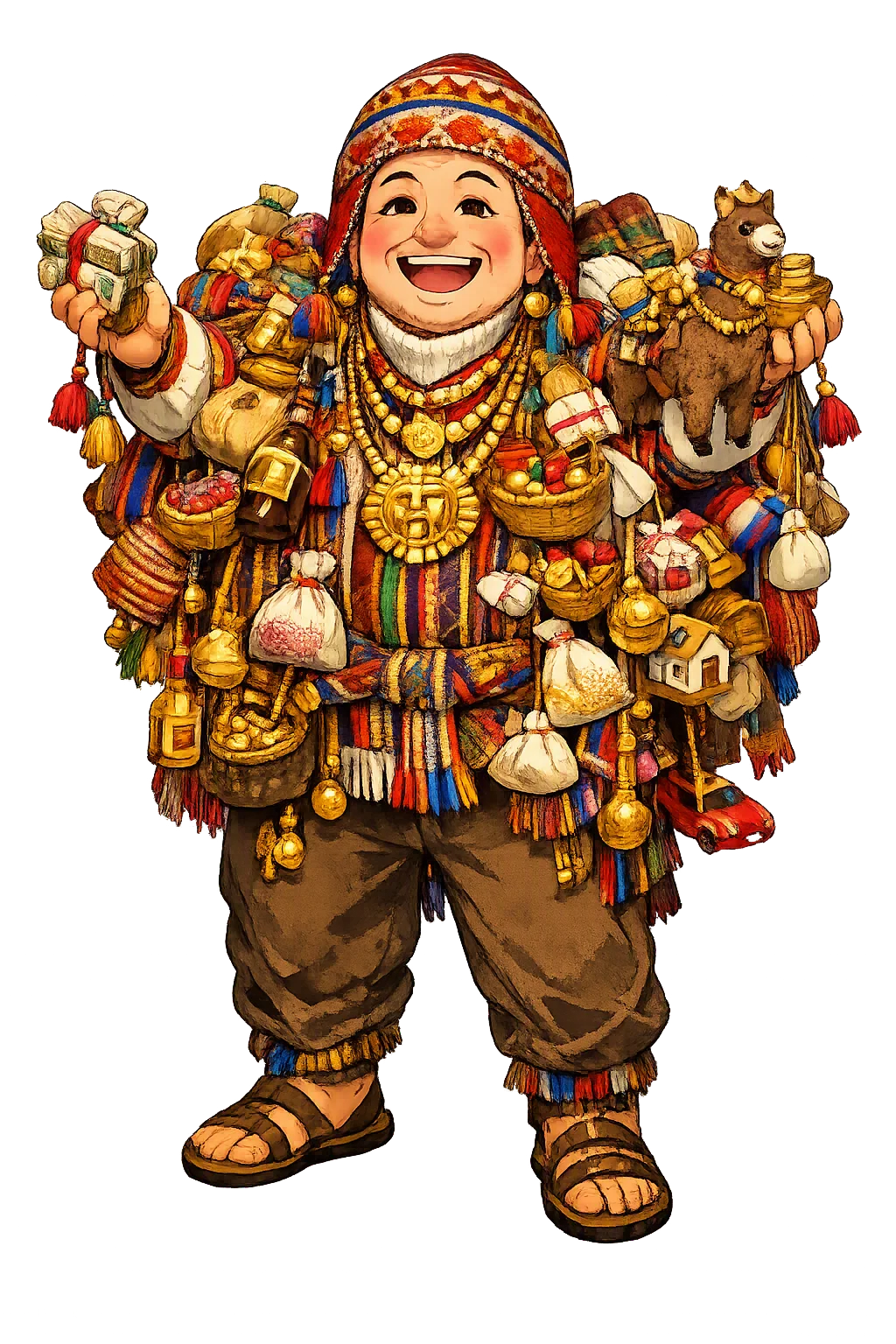
The Cult
Ekeko never had a temple, and that is the point of his cult. His sanctuary is the household altar: Bernabé Cobo saw the little idol in 1653 loaded with miniature packs and fed so the family would not lack food, clothing, or coin. The worship is intimate and continuous — coca and grain, alcohol sprinkled in ch'alla, tiny goods renewed on his back — and its specialists are the householders themselves, aided by the yatiris, the Aymara ritual men who bless purchases at the fair. Once a year the cult goes public: on 24 January the Alasitas fair floods the streets of La Paz with miniatures of everything desired, each object bought and blessed twice, by priest and yatiri alike, and lodged with the god to be grown real during the year. The extirpation campaigns that raged in the Andes after 1610 targeted exactly such household idols; Ekeko’s survival in kitchens and stalls is the cult’s own answer. Ancient attestation is another matter: the Tiwanaku burden-carriers buried a thousand years before his name was written are his ancestors by resemblance, not by proof.