PuniCodex

Extended Lore

ᛁᚱ Eir

Etymology · Phonology · Orthography · Cultural Legacy · Primary Sources

Tier 2 Eir
Eir — Healing, Mercy, Medical Skill
01

Quick Facts

Essential information about Eir, Healing, Mercy, Medical Skill

Original Scriptᛁᚱ
Unicode RestorationEir
Reconstructed Pronunciation/ˈɛir/
PantheonNorse
DomainHealing, Mercy, Medical Skill
MeaningHelp, mercy
ClassificationTier 2
Primary DomainEir
Sacred SymbolsLyfjaberg, The nine maidens, The altar at the holy place, Menglöð's knee, The name itself
02

Etymology & Word Family

From original script to Unicode restoration

Original Script ᛁᚱ Eir — "Help, mercy"
Unicode Restoration Eir Restored stress, length, and script
Modern ASCII eir Plain-ASCII fallback

Eir is Tier 2 by the mechanical rule: the normalized Old Norse form is already plain ASCII — no diacritic, no distinctive letter — so the ASCII alphabet loses nothing in copying it. Three letters and a capital; the goddess's standing in the sources is entirely beside the orthographic point.

03

Unicode Character Breakdown

Character-by-character philological analysis

CharacterUnicodeNameBlockPhonetic Role
EU+0045Latin Capital Letter EBasic LatinSame
iU+0069Latin Small Letter IBasic LatinSame
rU+0072Latin Small Letter RBasic LatinSame

The Tier 2 classification reflects how much of the original phonology this restoration preserves — stress and vowel length for Greek names, distinctive letters and diacritics for every other tradition.

04

Cultural Significance

From ancient cult to modern Unicode

Ancient Domain

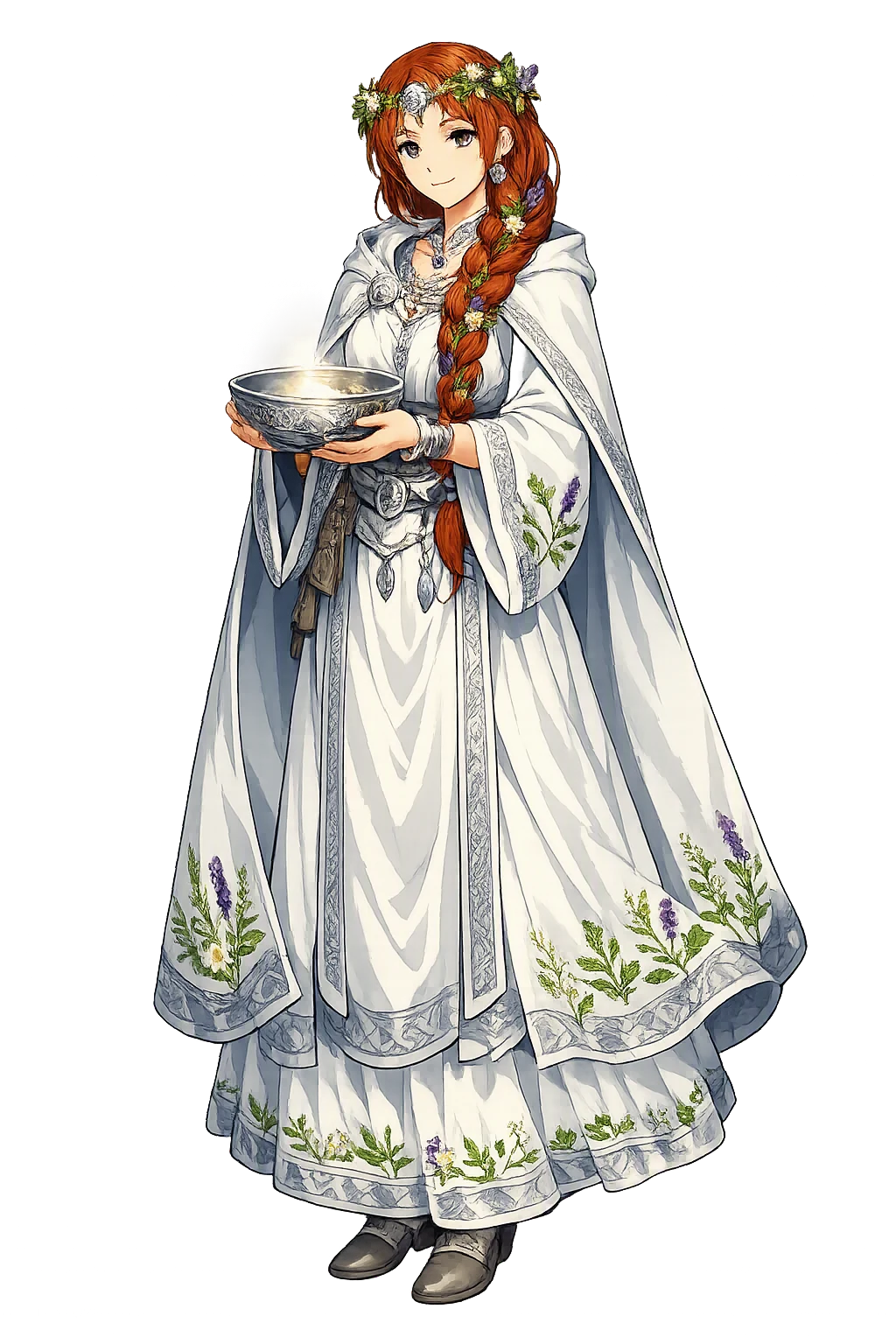
Eir is the Norse tradition's one physician: third in Snorri's catalogue of the ásynjur, defined by a single superlative — læknir beztr, 'the best of healers' — and named again among the healing maidens of Lyfjaberg in Fjölsvinnsmál. Her name is the common noun for mercy itself.

Eir in Later Traditions

No interpretatio romana ever found Eir a Latin name: the classical authors who mapped the northern gods left her unmentioned, and the medieval Icelandic writers who knew her wrote no equation. Her real company is native. The Germanic world knew healing as a craft guarded by female figures and spoken charms — the Second Merseburg Charm, the one surviving Old High German healing spell with divine names, binds Wodan and the healing of a wrenched foot in a formula that has Norse echoes, and the Edda's own Oddrúnargrátr gives a mortal woman, Oddrún, the role of birth-helper 'come from the southland'. Eir is the divine end of that continuum: the household of healing maidens on Lyfjaberg raised to the rank of ásynja. Modern comparisons with Greek healing deities are analogies of office, not borrowings — the name eir is transparently Norse, the common noun for mercy, and the tradition grew its physician out of its own vocabulary of help.

Modern Legacy

Eir's afterlife is quiet and remarkably alive. The name never died in the North: Eir remains a living Icelandic given name, and its family survives in the everyday verb eira, 'to spare, to show mercy'. Modern Heathen and Ásatrú practice, which keeps few of the lesser ásynjur in regular use, has made room for her precisely because her office is the one every household needs — she is invoked in healing rites as the physician Snorri named. Popular culture reached her through the valkyrie list: an Eir numbered among the valkyries appears in modern games and fiction, usually in the healer's role the þulur and Gylfaginning between them suggest. Her scholarly afterlife is disproportionate to her dossier: the two-sentence goddess of Gylfaginning 35 is the standing proof, cited in every handbook, that the Norse pantheon contained an explicit deity of medicine.

Unicode Restoration as Cultural Act

Restoring Eir in a domain name is more than orthographic accuracy. It is a statement that the internet should recognize the full range of human writing — not only the ASCII keyboard.

05

Frequently Asked Questions

Common questions about Eir, Healing, Mercy, Medical Skill, and Unicode restoration

01How do you pronounce Eir?

In reconstructed pronunciation, Eir is /ˈɛir/ — approximately 'AYR' — one syllable: glide from the e of 'bed' into 'ee', and close with a light trilled r; modern Icelanders say it nearly the same way..

02What does Eir mean?

Eir means Help, mercy in the norse tradition.

03What are the symbols of Eir?

Eir is associated with Lyfjaberg (The mountain of remedies — healing made landscape, the high place where help is found), The nine maidens (Protection, brightness, joy, mercy: the named company whose gifts are the inventory of recovery), The altar at the holy place (The covenant of Fjölsvinnsmál — sacrifice answered with deliverance from sickness), Menglöð's knee (The healing maidens sit at the necklace-glad one's knees — mercy attendant upon splendour), The name itself (Eir, 'help, mercy': the remedy and the plea for it in a single word).

04Why restore Eir in Unicode?

Plain ASCII eir strips the stress, length, and script that make the name specific. Unicode restoration returns the name to its original written dignity.

05What is the most important myth about Eir?

Snorri's catalogue of the ásynjur runs like a court roll: Frigg is highest; second is Sága at Søkkvabekkr; and then, without genealogy, marriage, or adventure, the third entry: 'Eir is the third: she is the best physician' — Eir er þriðja: hon er læknir beztr. That is the whole notice. No hall is named, no parentage given, no deed narrated. In a catalogue that finds something to say about every goddess — Fulla's headband, Gefjun's plough, Syn's door-keeping — Eir alone is defined by a profession and a superlative, and the profession is medicine.

06

Scholarly Sources

The philological foundations of this restoration

Every claim on this page is grounded in established scholarship. The orthographic restorations follow disciplinary convention. The etymological chain follows the best available reference works. This is not invention — it is resurrection through scholarship.

Lexicography & Philology

  • Cleasby-Vigfusson
  • Zoëga

Primary Texts

  • Snorri Sturluson, Prose Edda: Gylfaginning 35 (Eir third among the ásynjur, 'the best physician'); Skáldskaparmál þulur (Eir among the valkyrie names)
  • Poetic Edda: Fjölsvinnsmál 38-40 (the nine maidens at Menglöð's knees; the promise of protection from sickness), in the Svipdagsmál pair

Archaeology & Art History

  • Material evidence — iconography, inscriptions, and temple archaeology — for Eir and related cults.
  • Eir is an entirely textual goddess: no runestone invokes her, no votive deposit or place-name can be securely claimed for her, and no image is identified as hers. Her witnesses are manuscripts. The Gylfaginning notice survives with the Prose Edda — above all the Codex Regius (GKS 2367 4to, c. 1300) and its sister codices — while Fjölsvinnsmál hangs by a thinner thread: the poem is not in the Codex Regius of the Poetic Edda at all but is preserved only in seventeenth-century paper manuscripts, and it was nineteenth-century editors who first joined it with Grógaldr as the two halves of Svipdagsmál. The late transmission has made some scholars cautious about the poem's age, but its language and metre are accepted as medieval, and its Lyfjaberg catalogue remains the only narrative context in which the physician of the ásynjur is ever seen at her post.

Religious Studies

  • The Second Merseburg Charm (Wodan's healing charm), in Braune-Ebbinghaus, Althochdeutsches Lesebuch
  • Cleasby-Vigfusson, An Icelandic-English Dictionary, s.v. eir ('help, mercy, clemency'); Zoëga, A Concise Dictionary of Old Icelandic, s.v. eir, eira, lyf
  • Simek, Dictionary of Northern Mythology; Orchard, Dictionary of Norse Myth and Legend; Lindow, Norse Mythology: A Guide — s.v. Eir, Lyfjaberg, Menglöð (the valkyrie-list double attestation and the Freyja question)
Return

The Surface Awaits

You have traced the name from its earliest attestation to its Unicode restoration. Now return to the myth. The story is where the name lives.

Back to Lore
Eir mascot