PuniCodex

Extended Lore

Ecne

Etymology · Orthography · Cult · Iconography · Reception · Sources

Tier 2 Ecne
Ecne — Knowledge, Wisdom
01

Quick Facts

Essential information about Ecne, Knowledge, Wisdom

Scholarly TransliterationEcne
Unicode RestorationEcne
Reconstructed Pronunciation/ˈeː.ɡnʲe/
PantheonCeltic
DomainKnowledge, Wisdom
MeaningKnowledge
ClassificationTier 2
Primary DomainEcne
Sacred SymbolsThe nine hazels of wisdom, The well of Segais / Connla's well, The salmon of knowledge, The nuts of knowledge, Imbas, the great knowledge
02

Etymology & Word Family

From original script to Unicode restoration

Scholarly Transliteration Ecne Ecne — "Knowledge"
Unicode Restoration Ecne Canonical scholarly spelling — ASCII-identical
Modern ASCII ecne Plain-ASCII fallback

The name Ecne reaches the modern world through scholarly transliteration of the celtic tradition. Because the conventional spelling uses only Latin letters, its Unicode and ASCII forms coincide — the tradition it carries is in the name itself, not in diacritics.

03

Unicode Character Breakdown

Character-by-character philological analysis

CharacterUnicodeNameBlockPhonetic Role
EU+0045Latin Capital Letter EBasic LatinSame, capitalized
cU+0063Latin Small Letter CBasic LatinSame
nU+006ELatin Small Letter NBasic LatinSame
eU+0065Latin Small Letter EBasic LatinSame

The Tier 2 classification here reflects fidelity to the attested tradition, not recovered diacritics: every character of Ecne already survives in ASCII. What the restoration preserves is the canonical spelling itself — the form scholarship standardised.

04

Cult & Worship

How the sacred was kept — rites, sanctuaries, remains

The Cult

No cult of Écne is attested, and none should be constructed: he is a personified noun — 'knowledge' — given a place in a list of the Túatha Dé Danann, not a deity with a shrine, priesthood, or festival. Ireland's learned tradition worshipped with its head rather than at altars, and the mythic geography that belongs to Écne's complex — the well of Segais beneath the nine hazels — is cosmology, not cult-site: no spring has ever been excavated into evidence for him. What can be said honestly is slender but real: the Irish filed wisdom among the divine, named it, and built the doctrine that knowledge is caught, like a salmon, never owned.

In the Earth

Écne is an entirely textual figure: no ogham stone names him, no votive inscription invokes him, and Irish paganism generally left literature rather than dedications. The witnesses are manuscripts. Sanas Cormaic, the glossary that folds the word into the hazel-and-nut doctrine, is preserved in the great late-medieval Irish codices, among them the Yellow Book of Lecan and the Book of Ballymote; the Boyhood Deeds of Finn survives in late-medieval Irish manuscript tradition and was first put into modern print by Kuno Meyer in the opening volume of Ériu (1904). The material afterlife of the tradition is civic rather than ancient: John Kindness's Salmon of Knowledge — the ten-metre, tile-clad Big Fish raised on Donegall Quay, Belfast, in 1999 — is the largest monument the wisdom complex has ever received, its scales printed with the texts and images of the city's memory.

05

Iconography

How Ecne was imaged across the ages

The Image

No image of Écne survives, nor could one: he appears in the record only as a word glossed and a name listed. The tradition's imagination spent itself on the emblems of the complex around him — the hazel whose nuts fall into the well of Segais, the salmon that eats them, the thumb a boy burns and puts to his mouth — and these are attributes of knowledge's story, not of a god with a body. Irish art of the period worked in high crosses, manuscript carpet-pages, and metalwork bosses, and none of it personifies him. Écne's portrait is a definition: Cormac's glossary, which explains the name, is as close as he ever came to a face.

06

Reception & Transformation

The name after its own age — transmission, translation, survival

Afterlives

Écne's afterlife is the afterlife of a glossary entry, and it ran through the schools of Irish philology. Sanas Cormaic, composed around 900 and ascribed to the bishop-king Cormac mac Cuilennáin, survived in the great late-medieval codices; antiquarian Ireland carried it into print through Whitley Stokes's Three Irish Glossaries (1862), and Kuno Meyer's edition of 1912 made the definition a citable fixture of the field. The wider recovery ran alongside: the Fenian cycle, which had carried the salmon and the thumb since the medieval Boyhood Deeds — first printed by Meyer in the opening volume of Ériu (1904) — put the wisdom-complex before every reader of Irish texts, and the Revival anthologies carried it into the schools. The scholarly tradition kept the personification alive in the dictionaries: the Royal Irish Academy's Dictionary of the Irish Language gives écne its head-word, and MacKillop's Dictionary of Celtic Mythology restored the figure to the reference shelf. A noun, glossed by the tenth century and referenced ever since — the journey is small, and completely documented.

Identifications Across Traditions

Écne has no cross-border attestation — no Gaulish altar, no Welsh namesake, and the handbooks claim none; the figure is Irish through and through, a word given a face. But the pattern the word belongs to crosses the Irish Sea intact. The Welsh tradition keeps its own story of wisdom arriving by accident to the wrong cook: the boy Gwion Bach, set to stir Ceridwen's cauldron of inspiration for a year and a day, takes the three scalding drops of awen meant for her son, and flees through shape after shape until he is reborn as Taliesin, the radiant-browed chief of poets. The parallel with Fionn and the salmon — the helper, the burn, the unmeant gift, the shape-changed transmission — is the standard comparison in the handbooks, and it maps a shared Celtic doctrine: poetic wisdom is a substance that passes from vessel to vessel, and no one can hold it by force. Within the Irish tradition Écne's closest kin are the other masters of knowing: Brigit, whom Cormac's Glossary calls the goddess the poets worshipped; Ogma, the honey-mouthed champion of eloquence; the Dagda, Ruad Rofhessa, the Red One of Great Knowledge; and Fionn himself, the wisdom-taster of the Boyne.

Modern Legacy

Écne's afterlife runs through the thing the name means rather than through the name itself. The salmon of knowledge became Ireland's emblem of learning: it crowns the crests of schools and universities, and John Kindness's great ceramic-clad Salmon of Knowledge — the Big Fish of Donegall Quay, Belfast, raised in 1999 — carries the hazel-and-well story in printed tiles across its scales, the most famous piece of public art in the city. The Boyhood Deeds of Finn, with the thumb and the salmon, entered every Irish schoolroom through Lady Gregory's retellings and the Fenian anthologies, so that the parable of wisdom tasted by accident is one of the best-known stories in the language. The old word itself faded from ordinary Irish — eolas and fios do its daily work now — but the learned tradition kept écne in the glossaries, and the revival's scholars, from Kuno Meyer onward, restored the figure to the reference books where it stands today: the Túatha Dé Danann's own personification of the sense that can be taken but not held.

07

The Meditation

What Ecne means — beyond the dictionary

Écne is the god of the thing that slips through the fingers — knowledge as water, as falling fruit, as the fish that must be eaten in the moment or not at all. Every other figure in this collection is measured by what it holds: a hammer, a harp, a hoard, a hall. Écne holds nothing, because the tradition understood that the highest sense cannot be warehoused. The hazels drop their nuts on their own hour; the well gives only to those who stand downstream; the salmon yields its wisdom to the burned thumb of a boy who was told to wait.

That is the doctrine's edge, and it has not blunted in twelve centuries. The poet Finnéces kept vigil for seven years and the knowledge went to his kitchen-boy — not as injustice, but as the nature of the gift. What Écne names is the difference between information and understanding: the first can be copied, stored, and owned; the second must happen to you. The word survives in the glossaries like a sign at the head of a river — this way to the water; bring nothing to carry it in.

08

Frequently Asked Questions

Common questions about Ecne, Knowledge, Wisdom, and Unicode restoration

01How do you pronounce Ecne?

In reconstructed pronunciation, Ecne is /ˈeː.ɡnʲe/ — approximately 'EHG-nyeh' — hold a long tense 'eh' like French été, let the c melt into a soft g before the n, and finish with a light y-glide on the n and a short final vowel.

02What does Ecne mean?

Ecne means Knowledge in the celtic tradition.

03What are the symbols of Ecne?

Ecne is associated with The nine hazels of wisdom (Wisdom drops its fruit into the water, not into the hand — knowledge comes by its own season, never by demand), The well of Segais / Connla's well (The hidden source under the world-tree's mirror — every stream of knowing traced back to one spring no map holds), The salmon of knowledge (The carrier that feeds on the fallen nuts and wears their marks — sense that can be taken, tasted, and passed on, but not held), The nuts of knowledge (Cormac's Glossary read the very word as 'from nuts' — the medieval tradition's own image of wisdom cracking its shell), Imbas, the great knowledge (The poet's sudden illumination — knowing as an event that happens to a person, not a property a person owns).

04Why restore Ecne in Unicode?

Ecne is written entirely in ASCII letters, so its restoration is about canonical fidelity rather than recovered diacritics: the temple fixes the name in its scholarly standard spelling, attested in the source tradition, instead of leaving it to drift.

05What is the most important myth about Ecne?

“The Name on the List” — the eDIL · MacKillop story that anchors the mythology of Ecne, told in full on the lore page.

09

Scholarly Sources

The philological foundations of this restoration

Every claim on this page is grounded in established scholarship. The orthographic restorations follow disciplinary convention. The etymological chain follows the best available reference works. This is not invention — it is resurrection through scholarship.

◈

Lexicography & Philology

  • Irish folklore
  • MacKillop
◎

Primary Texts

  • The Immram Brain (Voyage of Bran); Tochmarc Étaíne; Cóir Anmann; medieval Irish saga literature.
◉

Archaeology & Art History

  • Material evidence — iconography, inscriptions, and temple archaeology — for Ecne and related cults.
✦

Religious Studies

  • Dictionary of the Irish Language (Royal Irish Academy, 1913–76; eDIL 2019), s.v. écne — 'knowledge, wisdom'; the word and the proper name
  • Sanas Cormaic (Cormac's Glossary), ed. Kuno Meyer, Anecdota from Irish Manuscripts 4 (1912), s.v. écne — the medieval derivation from cnú, 'nut'
  • MacKillop, James, Dictionary of Celtic Mythology (Oxford, 1998), s.v. Écne; hazel; salmon of knowledge — the personification and the wisdom complex
  • Meyer, Kuno, ed. and trans., 'The Boyhood Deeds of Fionn' (Macgnímartha Finn), Ériu 1 (1904) — Finnéces, the salmon of knowledge, and the thumb
  • Hull, Vernam, ed. and trans., 'The Settling of the Manor of Tara', Ériu 8 (1916) — Fintan mac Bóchra, the salmon that remembers
  • Koch, John T., ed., Celtic Culture: A Historical Encyclopedia (ABC-CLIO, 2006), s.v. Taliesin, awen, salmon of knowledge — the Welsh parallel and the Irish complex
  • Mac Cana, Proinsias, Celtic Mythology (Hamlyn, 1970) — the Túatha Dé Danann and the Celtic habit of personification
  • Thurneysen, Rudolf, A Grammar of Old Irish, trans. Binchy and Bergin (DIAS, 1946) — the phonology of the name
Return

The Surface Awaits

You have traced the name from its earliest attestation to its Unicode restoration. Now return to the myth. The story is where the name lives.

Back to Lore
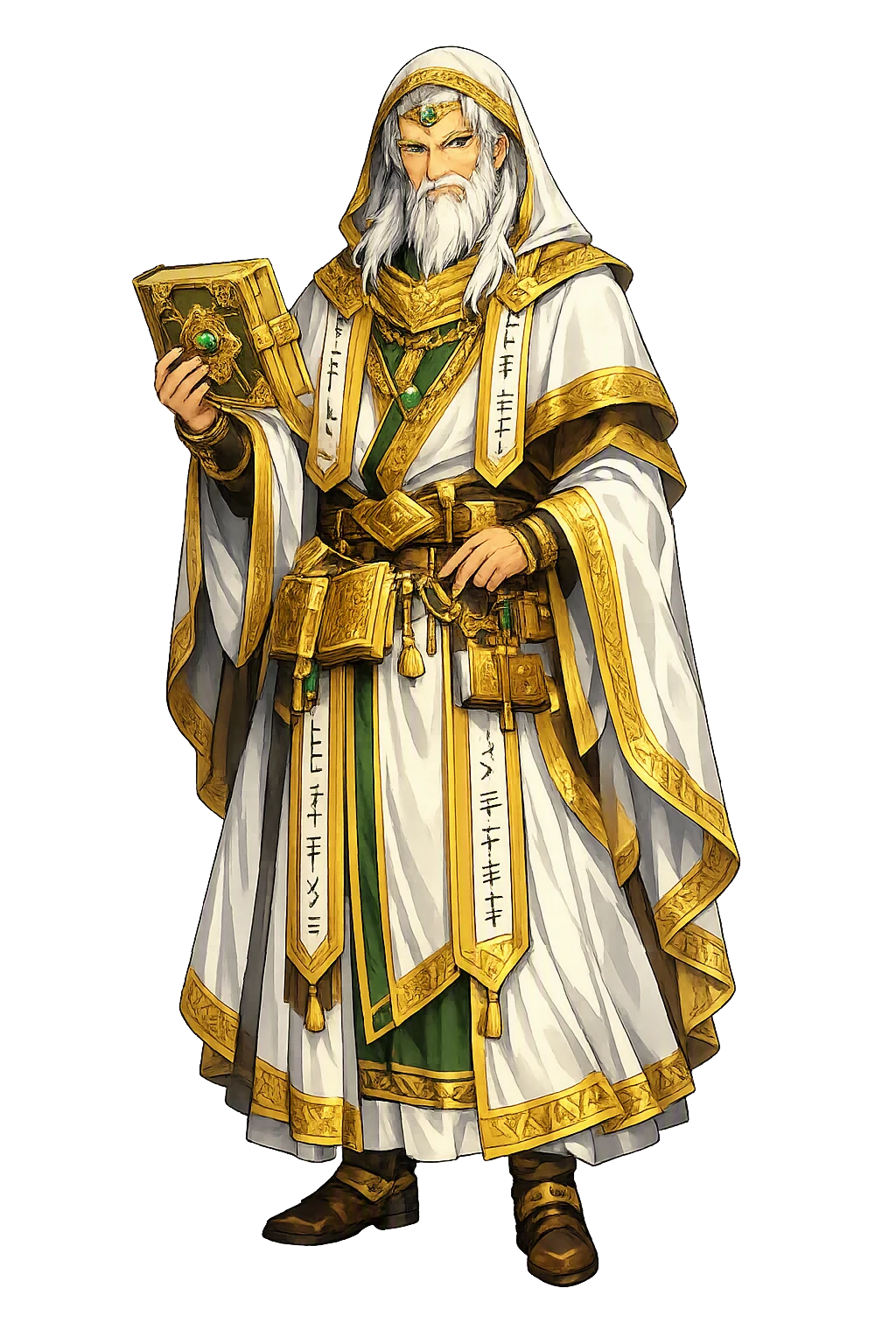
Ecne mascot