PuniCodex

Extended Lore

𒀭𒌉𒍣 Dumuzid

Etymology · Phonology · Orthography · Cultural Legacy · Primary Sources

Tier 2 Dumuzid
Dumuzid — Shepherds, Vegetation
01

Quick Facts

Essential information about Dumuzid, Shepherds, Vegetation

Original Script𒀭𒌉𒍣
Unicode RestorationDumuzid
Reconstructed Pronunciation/duˈmu.zid/
PantheonMesopotamian
DomainShepherds, Vegetation
MeaningFaithful son
ClassificationTier 2
Primary DomainDumuzid
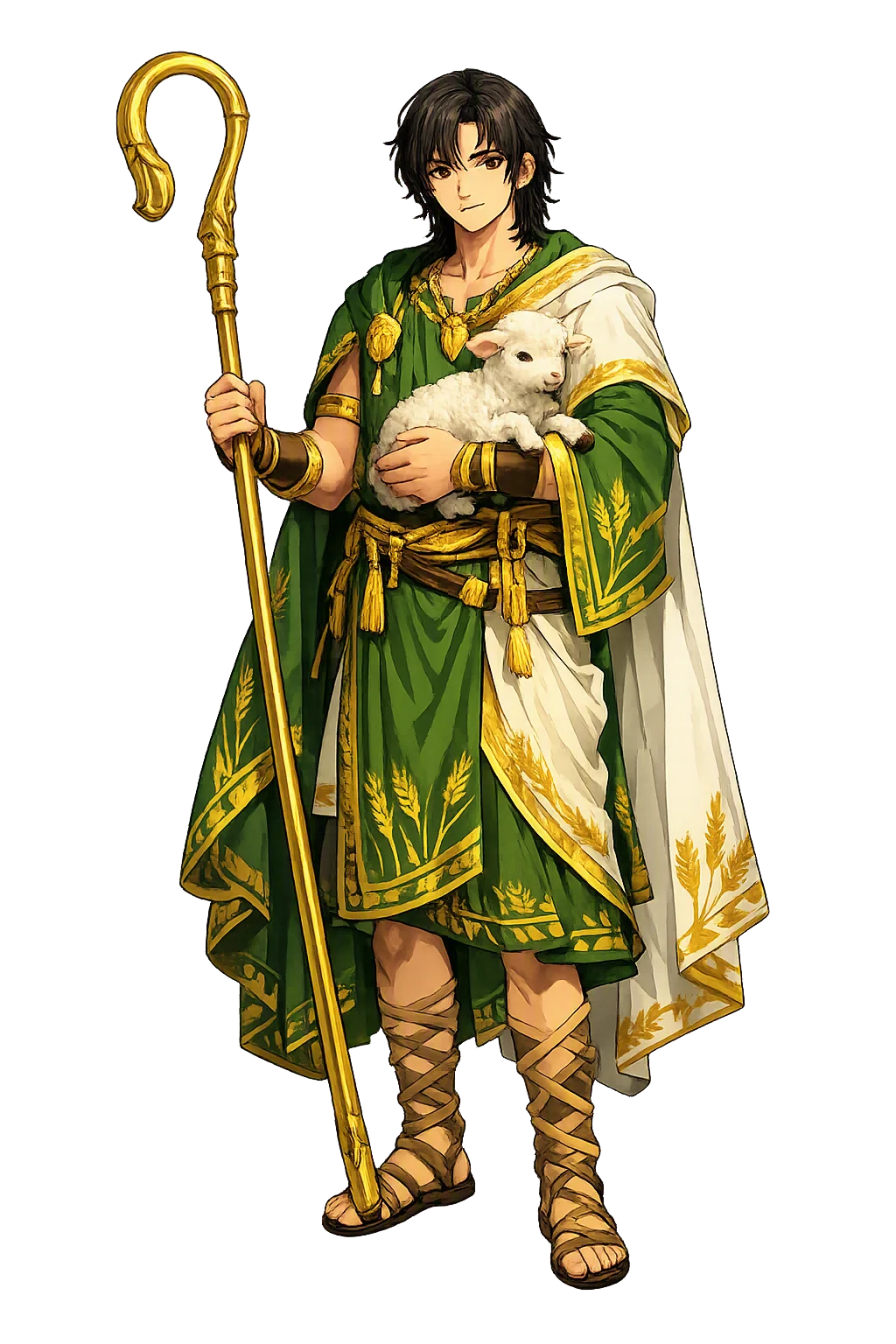
Sacred SymbolsShepherd's crook, Milk pail and churn, Date palm, Wool and fleece, Wedding ring
02

Etymology & Word Family

From original script to Unicode restoration

Original Script 𒀭𒌉𒍣 Dumuzid — "Faithful son"
Unicode Restoration Dumuzid Restored stress, length, and script
Modern ASCII dumuzid Plain-ASCII fallback

Dumuzid is Tier 2: the canonical restoration uses plain Latin letters with no distinctive diacritic or non-ASCII letter. The Sumerian cuneiform signs carry meanings — dumu 'son' and zid 'faithful' — that the Latin form cannot display; it is therefore a readable scholarly transliteration rather than a phonological reconstruction.

03

Unicode Character Breakdown

Character-by-character philological analysis

CharacterUnicodeNameBlockPhonetic Role
DU+0044Latin Capital Letter DBasic LatinSame, capitalized
uU+0075Latin Small Letter UBasic LatinSame
mU+006DLatin Small Letter MBasic LatinSame
uU+0075Latin Small Letter UBasic LatinSame
zU+007ALatin Small Letter ZBasic LatinSame
iU+0069Latin Small Letter IBasic LatinSame
dU+0064Latin Small Letter DBasic LatinSame

The Tier 2 classification reflects how much of the original phonology this restoration preserves — stress and vowel length for Greek names, distinctive letters and diacritics for every other tradition.

04

Cultural Significance

From ancient cult to modern Unicode

Ancient Domain

Dumuzid is the Sumerian shepherd made divine — the 'faithful son' whose name joins dumu ('son') and zid ('true, faithful, right'). He is the lord of the sheepfold, the provider of milk and wool, and the bridegroom of Inanna in the sacred marriage that guarantees the land's fertility. Unlike the storm-gods who rule by force, Dumuzid reigns through the gentle goods of the pasture: grass, water, flock, and the cyclic return of vegetation.

His myth is also the myth of seasonal loss. In the Descent of Inanna he is chosen to take the goddess's place in the underworld for half the year, so that life and death may alternate on earth. Dumuzid is therefore not only the patron of shepherds but the archetype of the dying-and-rising vegetation god, mourned as Tammuz across the ancient Near East.

Dumuzid in Later Traditions

Dumuzid is the Sumerian original behind the Akkadian Tammūzu and the later West Semitic Tammuz. The Greeks knew a comparable dying-and-rising vegetation figure in Adonis; while Adonis has separate Northwest Semitic roots, the two share the same seasonal logic and were sometimes identified in later antiquity. In the Hebrew Bible, Tammuz appears as a foreign deity mourned in Jerusalem (Ezekiel 8:14), and the month Tammuz still bears his name in the Jewish calendar. Some Sumerian god-lists distinguish Dumuzid the Shepherd from Dumuzid-abzu, a chthonic or freshwater form; the traditions converged over time.

Modern Legacy

The name Tammuz outlived Mesopotamian cult by millennia. The fourth month of the Jewish calendar, Tammuz, preserves his memory, and the fast of the Seventeenth of Tammuz commemorates national calamity. In Arabic and Syriac folklore, Tammuz remained a byword for the death of vegetation and the summer drought. Modern scholarship treats Dumuzid as a classic example of the 'dying god' type alongside Osiris, Attis, and Adonis — though each figure has distinct local roots. His myth still shapes how we imagine the cycle of seasons, the return of spring, and the intimate link between divine love and agricultural fertility.

Unicode Restoration as Cultural Act

Restoring Dumuzid in a domain name is more than orthographic accuracy. It is a statement that the internet should recognize the full range of human writing — not only the ASCII keyboard.

05

Frequently Asked Questions

Common questions about Dumuzid, Shepherds, Vegetation, and Unicode restoration

01How do you pronounce Dumuzid?

In reconstructed pronunciation, Dumuzid is /duˈmu.zid/ — approximately 'doo-MOO-zid' — the first two syllables are soft and round, the last closes crisply like 'zid'..

02What does Dumuzid mean?

Dumuzid means Faithful son in the mesopotamian tradition.

03What are the symbols of Dumuzid?

Dumuzid is associated with Shepherd's crook (The emblem of his pastoral rule and the surrogate kingship enacted in the sacred marriage), Milk pail and churn (The dairy abundance of the flock; the goods that win Inanna's hand over the farmer's grain), Date palm (The sacred tree of Inanna's garden and the vegetative power that flourishes in Dumuzid's season), Wool and fleece (The textile wealth of the sheepfold and the warm garment of the bridegroom), Wedding ring (The sacred marriage that binds heaven and earth, goddess and king, fertility and legitimacy).

04Why restore Dumuzid in Unicode?

Plain ASCII dumuzid strips the stress, length, and script that make the name specific. Unicode restoration returns the name to its original written dignity.

05What is the most important myth about Dumuzid?

In the Sumerian poem Dumuzi and Enkimdu (ETCSL 4.08.33), Inanna must choose between Dumuzid, the shepherd, and Enkimdu, the farmer. The shepherd boasts of milk, cheese, and wool; the farmer counters with grain, bread, and beer. Inanna prefers Dumuzid, and the poem dramatizes the prestige of the pastoral economy alongside agriculture in early Mesopotamia.

06

Scholarly Sources

The philological foundations of this restoration

Every claim on this page is grounded in established scholarship. The orthographic restorations follow disciplinary convention. The etymological chain follows the best available reference works. This is not invention — it is resurrection through scholarship.

Lexicography & Philology

  • ETCSL
  • Black-Green

Primary Texts

  • Epic of Gilgamesh, Tablet VI (Dumuzi/Tammuz listed among Ishtar's doomed lovers)
  • Hebrew Bible, Ezekiel 8:14 (women weeping for Tammuz at the Jerusalem temple)

Archaeology & Art History

  • Material evidence — iconography, inscriptions, and temple archaeology — for Dumuzid and related cults.
  • Cuneiform tablets from Nippur, Ur, and Uruk preserve Dumuzid's sacred-marriage songs and death laments. Neo-Assyrian and Late Babylonian copies of the Descent of Inanna and the Tammuz liturgies attest his continued cult into the first millennium BCE. The biblical witness in Ezekiel 8:14 confirms the rite's spread to Jerusalem, while the month-name Tammuz in the Jewish calendar preserves his memory into the present.

Religious Studies

  • ETCSL (Electronic Text Corpus of Sumerian Literature)
  • Black & Green, Gods, Demons and Symbols of Ancient Mesopotamia
  • Jacobsen, The Treasures of Darkness
  • Kramer, The Sumerians
  • Foster, Before the Muses
  • Descent of Inanna (ETCSL 1.4.1: Inanna chooses Dumuzid as her underworld substitute)
  • Dumuzi and Enkimdu (ETCSL 4.08.33: the shepherd wins the goddess from the farmer)
  • The Death of Dumuzid (ETCSL 4.08.32: Sumerian lament for the dying shepherd)
Return

The Surface Awaits

You have traced the name from its earliest attestation to its Unicode restoration. Now return to the myth. The story is where the name lives.

Back to Lore
Dumuzid mascot