
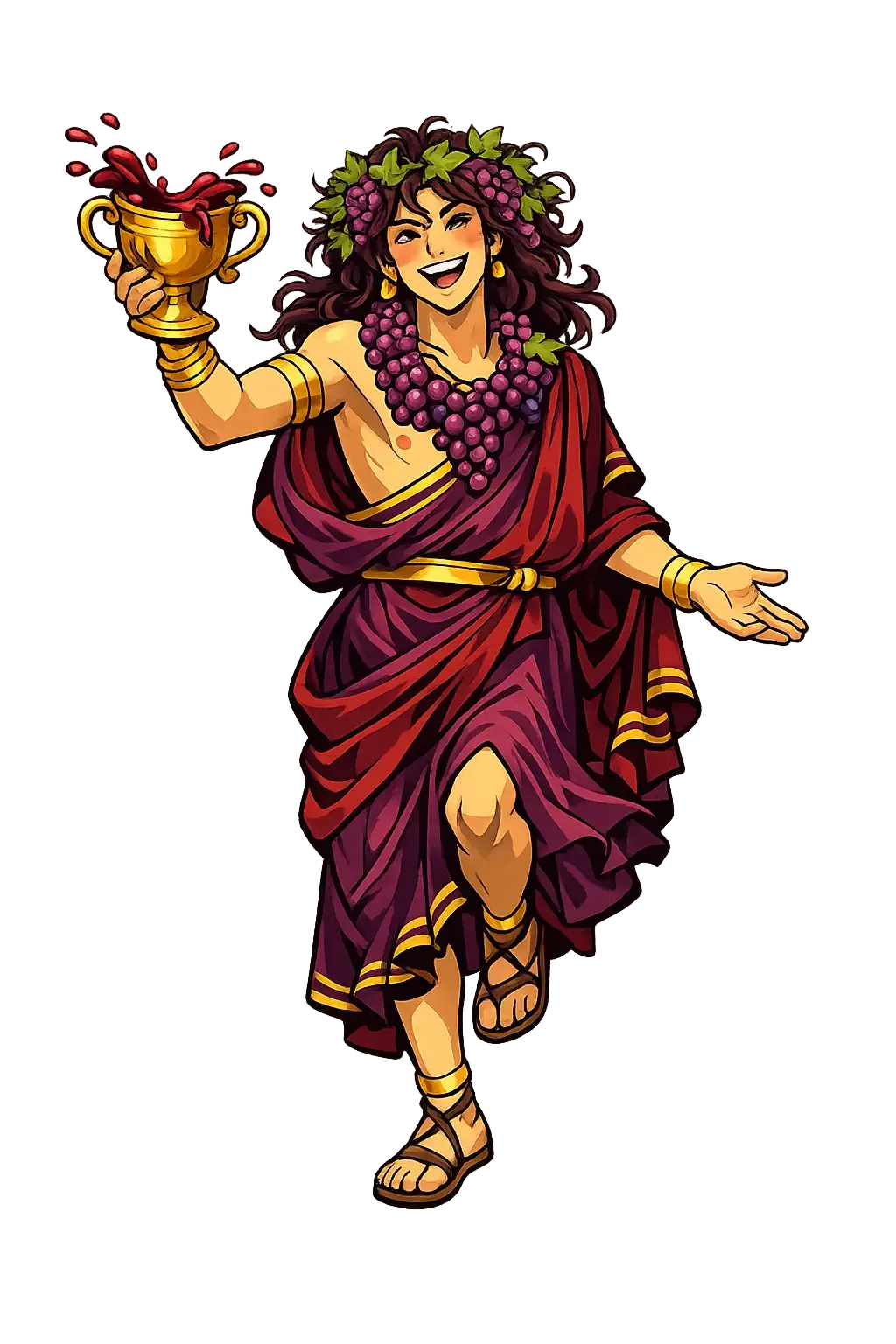
The Cult
Dionysos had the liveliest festival calendar in the Greek year. At Athens the cycle turned three times: the Anthesteria in Anthesterion, the feast of opened jars, when the Basilissa — wife of the Archon Basileus — held sacred marriage with the god in the Boukoleion; the Lenaia in Gamelion, home of comedy; and the great City Dionysia in Elaphebolion, where tragedy was first staged in the theatre below the Acropolis. Wine was the sacrament and the phallus was carried in procession; his worshippers gathered in thiasoi, and their women — the maenads — are epigraphically real: a third-century inscription from Magnesia records three of them brought from Phrygia to organize the local cult. His great seats were Thebes, Naxos, and Delphi, where he held the sanctuary through the winter months while Apollo was away. The material residue is abundant: choregic monuments such as Lysicrates' tripod of 335, ranks of Lenaia vases, and Bacchic gold tablets buried with initiates, promising a better road below the earth.