
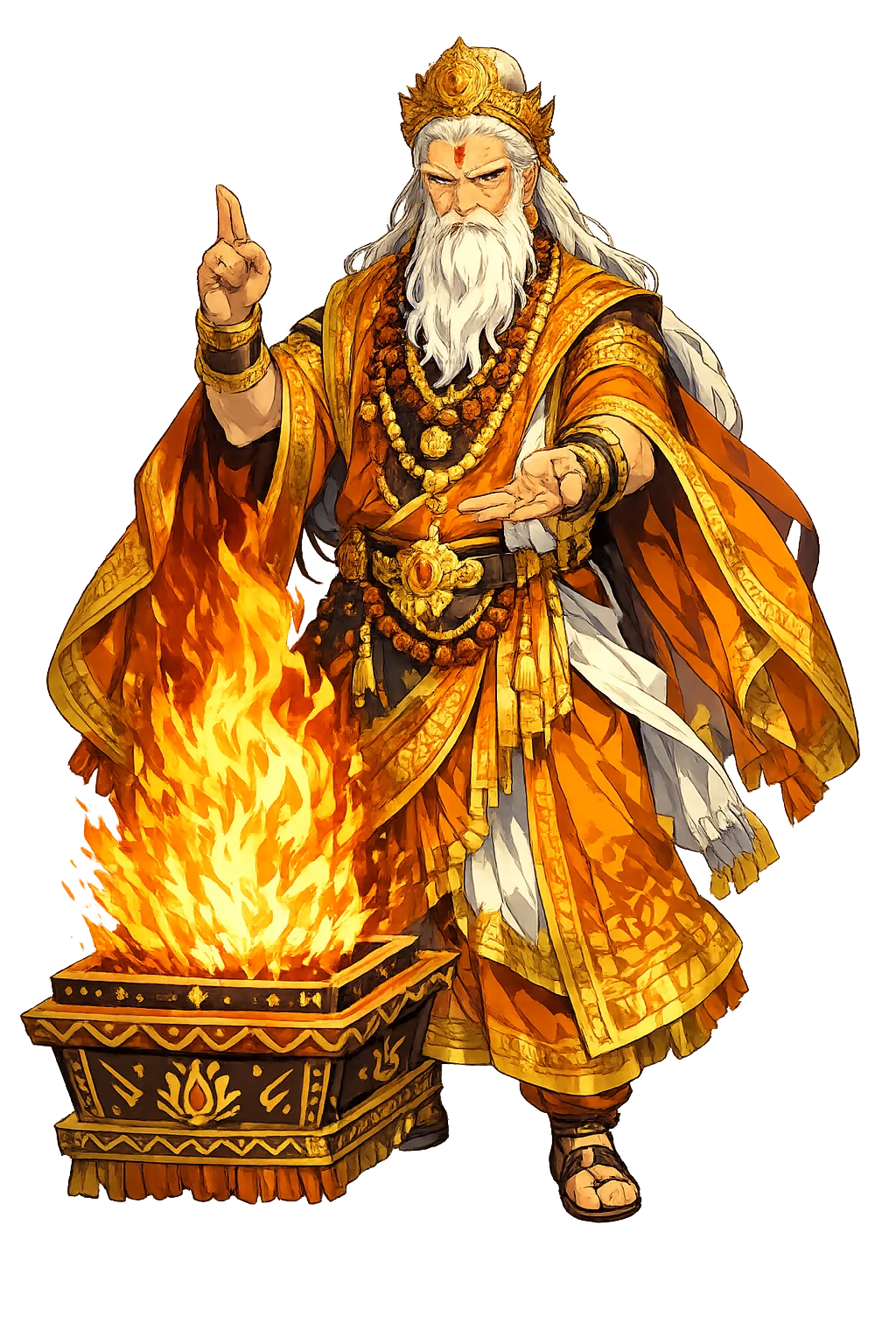
The Cult
Dakṣa never had a cult of his own — the texts that remember him best are the ones that record his ruin. As one of the Ādityas he received his share of the midday oblations in the Vedic fire rite, one name in a litany rather than the lord of a shrine. The only geography his story owns is Kankhal, on the Ganga at Haridwar, where the Daksheśvara temple stands on the traditional ground of the great sacrifice — continuously rebuilt, renovated in 1810 and 1962, but dedicated chiefly to Śiva, the very god Dakṣa excluded. His daughters' geography is far larger: the fifty-one Śakti Pīṭhas, from Kamakhya in Assam to Hinglaj beyond the Indus, mark where Satī's body fell, and their pilgrims walk his story without ever stopping at an altar of his. What votive evidence exists is performance — the yajña cycle retold in temple festival drama — rather than image or relic. The honest summary: a Prajāpati worshipped everywhere by inference, and almost nowhere by name.