PuniCodex

Extended Lore

Κοῖος Koîos

Etymology · Orthography · Cult · Iconography · Reception · Sources

Tier 1 Koîos.com
Koîos — Titan of Intellect
01

Quick Facts

Essential information about Koîos, Titan of Intellect

Original ScriptΚοῖος
Unicode RestorationKoîos
Reconstructed Pronunciation/kói̯os/
PantheonGreek
DomainTitan of Intellect
MeaningQuestioning, inquiry
ClassificationTier 1
Primary DomainKoîos.com
Sacred SymbolsCelestial axis, Torch, Pillar or obelisk, The polar star
02

Etymology & Word Family

From original script to Unicode restoration

Original Script Κοῖος Koîos — "Questioning, inquiry"
Unicode Restoration Koîos Restored stress, length, and script
Modern ASCII coeus Plain-ASCII fallback

The name Koîos carries the orthographic signature of the greek tradition: Κοῖος. Unicode restoration recovers what ASCII flattens.

03

Unicode Character Breakdown

Character-by-character philological analysis

CharacterUnicodeNameBlockPhonetic Role
KU+004BLatin Capital Letter KBasic LatinSpecial character
oU+006FLatin Small Letter OBasic Latino same
îU+00EELatin Small Letter I with CircumflexLatin-1 SupplementSpecial character
oU+006FLatin Small Letter OBasic LatinSpecial character
sU+0073Latin Small Letter SBasic Latins same

The Tier 1 classification reflects how much of the original phonology this restoration preserves — stress and vowel length for Greek names, distinctive letters and diacritics for every other tradition.

04

Cult & Worship

How the sacred was kept — rites, sanctuaries, remains

The Cult

No ancient cult of Koîos is attested. As one of the shadowy Titans of Hesiod's Theogony, he belongs to the cosmogonic generation that was overthrown rather than worshipped. There are no altars, priesthoods, or festivals bearing his name; the silence is consistent with the treatment of most defeated Titans, who recede into genealogy. His religious life is purely literary: the manuscript and scholia tradition that copied and glossed Hesiod. Pergamon's Great Altar narrates the Titanomachy in stone, but the figures are generic giants and gods, not a sanctuary to Koîos. Modern readers encounter him only through myth handbooks and classical dictionaries.

In the Earth

No temple, altar, or inscribed dedication to Koîos is known; a god without cult leaves no cult debris. His material record is instead textual: the manuscript tradition and ancient papyri of Hesiod's Theogony — the sole early witness to his name — and the vast apparatus of scholia and lexica that glossed it for two millennia. Monumentally, his generation's war is preserved in stone at Pergamon, where the Great Altar's Gigantomachy frieze (c. 180–160 BCE) shows gods and Giants locked in the combat in which the Titan order fell; the frieze names no Koîos, but it gives his war its surviving image. For a Titan, that is fitting archaeology: no coins, no votives — only the papyrus, the commentary, and one of antiquity's most violent works of art.

05

Iconography

How Koîos was imaged across the ages

The Image

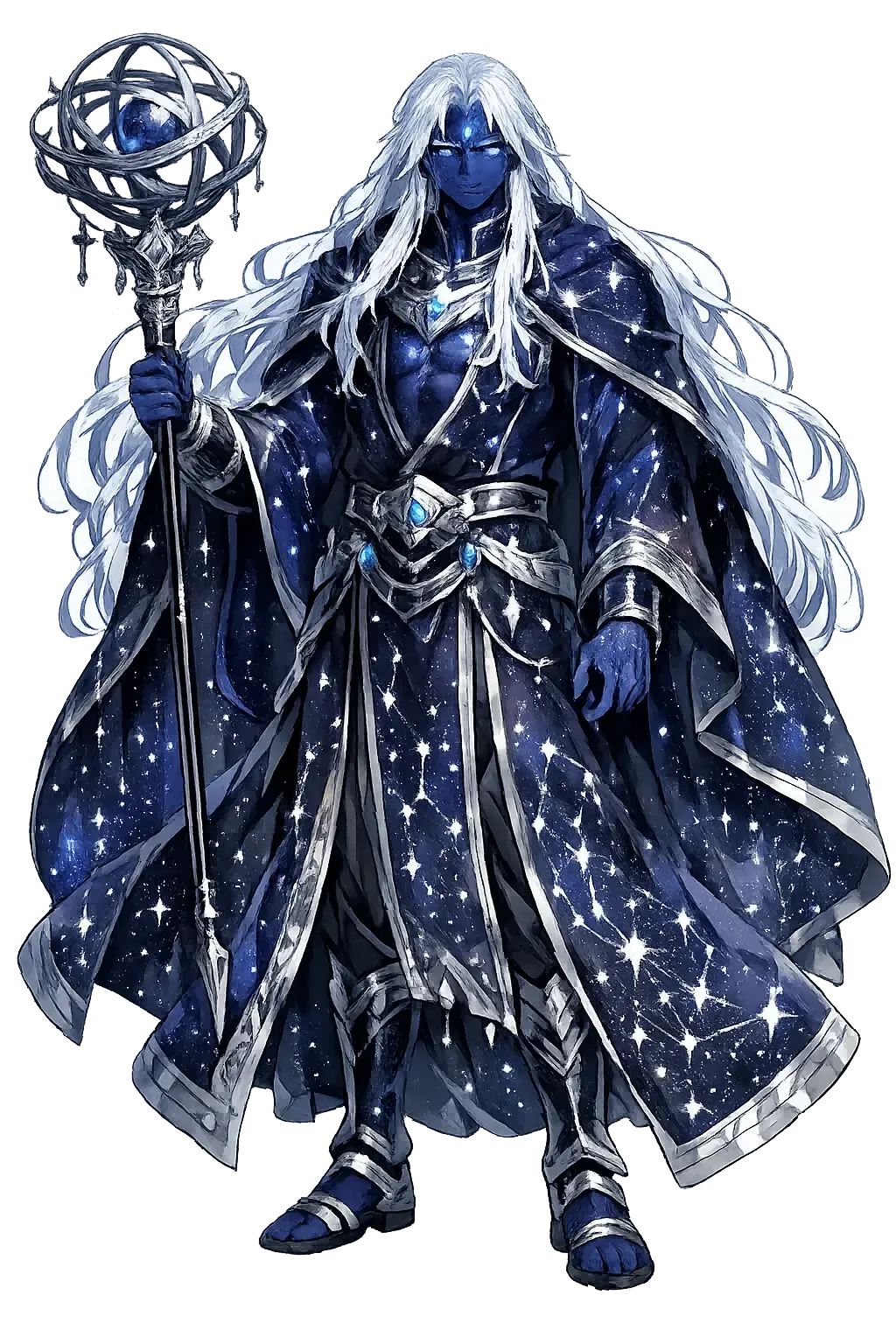
Koîos has no independent iconographic tradition. In antiquity he would have appeared, if at all, as one of the anonymous bearded Titans in scenes of the Titanomachy—the great battle carved on the Pergamon Altar and echoed on Attic vases. Renaissance and Baroque painters who tackled the fall of the Titans, such as the followers of Giulio Romano in the Palazzo del Tè, filled their canvases with muscular elderly gods without singling him out. Manuscript illuminations of the Theogony rarely attempt individual portraits of the Titan brood. Modern representations are almost absent: he surfaces occasionally in fantasy gaming and comic-book pantheons as a generic Titan of intellect, but without a stable visual signature.

06

Reception & Transformation

The name after its own age — transmission, translation, survival

Afterlives

Koîos survived entirely through the manuscript tradition of Hesiod's Theogony and the ancient scholia that explained his uncertain name—derived variously from inquiry or perception. Roman mythographers such as Hyginus transmitted the list of Titans into medieval and Renaissance compendia, where Koîos remained a cipher even among his famous brothers. The recovery of Greek printed editions in the fifteenth and sixteenth centuries gave him a place in learned genealogies of the gods, though artists and poets preferred Kronos, Prometheus, and Atlas. Modern scholarship treats him as a test case for reconstructing lost Titan names and for the semantics of Ancient Greek intellectual vocabulary. His reception is therefore almost entirely philological: a name preserved by grammarians rather than celebrated by cult or art.

Identifications Across Traditions

Koîos was never a cult figure, so his syncretism is interpretive rather than ritual. Roman and late antique mythographers mapped him onto Polus, the celestial pole, and through that identification he drifted into the company of world-axis divinities — Atlas bearing the sphere, the axis mundi of philosophical cosmology. His genuine afterlife is genealogical and textual: in the Roman reception of Hesiod he remains the northern pillar of the Titan generation, and in Renaissance mythography — Gigantomachies, genealogies of the gods, star atlases — he reappears whenever the ordered cosmos needs a Titan at its pivot. Through Lētō he connects the dark Titan generation to the luminous Olympians, making Apollo and Artemis the grandchildren of inquiry and starlight — a descent the Greeks themselves found worth preserving in the lineage of their most famous oracle.

Modern Legacy

Koîos survives mainly as a name for intellectual curiosity and cosmic order. He appears in Renaissance genealogies of the gods, in allegorical paintings of the fallen Titans, and in modern fantasy and science fiction, where 'Coeus' — the Latinised spelling — stands for ancient powers of mind; moon bases, libraries, warships and software projects have all carried the name. In scholarship he is a standard exhibit in the study of the Titans: the most shadowy of the twelve, whose obscurity has itself become the subject of commentary. The Latinised 'Coeus' is familiar to readers of classical dictionaries, while the restored Greek Koîos with its circumflex remains almost unknown outside philology — exactly the flattening this restoration exists to reverse.

07

The Meditation

What Koîos means — beyond the dictionary

Koîos is the god of the unanswered question. Unlike Apollo, who delivers oracles, Koîos only asks — his name is plausibly the relative pronoun of inquiry, 'what sort?', made divine. His obscurity is not an accident of survival but his essence: he is the intellectual drive that precedes every system, the doubt that keeps doctrine honest, the north wind of curiosity that blows before any light appears. To remember him is to remember that even the Olympian gods were descended from uncertainty. Apollo's certainty — his oracles, his music, his unerring aim — came through Lētō, who came through Koîos. Inquiry is older than answer, and the northern sky, silent and fixed, is its oldest emblem. The Titans lost the war; but the questions they asked outlived the answers of their conquerors.

08

Frequently Asked Questions

Common questions about Koîos, Titan of Intellect, and Unicode restoration

01How do you pronounce Koîos?

In reconstructed pronunciation, Koîos is /kói̯os/ — approximately 'KOY-oss' — pronounce the 'oy' as in 'boy', and keep the final syllable short.

02What does Koîos mean?

Koîos means Questioning, inquiry in the greek tradition.

03What are the symbols of Koîos?

Koîos is associated with Celestial axis (The invisible pole around which stars and seasons turn.), Torch (The light of inquiry in the darkness before Olympian order.), Pillar or obelisk (The cosmic column that the Titans were imagined to support.), The polar star (The one light that never leaves its place — the fixed point against which the questioner measures the turning sky).

04Why restore Koîos in Unicode?

Plain ASCII coeus strips the stress, length, and script that make the name specific. Unicode restoration returns the name to its original written dignity.

05What is the most important myth about Koîos?

“Son of Ouranos, Husband of Phoibe” — the Theogony story that anchors the mythology of Koîos, told in full on the lore page.

09

Scholarly Sources

The philological foundations of this restoration

Every claim on this page is grounded in established scholarship. The orthographic restorations follow disciplinary convention. The etymological chain follows the best available reference works. This is not invention — it is resurrection through scholarship.

◈

Lexicography & Philology

  • Liddell, H. G., Scott, R., & Jones, H. S. A Greek-English Lexicon. Oxford: Clarendon Press, 9th ed. 1996.
◎

Primary Texts

  • Hesiod
  • Hesiod, Theogony 132–138, 404–410, 617–745, 918
  • Aeschylus, Eumenides 1–8
  • Homeric Hymn to Apollo
  • Apollodorus, Bibliotheca 1.2
  • West, Hesiod: Theogony (comm. ad 132–138, 404–410)
◉

Archaeology & Art History

  • Material evidence — iconography, inscriptions, and temple archaeology — for Koîos and related cults.
✦

Religious Studies

  • Hyginus, Fabulae praef.
Return

The Surface Awaits

You have traced the name from its earliest attestation to its Unicode restoration. Now return to the myth. The story is where the name lives.

Back to Lore
Koîos mascot