PuniCodex

Extended Lore

Cháos — The Deeper Record

Etymology · Orthography · Cult · Iconography · Reception · Sources

Preserves stress Cháos.com
Cháos — The First Void
01

At a Glance

Cháos — every fact links to its home

PantheonGreek
DomainThe First Void
Attested340 BCE
Original ScriptΧάος →
Primary Sources2 cited →
02

Etymology & Word Family

From original script to Unicode restoration — the full etymology page →

Original Script Χάος Cháos — "Gap, yawning void (from χάος)"
Unicode Restoration Cháos Restored stress, length, and script
Modern ASCII chaos Plain-ASCII fallback

Gap, yawning void (from χάος)

03

Unicode Character Breakdown

Character-by-character philological analysis

CharacterUnicodeNameBlockPhonetic Role
CU+0043Latin Capital Letter CBasic LatinChi (digraph with h)
hU+0068Latin Small Letter HBasic LatinChi (digraph with c)
áU+00E1Latin Small Letter A with AcuteLatin-1 SupplementAcute on alpha
oU+006FLatin Small Letter OBasic LatinOmicron
sU+0073Latin Small Letter SBasic LatinSigma

More than one historically valid Unicode spelling of Cháos exists — each variant is a real, attested restoration, and the owned forms live as temples.

04

Cult & Worship

How the sacred was kept — rites, sanctuaries, remains

The Cult

No ancient cult of Cháos is attested. As the primordial gap in Hesiod and the Orphic theogonies, Cháos was a cosmogonic state rather than a being that received sacrifices, priesthoods, or temples. The Derveni Papyrus (ca. 340 BCE) treats such cosmogonies as philosophical texts, not as liturgies. Roman poets including Ovid preserved the figure as a literary personification, but no altar, votive, or festival calendar names Cháos. The absence is the point: a yawning void could not be petitioned or propitiated. Modern neopagan and fantasy revivals sometimes invoke “Chaos” as a deity, but these are new formations unrelated to classical cult.

In the Earth

No sanctuary, altar, or votive of Cháos is known anywhere in the Greek or Roman world — the god of the gap left no dedications, and that absence is itself the archaeological fact. The figure's material trace is textual and Orphic: the Derveni Papyrus (ca. 340 BCE) is a philosophical commentary on a hexameter theogony of the Hesiodic type, proving that such cosmogonies circulated as books in the classical city. In Roman art the separated elements appear personified in floor mosaics — Ocean, Sun, Earth — as the ordered world that came after the gap; the gap itself, being nothing, could be depicted only by what replaced it.

05

Iconography

How Cháos was imaged across the ages

The Image

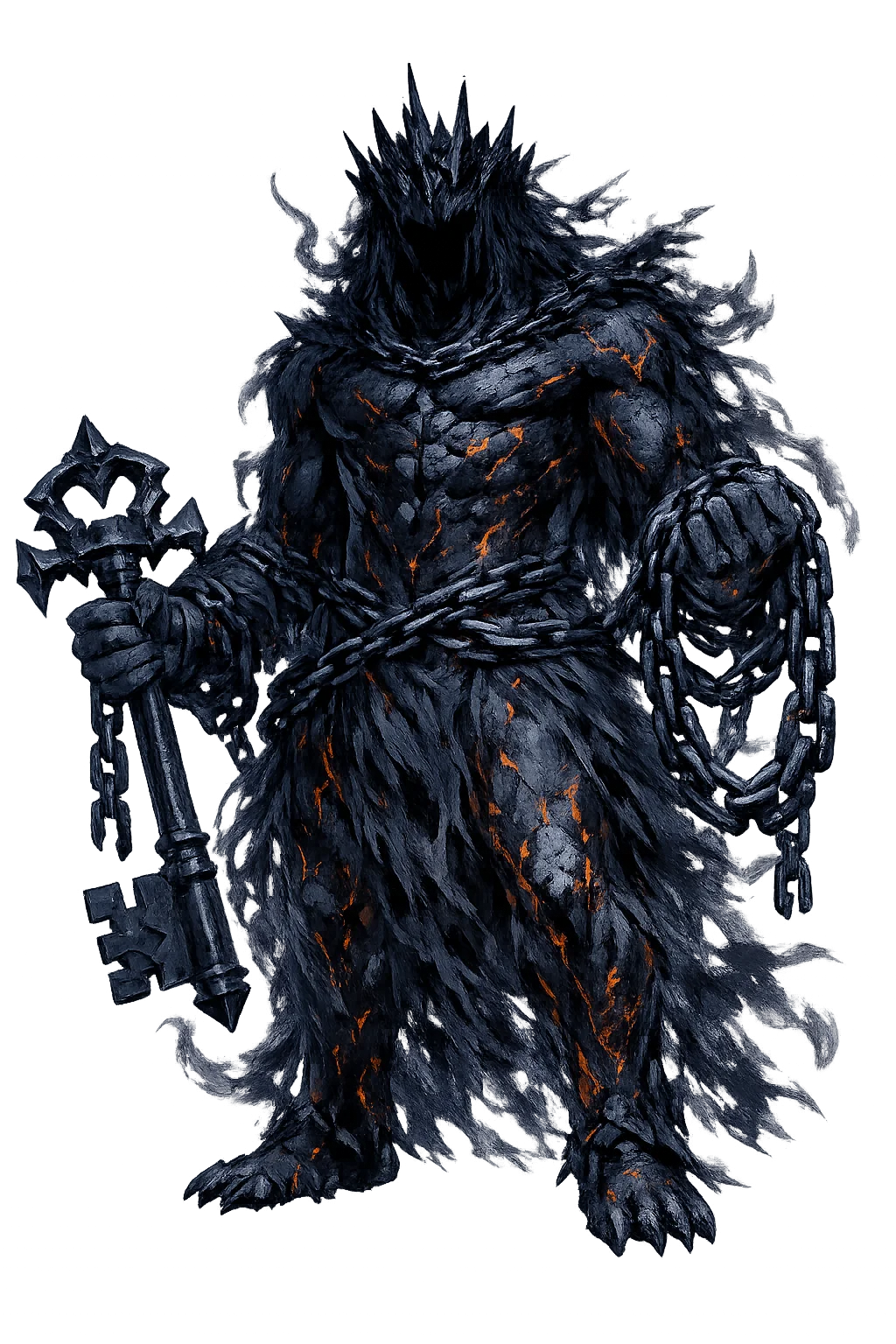
Cháos had no fixed ancient iconography. Greek vase painters and sculptors did not personify the primordial void; the figure exists almost entirely in hexameter poetry and philosophical commentary. The Derveni Papyrus preserves a cosmogonic narrative without illustration. Medieval manuscripts of Ovid’s Metamorphoses sometimes open with a figure of confused matter, but the image is allegorical and not specifically Cháos. Renaissance artists such as the Master of the Aeneid Legend or Baroque interpreters of Ovid gave the opening of Book 1 a swirling, shadowy composition. Modern fantasy and scientific visualization—nebulae, fractals, abstract expressionism—have supplied the visual vocabulary that antiquity withheld.

06

Reception & Transformation

The name after its own age — transmission, translation, survival

Afterlives

Cháos entered Western thought as a cosmogonic concept and never left. Hesiod made it the first thing to exist; the Orphic theogonies and the Derveni Papyrus turned it into a subject for philosophical allegory. Roman poets, especially Ovid, transmitted the figure to medieval Europe, where glossators read it as the original confusion before divine ordering. Renaissance mythographers and painters revived Cháos as the dark prelude to Creation, often conflating it with the biblical abyss. In the modern era the ancient term was borrowed into mathematics and physics as “chaos theory,” acquiring a scientific afterlife quite separate from its mythological origin. Fantasy literature and gaming have since personified Cháos as a cosmic antagonist, a fate the Hesiodic void was never designed to bear.

Identifications Across Traditions

The Romans kept the Greek name but changed its nature. Ovid made Cháos the raw material of creation, a Stoic-inspired mixture awaiting the divine craftsman (Metamorphoses 1.5–31). Christian exegetes then reached for Cháos to translate the ‘without form and void’ (tohu wabohu) of Genesis 1:2, binding Greek cosmogony to biblical creation and giving the Latin Fathers a pagan word for the state of the world before God's ordering word. Gnostic systems reversed the valuation entirely: Cháos became the fallen, ignorant realm from which the spark of the soul must escape, and the gap that Hesiod had found generative became a prison. In the high Middle Ages the word kept both senses at once — the primordial condition in exegesis, the confusion of sin in moral allegory. Through all these reinterpretations the original Greek sense, a yawning opening rather than a turbulent mess, was gradually buried, and only modern philology dug it back out.

Modern Legacy

The modern word ‘chaos’ is, ironically, a corruption of Cháos. Because of Ovid it came to mean disorder, confusion, randomness — the opposite of Hesiod's ordered emptiness. The twentieth century gave the word a strange second life: ‘chaos theory’ studies deterministic systems so sensitive to initial conditions that they appear unpredictable — Lorenz's butterfly, strange attractors, the edge of order. This technical usage is unexpectedly close to the Greek original: not noise, but a hidden structure too fine to see. Artists, musicians, and writers still invoke Cháos as the fertile void, the blank page, the silence before the symphony — the necessary absence from which form is born. Restoring Cháos restores the yawning, not the mess.

09

The Original Script Note

What the written record preserves — and what it does not

Original Script

The name is written in Greek as Χάος, a neuter noun from the verb-family of χαίνω, 'to gape or yawn'. In Hesiod's Theogony (116) Chaos is the first thing to exist, the yawning gap in which earth and sky have yet to appear; only later Greek, and then English, narrowed the word to 'disorder'. Nothing in the Greek suggests randomness — it names a space, not a mess. The acute on the first syllable is the only feature the ASCII chaos abandons; the omicron is short. The restoration Cháos carries the accent; the word's later career it cannot.

10

The Meditation

What Cháos means — beyond the dictionary

Cháos is the hardest of the primordials to love because it offers nothing to hold. It is not a god you can picture, not a mountain you can visit, not a story you can retell. It is simply the gap. And yet every creation myth, every scientific account of the Big Bang, every meditation on the empty canvas begins here: with an opening that has room in it for something else.

To name Cháos correctly is to resist the lazy equation of void with disorder. The Greek gap is not a mess; it is a precondition. It is the silence before the note, the darkness before the image, the space before the word. Without it, there is nowhere for the world to stand.

11

Frequently Asked Questions

Deep-dives into the cult, attestation, reception, and sources of Cháos

01How do we know how Cháos was worshipped?

No sanctuary, altar, or votive of Cháos is known anywhere in the Greek or Roman world — the god of the gap left no dedications, and that absence is itself the archaeological fact. The full cult record →

02Where do the earliest attestations of Cháos come from?

The record rests on LSJ, Beekes, Hesiod, Theogony 116–125, 211–232, 748–757, among 6 cited works. The full source apparatus →

03How did later traditions reinterpret Cháos?

Cháos entered Western thought as a cosmogonic concept and never left. Reception & transformation →

04What do the surviving images of Cháos actually show?

Cháos had no fixed ancient iconography. The iconography →

05What does the written record of Cháos actually preserve?

The name is written in Greek as Χάος, a neuter noun from the verb-family of χαίνω, 'to gape or yawn'. The Original Script note →

12

Scholarly Sources

The philological foundations of this restoration

Every claim on this page is grounded in established scholarship. The orthographic restorations follow disciplinary convention. The etymological chain follows the best available reference works. This is not invention — it is resurrection through scholarship.

◈

Lexicography & Philology

  • Liddell, H. G., Scott, R., & Jones, H. S. A Greek-English Lexicon. Oxford: Clarendon Press, 9th ed. 1996.
  • Pape, W., & Benseler, G. E. Wörterbuch der griechischen Eigennamen. Braunschweig: Vieweg, 1884.
  • Beekes, R. S. P. Etymological Dictionary of Greek. Leiden: Brill, 2010.
◎

Primary Texts

  • Hesiod, Theogony 116–125, 211–232, 748–757
  • Ovid, Metamorphoses 1.5–31
◉

Archaeology & Art History

  • Boardman, J. Greek Sculpture: The Classical Period; Carpenter, T. H. Art and Myth in Ancient Greece.
✦

Religious Studies

  • Aristophanes, Birds 693–703
  • Aristotle, Physics 208b
Return

The Surface Awaits

You have traced the name from its earliest attestation to its Unicode restoration. Now return to the myth. The story is where the name lives.

Back to Lore
Cháos mascot