PuniCodex

Extended Lore

Χάος Cháos

Etymology · Orthography · Cultural Legacy · Reception · Primary Sources

Tier 2 Cháos.com
Cháos — The First Void
01

Quick Facts

Essential information about Cháos, The First Void

Original ScriptΧάος
Unicode RestorationCháos
Reconstructed Pronunciation/kʰá.os/
PantheonGreek
DomainThe First Void
MeaningGap, yawning void (from χάος)
ClassificationTier 2
Primary DomainCháos.com
Sacred SymbolsOpen mouth, Abyss, Unshaped mass, First breath
02

Etymology & Word Family

From original script to Unicode restoration

Original Script Χάος Cháos — "Gap, yawning void (from χάος)"
Unicode Restoration Cháos Restored stress, length, and script
Modern ASCII chaos Plain-ASCII fallback

Gap, yawning void (from χάος)

03

Unicode Character Breakdown

Character-by-character philological analysis

CharacterUnicodeNameBlockPhonetic Role
CU+0043Latin Capital Letter CBasic LatinChi (digraph with h)
hU+0068Latin Small Letter HBasic LatinChi (digraph with c)
áU+00E1Latin Small Letter A with AcuteLatin-1 SupplementAcute on alpha
oU+006FLatin Small Letter OBasic LatinOmicron
sU+0073Latin Small Letter SBasic LatinSigma

The Tier 2 classification reflects how much of the original phonology this restoration preserves — stress and vowel length for Greek names, distinctive letters and diacritics for every other tradition.

04

Cultural Significance

From ancient cult to modern memory

Cháos in Later Traditions

The Romans kept the Greek name but changed its nature. Ovid made Cháos the raw material of creation, a Stoic-inspired mixture awaiting the divine craftsman (Metamorphoses 1.5–31). Christian exegetes then reached for Cháos to translate the ‘without form and void’ (tohu wabohu) of Genesis 1:2, binding Greek cosmogony to biblical creation and giving the Latin Fathers a pagan word for the state of the world before God's ordering word. Gnostic systems reversed the valuation entirely: Cháos became the fallen, ignorant realm from which the spark of the soul must escape, and the gap that Hesiod had found generative became a prison. In the high Middle Ages the word kept both senses at once — the primordial condition in exegesis, the confusion of sin in moral allegory. Through all these reinterpretations the original Greek sense, a yawning opening rather than a turbulent mess, was gradually buried, and only modern philology dug it back out.

Modern Legacy

The modern word ‘chaos’ is, ironically, a corruption of Cháos. Because of Ovid it came to mean disorder, confusion, randomness — the opposite of Hesiod's ordered emptiness. The twentieth century gave the word a strange second life: ‘chaos theory’ studies deterministic systems so sensitive to initial conditions that they appear unpredictable — Lorenz's butterfly, strange attractors, the edge of order. This technical usage is unexpectedly close to the Greek original: not noise, but a hidden structure too fine to see. Artists, musicians, and writers still invoke Cháos as the fertile void, the blank page, the silence before the symphony — the necessary absence from which form is born. Restoring Cháos restores the yawning, not the mess.

In the Earth

No sanctuary, altar, or votive of Cháos is known anywhere in the Greek or Roman world — the god of the gap left no dedications, and that absence is itself the archaeological fact. The figure's material trace is textual and Orphic: the Derveni Papyrus (ca. 340 BCE) is a philosophical commentary on a hexameter theogony of the Hesiodic type, proving that such cosmogonies circulated as books in the classical city. In Roman art the separated elements appear personified in floor mosaics — Ocean, Sun, Earth — as the ordered world that came after the gap; the gap itself, being nothing, could be depicted only by what replaced it.

05

The Meditation

What Cháos means — beyond the dictionary

Cháos is the hardest of the primordials to love because it offers nothing to hold. It is not a god you can picture, not a mountain you can visit, not a story you can retell. It is simply the gap. And yet every creation myth, every scientific account of the Big Bang, every meditation on the empty canvas begins here: with an opening that has room in it for something else.

To name Cháos correctly is to resist the lazy equation of void with disorder. The Greek gap is not a mess; it is a precondition. It is the silence before the note, the darkness before the image, the space before the word. Without it, there is nowhere for the world to stand.

06

Frequently Asked Questions

Common questions about Cháos, The First Void, and Unicode restoration

01How do you pronounce Cháos?

In reconstructed pronunciation, Cháos is /kʰá.os/ — approximately "KHAH-oss" — first syllable like "cat" with a breathy k, second like "oss" in "moss".

02What does Cháos mean?

Cháos means Gap, yawning void (from χάος) in the greek tradition.

03What are the symbols of Cháos?

Cháos is associated with Open mouth (The etymological image — χαίνω, 'to gape': Cháos is the verb 'yawn' made into the world's first noun, the mouth before it speaks), Abyss (The depth before depth existed; Greek later used chasmós and the same root for the open pit of the underworld), Unshaped mass (Ovid's rudis indigestaque moles, the 'rough, undigested lump' — the Roman recasting that made 'chaos' mean disorder for two thousand years), First breath (The opening from which the whole genealogy of gods is exhaled: no gap, no gods — Cháos is the exhalation that precedes every name).

04Why are there different spellings of Cháos?

Each form is a historically attested restoration rather than a mistake: Khaos is the alt form (Transliterated form (kh for χ); the temple uses the Latinized Cháos.). PUNICODEX registers the full set so the tradition is preserved under every defensible spelling.

05Why restore Cháos in Unicode?

Plain ASCII chaos strips the stress, length, and script that make the name specific. Unicode restoration returns the name to its original written dignity.

06What is the most important myth about Cháos?

“First of All, Cháos” — Cháos has no myths in the usual sense — no loves, no wars, no disguises. It is the stage before the drama. Yet its single appearance in the Theogony is the most important stage direction in Greek literature, and later ages fought over what it meant. The full telling lives on the lore page.

07

Scholarly Sources

The philological foundations of this restoration

Every claim on this page is grounded in established scholarship. The orthographic restorations follow disciplinary convention. The etymological chain follows the best available reference works. This is not invention — it is resurrection through scholarship.

Lexicography & Philology

  • Liddell, H. G., Scott, R., & Jones, H. S. A Greek-English Lexicon. Oxford: Clarendon Press, 9th ed. 1996.
  • Pape, W., & Benseler, G. E. Wörterbuch der griechischen Eigennamen. Braunschweig: Vieweg, 1884.
  • Beekes, R. S. P. Etymological Dictionary of Greek. Leiden: Brill, 2010.

Primary Texts

  • Hesiod, Theogony 116–125, 211–232, 748–757
  • Ovid, Metamorphoses 1.5–31

Archaeology & Art History

  • Material evidence — iconography, inscriptions, and temple archaeology — for Cháos and related cults.

Religious Studies

  • Aristophanes, Birds 693–703
  • Aristotle, Physics 208b
Return

The Surface Awaits

You have traced the name from its earliest attestation to its Unicode restoration. Now return to the myth. The story is where the name lives.

Back to Lore
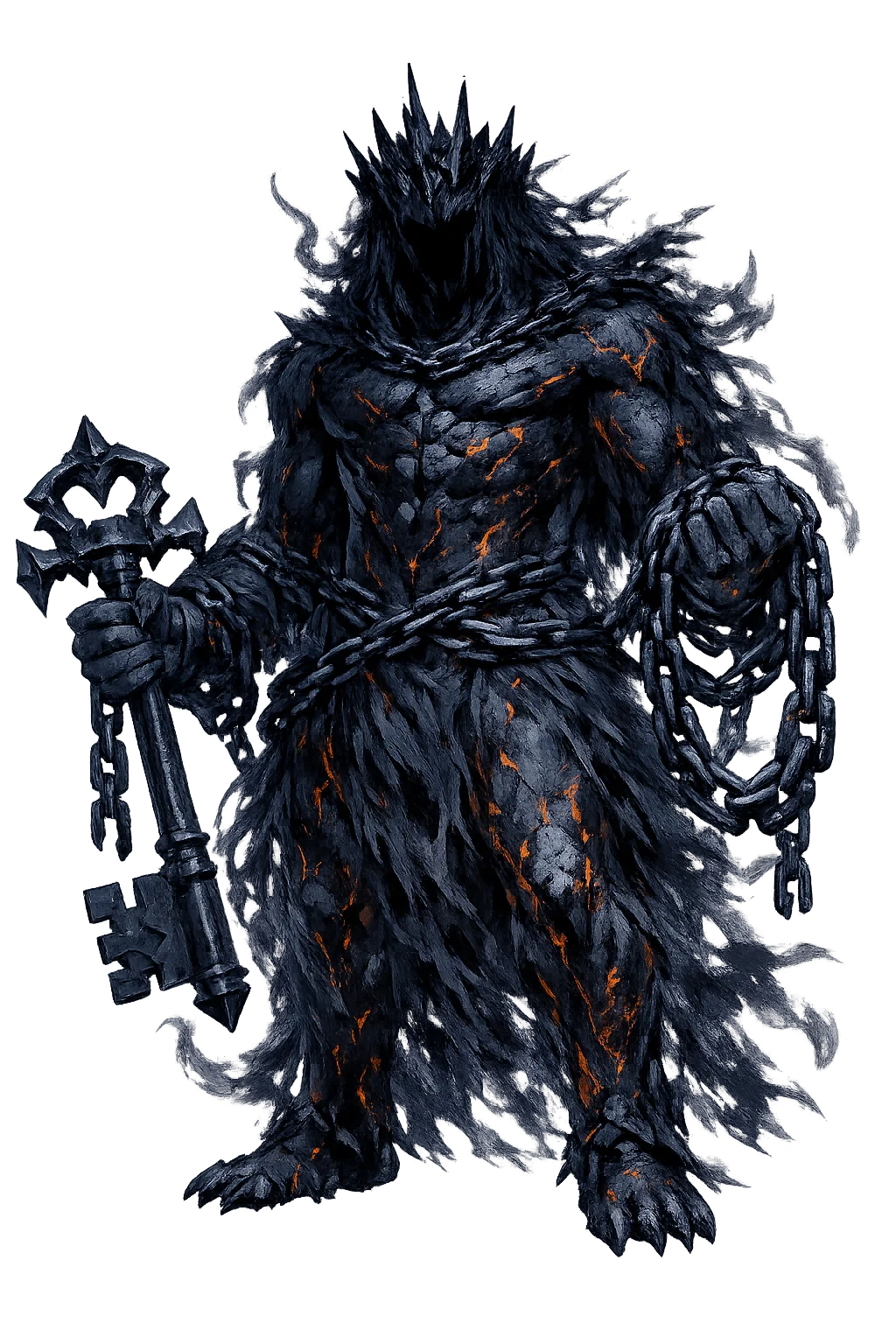
Cháos mascot