PuniCodex

Extended Lore

Brigid

Etymology · Phonology · Orthography · Cultural Legacy · Primary Sources

Tier 2 Brigid
Brigid — Poetry, Healing, Smithcraft, Fire
01

Quick Facts

Essential information about Brigid, Poetry, Healing, Smithcraft, Fire

Scholarly TransliterationBrigid
Unicode RestorationBrigid
Reconstructed Pronunciation/ˈbrʲiɣʲitʲ/
PantheonCeltic
DomainPoetry, Healing, Smithcraft, Fire
MeaningThe Exalted One (from Old Irish Brigit)
ClassificationTier 2
Primary DomainBrigid
Sacred SymbolsThe flame of Kildare, The anvil and the forge, The holy well, Fea and Femen, the two oxen, Imbolc
02

Etymology & Word Family

From original script to Unicode restoration

Scholarly Transliteration Brigid Brigid — "The Exalted One (from Old Irish Brigit)"
Unicode Restoration Brigid Restored stress, length, and script
Modern ASCII brigid Plain-ASCII fallback

Brigid is Tier 2 by the mechanical rule: the normalized form is already plain ASCII — the Old Irish spelling Brigit carries no diacritic and no distinctive letter for the restoration to recover. Only the capital distinguishes the temple's form from the input; the name's fame, like Baldr's, vastly outruns its orthography.

03

Unicode Character Breakdown

Character-by-character philological analysis

CharacterUnicodeNameBlockPhonetic Role
BU+0042Latin Capital Letter BBasic LatinSame
rU+0072Latin Small Letter RBasic LatinSame
iU+0069Latin Small Letter IBasic LatinSame
gU+0067Latin Small Letter GBasic LatinSame
iU+0069Latin Small Letter IBasic LatinSame
dU+0064Latin Small Letter DBasic LatinSame

The Tier 2 classification reflects how much of the original phonology this restoration preserves — stress and vowel length for Greek names, distinctive letters and diacritics for every other tradition.

04

Cultural Significance

From ancient cult to modern Unicode

Ancient Domain

Brigit, daughter of the Dagda, is the triple hearth of the Irish gods: Cormac's Glossary gives her two sisters of the same name — Brigit the smith and Brigit the leech beside Brigit the poet — so that the one name covers the forge, the well, and the word. Her feast is Imbolc, the first of February, when the ewes come into milk; and at Kildare a fire burned for her, Giraldus says, that no man might approach and no night ever saw go out.

Brigid in Later Traditions

Brigit's syncretic life runs in two directions. Across the water, her name is one with the goddess Brigantia of Roman Britain, honoured in inscriptions from the Wall country and portrayed on the Birrens relief with Minerva's globe and spear — the interpretatio romana pairing the exalted one with the Roman goddess of craft and war-wisdom; the tribal Brigantes and the Gaulish Brigindu carry the same name-element, and the old comparison with Sanskrit bṛhatī, 'the high, exalted one', shows how deep the root runs. Within Ireland, the identification is Christian: Brigit of Kildare, the sixth-century saint whose feast falls on Imbolc, whose church kept a perpetual fire, and whose wonder-tales in Cogitosus's Life echo the goddess's provinces. Whether saint succeeded goddess, goddess was Christianized into saint, or two figures fused in one name, the sources do not let us decide — and Mac Cana and Koch both counsel holding the question open. What is certain is the continuity of the name: the Exalted One never left Ireland's calendar.

Modern Legacy

No Celtic deity has a longer unbroken afterlife. Imbolc is still celebrated as St Brigid's Day — Lá Fhéile Bríde — and since 2023 it has been a public holiday in the Republic of Ireland, the first named for a woman. Rushes are still woven into Brigid's crosses on the eve of the feast and hung above doors; hundreds of holy wells bear the saint's name, and the clootie and cure customs at them preserve the leech-sister's province in folk practice. Modern paganism and Celtic Reconstructionism restored the goddess explicitly, keeping Imbolc as the feast of the returning light and of the three crafts; poets, smiths, and healers alike claim her patronage. And the name itself — Brigid, Bridget, Bríd — never ceased to be given to Irish daughters, carrying the Proto-Celtic word for exaltation into every generation since the Iron Age.

Unicode Restoration as Cultural Act

Restoring Brigid in a domain name is more than orthographic accuracy. It is a statement that the internet should recognize the full range of human writing — not only the ASCII keyboard.

05

Frequently Asked Questions

Common questions about Brigid, Poetry, Healing, Smithcraft, Fire, and Unicode restoration

01How do you pronounce Brigid?

In reconstructed pronunciation, Brigid is /ˈbrʲiɣʲitʲ/ — approximately 'BRIJ-id' — like 'bridge' split in two, the g softened to a voiced fricative (a gargled g), both r and d slender; the modern Irish form Bríd is simply 'breed'..

02What does Brigid mean?

Brigid means The Exalted One (from Old Irish Brigit) in the celtic tradition.

03What are the symbols of Brigid?

Brigid is associated with The flame of Kildare (The fire that neither dies nor accumulates ash — patronage that outlasts the night-watch of its keepers), The anvil and the forge (Smithcraft, the making province — skill that transforms raw metal the way poetry transforms raw speech), The holy well (Healing drawn from the ground — the countless wells of St Brigit where the leech-sister's province is still visited), Fea and Femen, the two oxen (The Dagda's daughter's beasts, who gave their names to plains of Ireland — wealth and the working land), Imbolc (The first of February, the milk returning to the ewes — the year's first hinge, kept as her day).

04Why restore Brigid in Unicode?

Plain ASCII brigid strips the stress, length, and script that make the name specific. Unicode restoration returns the name to its original written dignity.

05What is the most important myth about Brigid?

The Book of Invasions places Brigit firmly in the family of the Túatha Dé Danann: Brigit the poetess, daughter of the Dagda, the good god who owns the cauldron and the club. The same tradition marries her to Bres, the half-Fomorian king whose beautiful face and niggardly rule nearly undid the Túatha Dé Danann, and gives her a son, Ruadán — so that the exalted one stands, by marriage and blood, on both sides of the great conflict of Irish myth. The Lebor Gabála is pseudohistory, written by Christian scholars ordering the gods into an ancestry, but its genealogies are the tradition's own filing system: Brigit belongs to the Dagda's house.

06

Scholarly Sources

The philological foundations of this restoration

Every claim on this page is grounded in established scholarship. The orthographic restorations follow disciplinary convention. The etymological chain follows the best available reference works. This is not invention — it is resurrection through scholarship.

Lexicography & Philology

  • Vendryes

Primary Texts

  • The Immram Brain (Voyage of Bran); Tochmarc Étaíne; Cóir Anmann; medieval Irish saga literature.

Archaeology & Art History

  • Material evidence — iconography, inscriptions, and temple archaeology — for Brigid and related cults.
  • Brigit herself is unattested in pre-Christian Irish material: no Ogham stone, votive, or image names the goddess, and Ireland's Iron Age left no cult sites securely hers. Her name's material record lies across the water: Romano-British inscriptions honour Brigantia from the Wall country — most famously the relief from Birrens (Dumfriesshire), where the goddess stands with Minerva's globe, spear, and crown — and a Gaulish inscription from Volnay (Côte-d'Or) invokes Brigindu, the same name-element on the Continent. In Ireland the evidence is ecclesiastical and hydronymic: the monastic site of Kildare (Cill Dara, 'church of the oak'), with its round tower and its memory of the perpetual fire Giraldus describes, and the hundreds of holy wells dedicated to St Brigit, whose rag-trees and cure customs are the living deposit of the leech-sister's province.

Religious Studies

  • Sanas Cormaic (Cormac's Glossary), s.v. Brigit (the three sister Brigits: poetess, smith, physician) and s.v. oimelc (Imbolc, 'ewe's milk')
  • Cath Maige Tuired (The Second Battle of Mag Tuired), ed. and trans. Elizabeth A. Gray, Irish Texts Society 52 (1982) — Ruadán's death and the first keening in Ireland
  • Lebor Gabála Érenn (The Book of Invasions), ed. R. A. S. Macalister, Irish Texts Society — Brigit the poetess, daughter of the Dagda
  • Giraldus Cambrensis, Topographia Hiberniae II.34–36 (the perpetual fire of Kildare, the hedge, and the nineteen nuns)
  • Cogitosus, Vita Sanctae Brigitae (Life of St Brigit of Kildare, c. 650)
  • Vendryes, Lexique étymologique de l'irlandais ancien, s.v. Brigit (Proto-Celtic *Brigantī, 'the Exalted One')
  • Mac Cana, Celtic Mythology; Koch, Celtic Culture: A Historical Encyclopedia; Jackson, Language and History in Early Britain — s.v. Brigit, Brigantia, Brigantes
Return

The Surface Awaits

You have traced the name from its earliest attestation to its Unicode restoration. Now return to the myth. The story is where the name lives.

Back to Lore
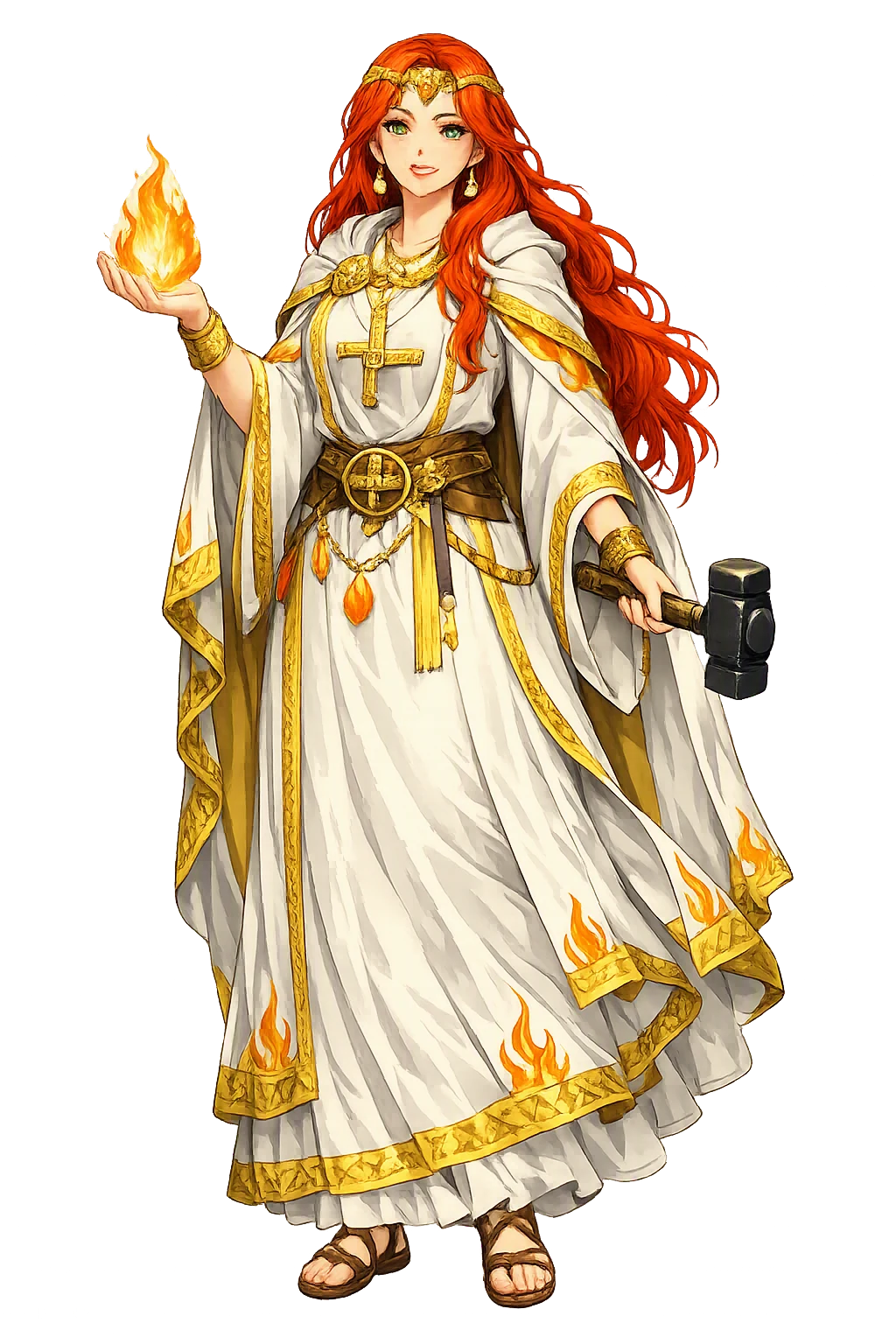
Brigid mascot