
How Blodeuwedd was rebuilt, mark by mark
Bench notes, Blodeuwedd: what we found, what we rejected, and what we finally set down. Kept in the open, because a restoration you cannot audit is just a spelling with confidence.
What We Found
The attestation runs through the tradition's own sources: —. Meaning: "Flower face".
The figure behind the name: Blodeuwedd exists in exactly one witness, and it is enough: the Fourth Branch of the Mabinogi, 'Math uab Mathonwy', the masterpiece of medieval Welsh prose.
What the Name Carried In
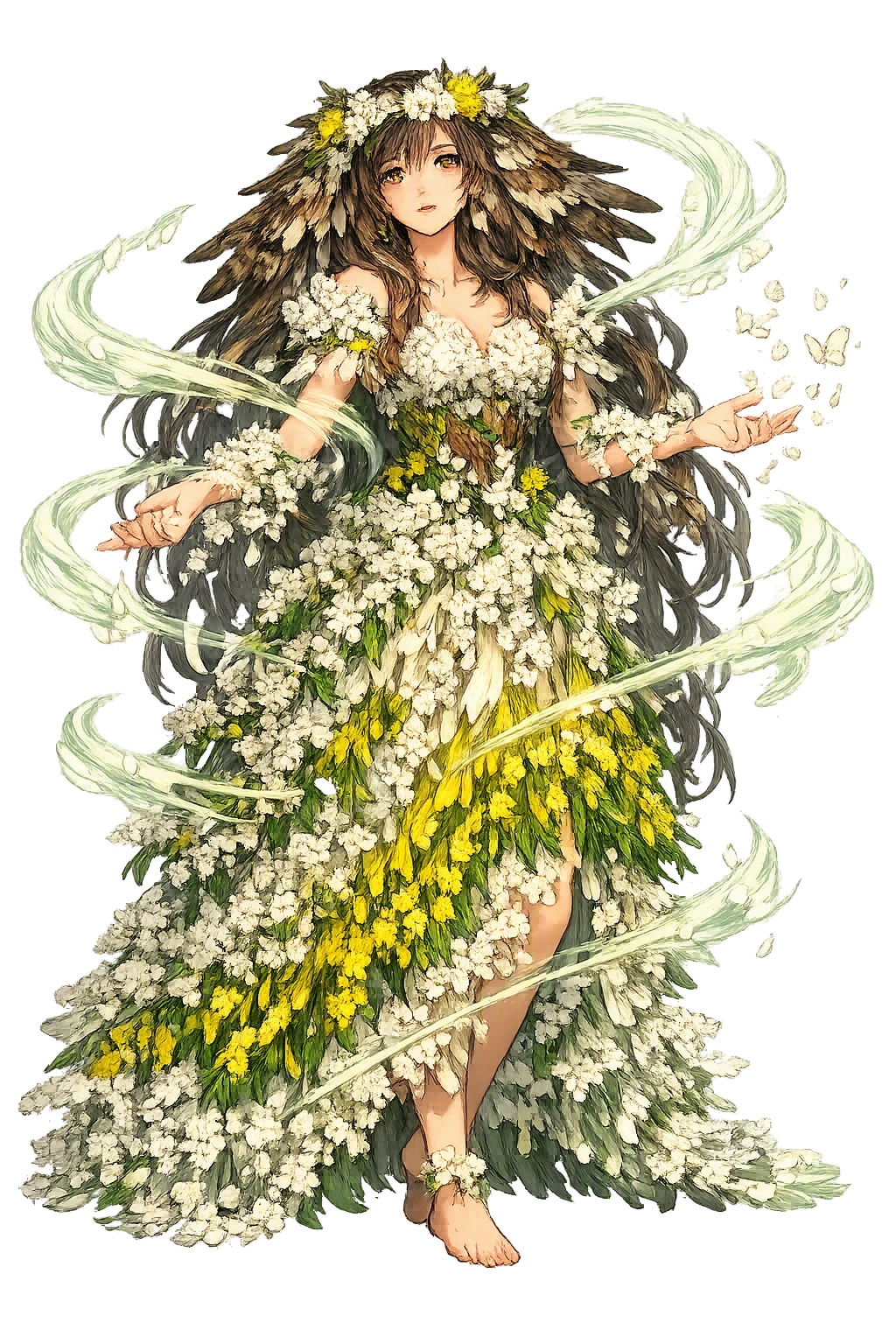
Made of Flowers. When Arianrhod, shamed by the birth the wand had forced from her, laid her third destiny on her son — that he should never have a wife of any race then on earth — Math the king took counsel with Gwydion: 'Let us try, by charms and enchantment, to conjure a wife for him out of flowers. ' They took the flowers of the oak, the flowers of the broom, and the flowers of the meadowsweet, and from them made the fairest and most beautiful woman anyone had ever seen; they baptized her in the manner of the time, and named her Blodeuwedd, Flower-face.
Gronw of Penllyn. Lleu went to Caer Dathyl to visit Math, and while he was away Gronw Pebr, the lord of Penllyn, came hunting into the country. At nightfall Blodeuwedd welcomed the hunter into the court — the hospitality owed to a guest — and the tale says simply that that night they talked, and she conceived a love for him, and he for her.
A spelling that has to carry stories like these is not a label. It is equipment.
Where It Stood Before Us
Blodeuwedd is a literary figure with no material cult record: no inscription, image, or votive object names her, and her witnesses are the two Mabinogion codices — the White Book of Rhydderch (Aberystwyth, NLW Peniarth 4–5, c. 1350) and the Red Book of Hergest (Oxford, Jesus College MS 111, c. 1400). What she has instead of temples is topography, and the Fourth Branch's map is still walkable. Mur Castell, her bridal court, is traditionally placed at Tomen y Mur in Ardudwy, beside the Roman fort; Llyn y Morwynion, the Lake of the Maidens where her retinue drowned, is pointed out above Ffestiniog; and on the bank of the river Cynfael stands a holed stone locally called Llech Ronw, 'Gronw's stone', the slab Lleu's spear pierced. These are local identifications rather than proof, but they show how early and how firmly the tale was staked into the landscape of Gwynedd — medieval hearers, like modern walkers, could be taken to the places where it happens. The bench inherits all of it — the web temple is the newest site, not the first.
What We Rejected
Any form invented for availability. The rule on the bench: if the evidence does not carry it, the domain does not get it — whatever the registrar has in stock.
What We Set Down
Blodeuwedd — One decisive feature survives — a single, honest mark — which places the restoration in Tier-2: exact, and exactly labeled.
For the voice: 'blo-DEH-weth' — three syllables with the weight on the middle one; the final dd is the soft th of 'this', and the eu slides like the vowel of 'say' pulled toward a rounded close.
The temple stands at /blodeuwedd/ — the notes above are public in its Scholarly Edition, sources and all.
At a Glance
- Restored name: Blodeuwedd
- ASCII form: blodeuwedd
- Meaning: "Flower face"
- Domain of influence: Flower Bride, Betrayal
- Pantheon: Celtic
- Classification: Tier 2
- Original script: —
- Series: The Restoration Files, No. 90 of 548
The File Continues
The temple's founding dispatch tells the name's story; its Resonance File reads the myths into the industries; the blog index holds the whole archive.
Continue the series — previous file: Bifrǫst (read it here) · next file: Bodhisattva (read it here).
The Restoration Files are written from the same canonical record as the temples themselves: the lexicon, the lore catalog, the pattern atlas, and the cited scholarly sources. If a file ever disagrees with its temple, the temple is right — tell us, and the file will be corrected.