PuniCodex

Extended Lore

भूदेवी Bhūdevī

Etymology · Orthography · Cult · Iconography · Reception · Sources

Tier 1 Bhūdevī.com
Bhūdevī — Earth, Fertility, Sustenance
01

Quick Facts

Essential information about Bhūdevī, Earth, Fertility, Sustenance

Original Scriptभूदेवी
Unicode RestorationBhūdevī
Reconstructed Pronunciation/bʱuːˈdeːʋiː/
PantheonSanskrit
DomainEarth, Fertility, Sustenance
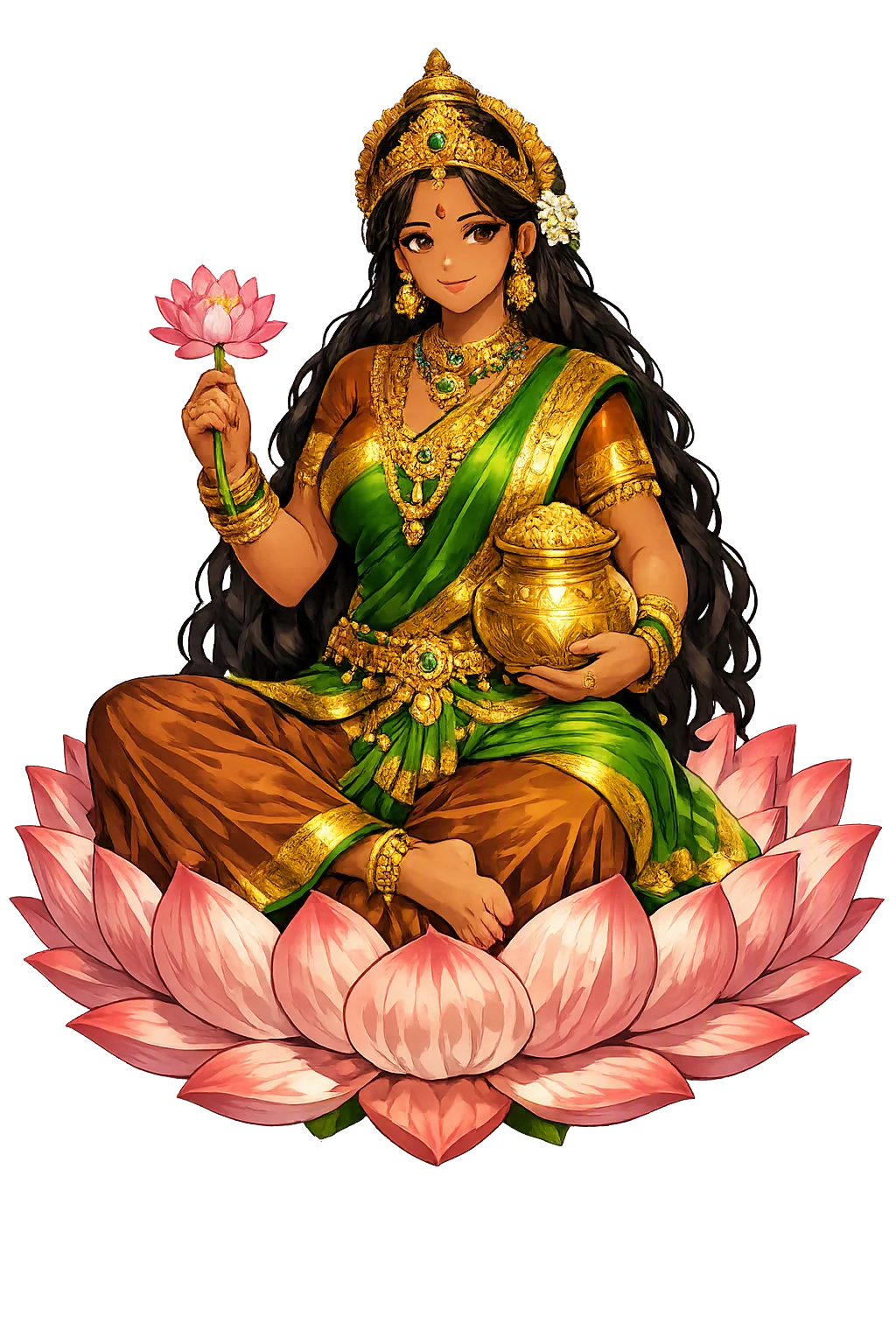
MeaningEarth goddess; seated on a lotus, holding a vessel of grain
ClassificationTier 1
Primary DomainBhūdevī.com
Sacred SymbolsLotus, Grain vessel, Cow, Varāha (boar avatar)
02

Etymology & Word Family

From original script to Unicode restoration

Original Script भूदेवी Bhūdevī — "Earth goddess; seated on a lotus, holding a vessel of grain"
Unicode Restoration Bhūdevī Restored stress, length, and script
Modern ASCII bhudevi Plain-ASCII fallback

The name Bhūdevī carries the orthographic signature of the sanskrit tradition: भूदेवी. Unicode restoration recovers what ASCII flattens.

03

Unicode Character Breakdown

Character-by-character philological analysis

CharacterUnicodeNameBlockPhonetic Role
BU+0042Latin Capital Letter BBasic LatinBha, capitalized
hU+0068Latin Small Letter HBasic LatinHa
ūU+016BLatin Small Letter U with MacronLatin Extended-ALong ū (macron)
dU+0064Latin Small Letter DBasic LatinDa
eU+0065Latin Small Letter EBasic LatinShort e
vU+0076Latin Small Letter VBasic LatinVa
īU+012BLatin Small Letter I with MacronLatin Extended-ALong ī (macron)

The Tier 1 classification reflects how much of the original phonology this restoration preserves — stress and vowel length for Greek names, distinctive letters and diacritics for every other tradition.

04

Cult & Worship

How the sacred was kept — rites, sanctuaries, remains

The Cult

Bhūdevī's living cult is a consort's cult, and its center of gravity is South India. At Śrīraṅgam — the largest functioning temple complex in India — she has her own sanctum and a bronze processional image beside Raṅganātha and Śrīdevī, and she rides in the great chariot festivals as thāyār, the mother. The great Varāha shrines make her rescue an annual event: at Simhachalam in Andhra the god stands coated in sandalwood paste all year and is unveiled for a single night of Vaiśākha, while at Srimushnam in Tamil Nadu Bhūdevī sits beside the boar as principal consort of the lord. The ritual grammar of touching her body remains exact. The building manuals — Mānasāra, Mayamata, the Kāmikāgama — prescribe śilānyāsa, the laying of foundation deposits of gold, gems, and a propitiated spirit, beneath every new house and temple: a negotiated wounding of the earth that the texts insist must be compensated with rites before the digging heals.

In the Earth

The rescue of Bhūdevī is one of the great set-pieces of Gupta monumental art. At Udayagiri in Madhya Pradesh, Cave 5 (c. 401–402 CE, reign of Candragupta II) contains a colossal Varāha bearing the earth goddess on his tusk; an inscription of the minister Vīrasena dates the complex, and the panel is among the most important surviving images of early Hindu state religion. The seventh-century Daśāvatāra temple at Deogarh (Uttar Pradesh) carves Varāha's descent in relief among the earliest surviving narrative panels of the Puranic cycle. South Indian bronze workshops of the Chola period and after cast Bhūdevī as a processional goddess — standing, lotus and grain vessel in hand — enshrined beside Śrīdevī in the great Viṣṇu temples of Tamil country, above all at Śrīraṅgam.

05

Iconography

How Bhūdevī was imaged across the ages

The Image

Bhūdevī is one of the most precisely typed goddesses in Hindu art: green as growing things, two-armed, standing, a blue lotus in one hand and a brimming grain-vessel (kalaśa) in the other, her free palm open in gift-giving. In the bronze-casting tradition of Tamil country, where Chola-period workshops standardized Viṣṇu's retinue, she stands to the god's left as second consort while Śrīdevī, golden-red, stands to his right; the pair process together on festival days, and worshippers learn to tell the mothers apart by color alone. Her narrative image is older than the bronzes: from the Gupta age the earth appears in Varāha scenes as a small female figure caught on the boar's upraised tusk — the type monumentalized at Udayagiri and Deogarh — and South Indian Varāha icons still cast her as the jewel the god lifts from the flood. Where Śrīdevī carries fortune, Bhūdevī carries the field itself.

06

Reception & Transformation

The name after its own age — transmission, translation, survival

Afterlives

Bhūdevī's journey begins in the Ṛgveda's earth-hymns and the PṚthivī-sūkta of the Atharvaveda, but her decisive carrier was Purāṇic Sanskrit: the Viṣṇu and Bhāgavata Purāṇas fixed her mythology, and the commentarial tradition identified her with Vedic PṚthivī without a seam. The early medieval centuries made her a goddess of the Tamil country: Śrīraṅgam's liturgy gave her the title thāyār, 'mother', a sanctum of her own beside Raṅganātha, and a place in the Śrīvaiṣṇava theology of Viṣṇu's two consorts that the temple still sings daily. The Chola bronzes then gave her a portable body, carried in procession ever since. Europe met her through colonial philology: H. H. Wilson's translation of the Viṣṇu Purāṇa (1840) introduced English readers to the earth lifted on the tusk, and the myth became a staple of comparative mythology — the earth-wife, the milked cow — from Max Müller's generation onward. Srinivasan's monograph on multiplicity and the modern study of Devī iconography have kept her type, and her rescue scene, in continuous scholarly view.

Identifications Across Traditions

Bhūdevī is in effect the Puranic continuation of the Vedic Pṛthivī — the Atharvaveda's earth-hymn is hers — and the structural twin of the Greek Gaia and Roman Terra: the planet as a goddess who can be wounded and must be placated. In South Indian Śrī-Vaiṣṇavism she becomes a temple goddess in her own right, standing at Śrīraṅgam beside Śrī (Lakṣmī) as the second consort of Raṅganātha; bronze processional images of Bhūdevī carry the lotus and the grain vessel that are her signatures. The Buddhist reflex is the most vivid: in Southeast Asia the earth goddess who witnesses the Buddha's accumulation of merit and then wrings her hair to drown Māra's army — known in Thai as Phra Mae Thorani — is the same figure, the ground itself bearing witness against the lie. Everywhere the motif travels, one idea survives intact: the earth remembers.

Modern Legacy

Bhūdevī's cult is continuous and everywhere. Farmers begin the sowing season with her worship across India; no Hindu house, temple, or well is begun without bhūmi-pūjā, the propitiation of the ground. She stands in most major South Indian Viṣṇu temples beside Śrīdevī, lotus and grain vessel in hand, and the great Varāha shrines — Śrī Varāhasvāmi at Simhachalam in Andhra, Bhū Varāha Svāmi at Srimushnam in Tamil Nadu — make her rescue an event pilgrims re-enter. Her iconography — green complexion, lotus, overflowing grain — is the most direct statement of earth-as-goddess in world religion. In the age of climate crisis she has been naturally adopted by ecological movements: 'Bhūdevī' names the planet in Indian environmental rhetoric with a theological weight the English word 'Earth' has lost. The theology was always the argument: the soil is not a resource but a person, and mistreatment of it is an offence against one's own mother.

07

The Meditation

What Bhūdevī means — beyond the dictionary

Bhūdevī is the quietest of the great goddesses. She does not brandish weapons or ride into battle; she simply holds everything. Every footstep is a pressure on her body; every harvest is a gift from her substance. She is the ground of being made literal.

To worship Bhūdevī is to refuse the modern fantasy that the earth is dead resource. The soil is alive, aware, and patient beyond human measure. The grain vessel in her hand is not a symbol of wealth but of dependence: we eat the earth, and the earth permits it. That permission is a sacred trust.

08

Frequently Asked Questions

Common questions about Bhūdevī, Earth, Fertility, Sustenance, and Unicode restoration

01How do you pronounce Bhūdevī?

In reconstructed pronunciation, Bhūdevī is /bʱuːˈdeːʋiː/ — approximately 'BHOO-day-VEE' — the first and last syllables are long, giving the name a measured, grounding rhythm.

02What does Bhūdevī mean?

Bhūdevī means Earth goddess; seated on a lotus, holding a vessel of grain in the sanskrit tradition.

03What are the symbols of Bhūdevī?

Bhūdevī is associated with Lotus (The seat from which she rises, pure despite emerging from water and mud), Grain vessel (The bounty of the harvest and the promise of nourishment), Cow (Often associated with her as the gentle provider of sustenance), Varāha (boar avatar) (Viṣṇu rescues her from the cosmic waters in his boar form).

04Why restore Bhūdevī in Unicode?

Plain ASCII bhudevi strips the stress, length, and script that make the name specific. Unicode restoration returns the name to its original written dignity.

05What is the most important myth about Bhūdevī?

“Varāha Lifts the Earth from the Flood” — the Rescue story that anchors the mythology of Bhūdevī, told in full on the lore page.

09

Scholarly Sources

The philological foundations of this restoration

Every claim on this page is grounded in established scholarship. The orthographic restorations follow disciplinary convention. The etymological chain follows the best available reference works. This is not invention — it is resurrection through scholarship.

◈

Lexicography & Philology

  • Monier-Williams
  • Bhagavata Purana
◎

Primary Texts

  • Vishnu Purana
  • Ṛgveda 1.22.15; Atharvaveda 12.1 (Pṛthivī-sūkta)
  • Viṣṇu Purāṇa 1.4 (Varāha rescues the earth); 1.13 (Pṛthu and the earth-cow)
  • Bhāgavata Purāṇa 3.18–19 (Varāha līlā)
◉

Archaeology & Art History

  • Material evidence — iconography, inscriptions, and temple archaeology — for Bhūdevī and related cults.
✦

Religious Studies

  • Vālmīki Rāmāyaṇa, Bālakāṇḍa (Sītā found in the furrow); Uttarakāṇḍa (Sītā returns to Bhūmidevī)
  • Monier-Williams, Sanskrit-English Dictionary, s.v. bhū, devī
  • Srinivasan, Many Heads, Arms, and Eyes (1997)
Return

The Surface Awaits

You have traced the name from its earliest attestation to its Unicode restoration. Now return to the myth. The story is where the name lives.

Back to Lore
Bhūdevī mascot