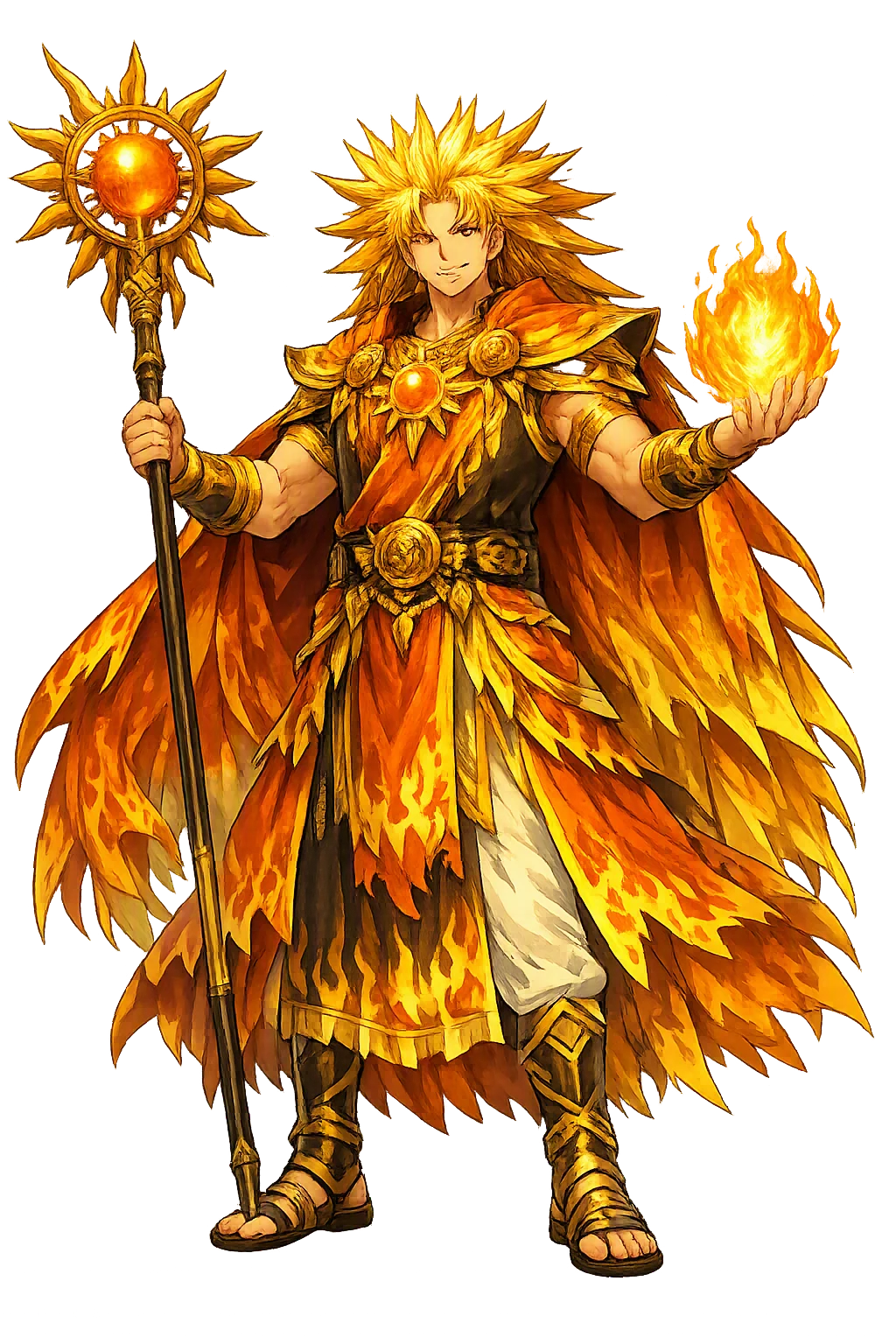
PuniCodex

Extended Lore

Beli

Etymology · Phonology · Orthography · Cultural Legacy · Primary Sources

Tier 2 Beli
Beli — Light, Sun
01

Quick Facts

Essential information about Beli, Light, Sun

Scholarly TransliterationBeli
Unicode RestorationBeli
Reconstructed Pronunciation/ˈbɛlɪ/
PantheonCeltic
DomainLight, Sun
MeaningBright, shining
ClassificationTier 2
Primary DomainBeli
Sacred SymbolsThe Island of Britain, The family tree, The veil of illusion, The walled city, The sun's brightness
02

Etymology & Word Family

From original script to Unicode restoration

Scholarly Transliteration Beli Beli — "Bright, shining"
Unicode Restoration Beli Restored stress, length, and script
Modern ASCII beli Plain-ASCII fallback

Middle Welsh Beli (Beli mawr uab Manogan, 'Beli the Great, son of Manogan') is already written in the Latin alphabet, so the ASCII form loses nothing: the name is Tier 2 by the mechanical rule, since the restoration preserves no diacritic or distinctive letter that ASCII drops. The traditional gloss 'bright, shining' reaches the name through its long-proposed connection with the Celtic god Belenos — conventionally derived from the root *bhel-, 'to shine' — but the etymology of Belenos itself is debated, and the handbooks record the link as a possibility, not a proof.

03

Unicode Character Breakdown

Character-by-character philological analysis

CharacterUnicodeNameBlockPhonetic Role
BU+0042Latin Capital Letter BBasic LatinSame, capitalized
eU+0065Latin Small Letter EBasic LatinSame
lU+006CLatin Small Letter LBasic LatinSame
iU+0069Latin Small Letter IBasic LatinSame

The Tier 2 classification reflects how much of the original phonology this restoration preserves — stress and vowel length for Greek names, distinctive letters and diacritics for every other tradition.

04

Cultural Significance

From ancient cult to modern Unicode

Ancient Domain

Beli mawr — Beli the Great, son of Manogan — is the deep ancestor of British kingship: the king of the Island of Britain whom the Mabinogion sets at the head of its dynasties, father of Lludd, Caswallawn, Nynniaw, and Llefelys, and the name to which the medieval Welsh royal pedigrees climb. Behind the king, scholarship has long glimpsed a god — the continental Belenos, the 'bright, shining' one — but the texts give us the ancestor, and the ancestor is what the record can defend.

Beli in Later Traditions

Beli's whole cross-cultural argument is the Belenos question. The continental god is attested from Aquileia to Noricum, glossed by the ancients as a Celtic Apollo, and derived by tradition from *bhel-, 'to shine'. Welsh Beli Mawr matches the name nearly perfectly, and from O'Rahilly onward scholars have set the Irish ancestor-god Bile beside both, proposing a single Celtic 'bright one' dimmed into three literatures as three ancestors. Mac Cana and Koch record the comparison; neither certifies it. The distinction worth keeping is Geoffrey's other Belinus — the son of Dunvallo, brother of Brennius — a different figure who shares nothing with Beli Mawr but the name. Within the Welsh corpus, Beli's closest kin are the other fountainheads of dynasty: [[don|Dôn]], mother of the Children of Dôn, and Llŷr, father of the house of Llŷr, whose sons Brân and [[manawydan|Manawydan]] lose the island's crown to Beli's son Caswallawn in the Second Branch.

Modern Legacy

Beli's afterlife is genealogical before it is literary. The medieval pedigrees made descent from Beli Mawr the deepest claim a British dynasty could print, and the convention outlived the Middle Ages: Tudor and Stuart antiquaries, eager to trace the crown to British and Trojan roots, found Beli waiting at the root of the trees Geoffrey had Latinized. Through Geoffrey's Heli he fathered the legend of London itself — Lud's town, Lud's gate, the name written into the city's streets — and through his son Cassibelaunus he stands two generations above Shakespeare's Cymbeline, whose Britain is still Beli's island. In modern Wales the name persists quietly: Beli remains a Welsh personal name, and Beli Mawr keeps his place in the national memory as the grandfather of kings. Modern Celtic pagan and Druid practice honors the ancestral Belenus beside him, keeping the old question — king or bright god — alive rather than answered.

Unicode Restoration as Cultural Act

Restoring Beli in a domain name is more than orthographic accuracy. It is a statement that the internet should recognize the full range of human writing — not only the ASCII keyboard.

05

Frequently Asked Questions

Common questions about Beli, Light, Sun, and Unicode restoration

01How do you pronounce Beli?

In reconstructed pronunciation, Beli is /ˈbɛlɪ/ — approximately BEL-ee — two syllables, stress on the first; the e is the open e of 'bed', never the long ay of 'bailey'..

02What does Beli mean?

Beli means Bright, shining in the celtic tradition.

03What are the symbols of Beli?

Beli is associated with The Island of Britain (The single realm Beli held and his sons inherited — kingship imagined whole before it was ever divided), The family tree (The pedigrees of the Welsh dynasties growing back to one root — ancestry as the ground of legitimacy), The veil of illusion (Caswallawn's invisible cloak in Branwen — the house of Beli taking the crown unseen), The walled city (Lludd's rebuilding of London — Lud's town, the memory of the dynasty fixed in stone and street-names), The sun's brightness (The traditional gloss of the name — 'bright, shining' — carried from the Belenos inscriptions into the Welsh ancestor).

04Why restore Beli in Unicode?

Plain ASCII beli strips the stress, length, and script that make the name specific. Unicode restoration returns the name to its original written dignity.

05What is the most important myth about Beli?

The tale of Lludd and Llefelys opens with the settlement of the island: Beli the Great, son of Manogan, was king of this island, and he had three sons — Lludd, Caswallawn, and Nynniaw — and, as the story tells, a fourth son called Llefelys. When Beli died, the kingdom of the Island of Britain fell to Lludd as the eldest, and Lludd ruled it prosperously, rebuilding the walls of London and living there for most of the year. Llefelys, the youngest, went to France, won the love of the old king's only daughter, and inherited that kingdom in his turn.What follows — the three plagues that fall on Britain, and Llefelys's counsel from the middle of the Channel — belongs to the sons' temples. Beli's part is finished in the opening lines, and that is precisely his function: he is the point from which legitimacy flows, the dead father whose reign makes his sons' divided world one family.

06

Scholarly Sources

The philological foundations of this restoration

Every claim on this page is grounded in established scholarship. The orthographic restorations follow disciplinary convention. The etymological chain follows the best available reference works. This is not invention — it is resurrection through scholarship.

Lexicography & Philology

  • Mabinogion
  • MacKillop

Primary Texts

  • The Immram Brain (Voyage of Bran); Tochmarc Étaíne; Cóir Anmann; medieval Irish saga literature.

Archaeology & Art History

  • Material evidence — iconography, inscriptions, and temple archaeology — for Beli and related cults.
  • Beli is a textual figure: no inscription, image, or votive object from Britain names him, and no cult site is his. His witnesses are codices — the White Book of Rhydderch (Aberystwyth, NLW Peniarth 4–5, c. 1350) and the Red Book of Hergest (Oxford, Jesus College MS 111, c. 1382–1410) for the Mabinogion tales, and British Library Harley MS 3859 (c. 1100) for the genealogies that root the Welsh dynasties in him. The material evidence belongs to his proposed continental cognate: the dedications Belino Augusto sacrum from Aquileia and the eastern Alps are real stones with a real theonym — the strongest archaeological fact in the whole dossier, and the reason the 'bright, shining' gloss will not go away. Comparative evidence only: no altar can be read as addressed to the Welsh ancestor-king himself.

Religious Studies

  • Mabinogion (Lludd a Llefelys; Branwen ferch Llŷr) — Sioned Davies, The Mabinogion (Oxford)
  • Harleian Genealogies (BL Harley MS 3859) — Peter C. Bartrum, Early Welsh Genealogical Tracts
  • Geoffrey of Monmouth, Historia Regum Britanniae (Heli, father of Lud, Cassibelaunus, Nennius)
  • Tertullian, Apologeticum 24 (Noricis Belenus); Herodian 8.3 (Apollo Belis of Aquileia)
  • John T. Koch, Celtic Culture: A Historical Encyclopedia, s.v. Beli Mawr, Belenos
  • Proinsias Mac Cana, Celtic Mythology
  • James MacKillop, A Dictionary of Celtic Mythology, s.v. Beli
Return

The Surface Awaits

You have traced the name from its earliest attestation to its Unicode restoration. Now return to the myth. The story is where the name lives.

Back to Lore
Beli mascot