
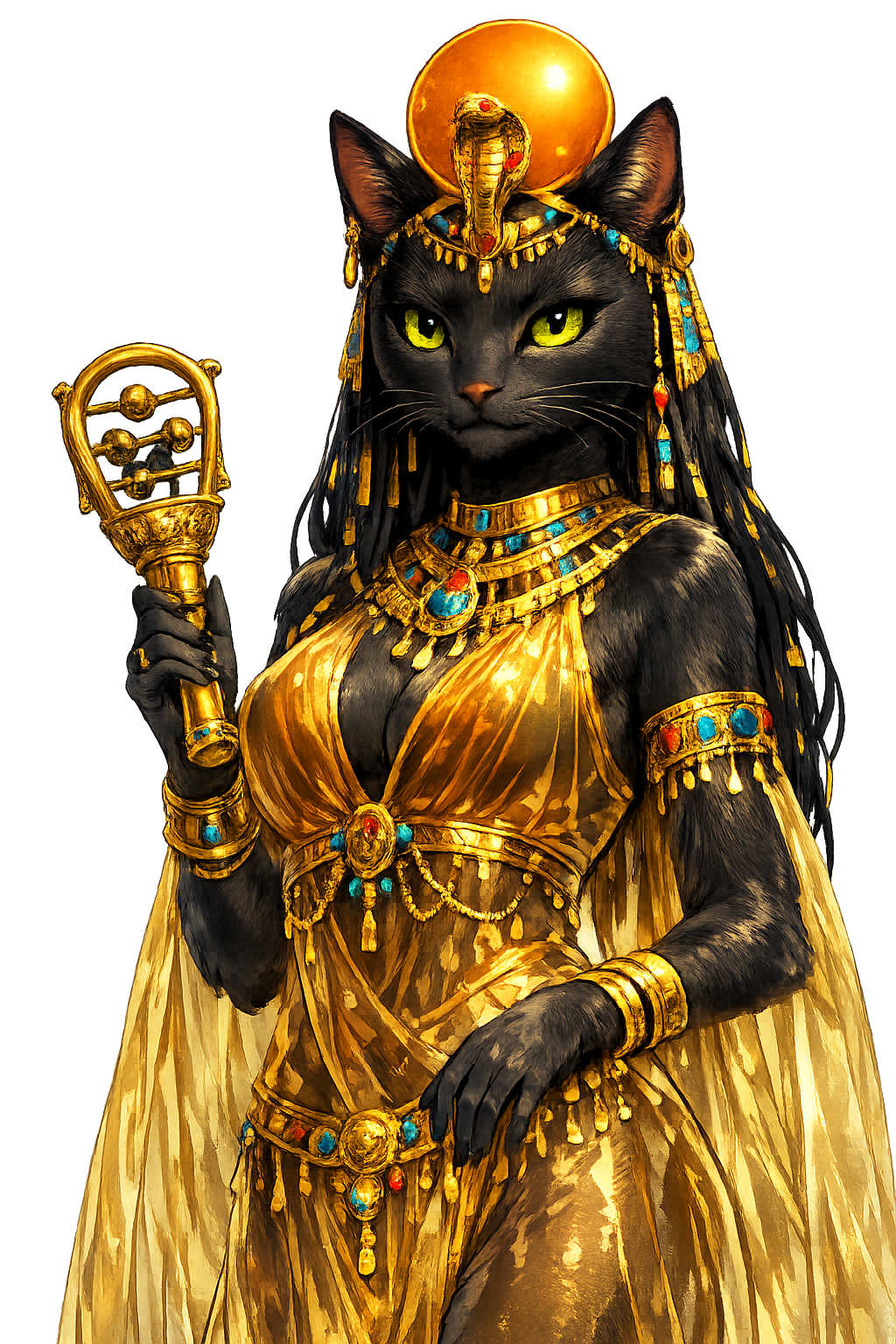
The Cult
Bastet's cult had an address: Per-Bastet, Bubastis, the Delta city that bore her name and housed her temple — the precinct Herodotus judged the loveliest in Egypt, with its grove, its spring, and its sacred lake (Histories 2.137–138). The excavations of Édouard Naville for the Egypt Exploration Fund in 1886–89 uncovered its remains: a temple lavishly rebuilt in the Saite and Late Period, treasure-house of a goddess whose feast briefly made Egypt a single city. The cult's engine was votive economics on an industrial scale: pilgrims bought bronze cat statuettes — the goddess's cat body, mass-cast in the temple workshops — and dedicated them by the thousand, while in the sacred animal necropolis the mummified cats of the pious accumulated into one of the largest animal cemeteries in the ancient world, hundreds of thousands deep from the Late Period into Roman times. Her annual festival, the gathering Herodotus judged the merriest in Egypt, ran on the temple's quays and processional ways — for one week the cult city outgrew its walls.