PuniCodex

Extended Lore

ᛒᛅᛚᛏᚱ Baldr

Etymology · Phonology · Orthography · Cultural Legacy · Primary Sources

Tier 2 Baldr
Baldr — Light, Beauty, Purity
01

Quick Facts

Essential information about Baldr, Light, Beauty, Purity

Original Scriptᛒᛅᛚᛏᚱ
Unicode RestorationBaldr
Reconstructed Pronunciation/ˈbɑl.dr̩/
PantheonNorse
DomainLight, Beauty, Purity
MeaningLord, prince (from *balþraz)
ClassificationTier 2
Primary DomainBaldr
Sacred SymbolsThe mistletoe, Hringhorni, Draupnir, Breiðablik, Baldrs brá (the daisy)
02

Etymology & Word Family

From original script to Unicode restoration

Proto-indo-european *balþraz Lord, prince
Original Script ᛒᛅᛚᛏᚱ Baldr — "Lord, prince (from *balþraz)"
Unicode Restoration Baldr Restored stress, length, and script
Modern ASCII baldr Plain-ASCII fallback

Baldr is Tier 2 by the mechanical rule: the normalized Old Norse form is already plain ASCII — there is no diacritic and no distinctive letter for the ASCII alphabet to lose. The god's fame vastly outruns his name's orthography; only the capital distinguishes the restored form from the input.

03

Unicode Character Breakdown

Character-by-character philological analysis

CharacterUnicodeNameBlockPhonetic Role
BU+0042Latin Capital Letter BBasic LatinSame
aU+0061Latin Small Letter ABasic LatinSame
lU+006CLatin Small Letter LBasic LatinSame
dU+0064Latin Small Letter DBasic LatinSame
rU+0072Latin Small Letter RBasic LatinSame

The Tier 2 classification reflects how much of the original phonology this restoration preserves — stress and vowel length for Greek names, distinctive letters and diacritics for every other tradition.

04

Cultural Significance

From ancient cult to modern Unicode

Ancient Domain

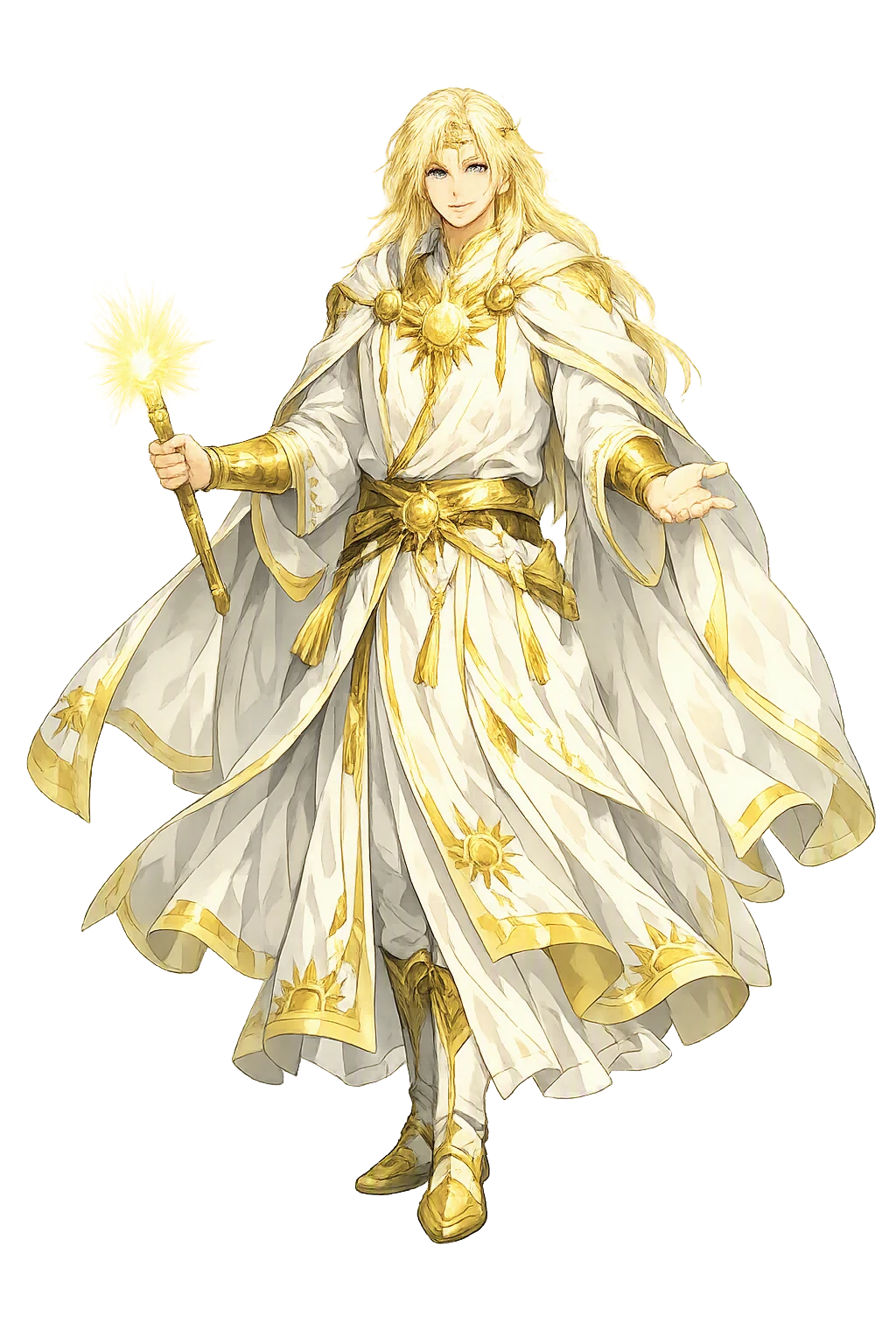
Baldr is the shining son of Óðinn and Frigg — the god Snorri calls simply the best: so fair of face and bright that light itself streams from him, so wise and gracious that his judgments cannot be undone. His hall is Breiðablik, the broad-gleaming, where nothing impure may dwell; his death by the mistletoe shaft is the first grief of the gods and the herald of Ragnarǫk.

Baldr in Later Traditions

The strongest cross-border witness is the Second Merseburg Charm, preserved in a tenth-century Fulda manuscript and the only pagan theogonic text in Old High German: 'Phol and Wodan rode to the wood; then Balder's foal wrenched its foot' — and Wodan charms it whole, bone to bone and blood to blood. Since Jacob Grimm, Phol has widely been read as Baldr himself, which would make the charm the one continental attestation of the god — though the identification is argued, not proven, and Simek counsels caution. The deeper syncretic debate is modern: nineteenth-century scholars, struck by the innocent god who dies and returns after the world's end, read Baldr as a northern Christ or a Frazerian dying-and-rising vegetation spirit. Current scholarship is cooler — Lindow and Orchard note that Baldr's return is scheduled strictly after Ragnarǫk, and that the myth's true company is not the Gospels but the northern complex of fratricide, failed ransom, and prophesied loss.

Modern Legacy

Baldr's afterlife is outsized precisely because his dossier is thin: the beautiful dead god became a vessel every age refills. Matthew Arnold's narrative poem 'Balder Dead' (1855) made him the Victorian emblem of vanished perfection; Frazer's 'Balder the Beautiful' volumes of The Golden Bough built a whole theory of dying gods on the mistletoe; and the Norse revival cast him as the North's own god of light. Modern Heathenry keeps him at the centre of its midsummer and funerary rites as the god of the good death and the return. The name never died in the North itself: Icelandic Baldur and Danish-Norwegian Balder remain living given names, and the daisy — baldrs brá — still carries his eyelash in the Old Norse lexicon.

Unicode Restoration as Cultural Act

Restoring Baldr in a domain name is more than orthographic accuracy. It is a statement that the internet should recognize the full range of human writing — not only the ASCII keyboard.

05

Frequently Asked Questions

Common questions about Baldr, Light, Beauty, Purity, and Unicode restoration

01How do you pronounce Baldr?

In reconstructed pronunciation, Baldr is /ˈbɑl.dr̩/ — approximately 'BAHL-dur' — a short open 'ah', the l and d run together, and the final r sounded as a light syllabic trill, as in Icelandic Baldur..

02What does Baldr mean?

Baldr means Lord, prince (from *balþraz) in the norse tradition.

03What are the symbols of Baldr?

Baldr is associated with The mistletoe (The overlooked thing that undoes the protected god — young, slender, and unsworn), Hringhorni (The greatest of ships, built for the voyage he never took and burned as his bier), Draupnir (The ring that travels from pyre to Hel and back — love's token across the boundary of death), Breiðablik (The broad-gleaming hall where nothing unclean may be — purity made architecture), Baldrs brá (the daisy) (The whitest plant in the world, named for his eyelash — brightness as the standard of measure).

04Why restore Baldr in Unicode?

Plain ASCII baldr strips the stress, length, and script that make the name specific. Unicode restoration returns the name to its original written dignity.

05What is the most important myth about Baldr?

Snorri introduces him in the catalogue of the Æsir with a formula the tradition never varies: Baldr the Good, second son of Óðinn, and 'he is the best, and all praise him'. He is so fair of face and bright that a splendour radiates from him, and one plant is so white that it takes its name from his eyelash — baldrs brá, the daisy, whitest of all plants. He is the wisest of the Æsir, the most beautifully spoken, and the most merciful — yet Snorri adds the one shadow across the portrait: none of his judgments holds; nothing he decides can stand.His dwelling is Breiðablik, the broad-gleaming, and Grímnismál says of that land that the fewest bale-runes lie there — the place in heaven where impurity has least footing. The Edda paints the perfect god first so that everything after reads as loss.

06

Scholarly Sources

The philological foundations of this restoration

Every claim on this page is grounded in established scholarship. The orthographic restorations follow disciplinary convention. The etymological chain follows the best available reference works. This is not invention — it is resurrection through scholarship.

Lexicography & Philology

  • Cleasby-Vigfusson
  • Zoëga

Primary Texts

  • Poetic Edda: Völuspá (Baldr's death foreseen, stanzas 31–33; his return with Höðr, stanza 62), Baldrs draumar (Óðinn's waking of the völva), and Grímnismál 12 (Breiðablik)
  • Snorri Sturluson, Prose Edda: Gylfaginning 22 (the best and fairest) and 49 (the oath, the mistletoe, the funeral on Hringhorni, Hermóðr's ride, Þökk's refusal); Skáldskaparmál (kennings for Baldr)
  • Saxo Grammaticus, Gesta Danorum, Book 3 (Balderus and Høtherus), trans. Peter Fisher, ed. Hilda Ellis Davidson

Archaeology & Art History

  • Material evidence — iconography, inscriptions, and temple archaeology — for Baldr and related cults.
  • Baldr is an almost entirely textual god: no runestone invokes him, no votive deposit names him, and the place-name evidence sometimes claimed for him is insecure. The nearest material witnesses are indirect. Úlfr Uggason's Húsdrápa (c. 983), quoted in Skáldskaparmál, describes the funeral procession — Óðinn, Freyr, Heimdallr, the valkyries, and Hyrrokkin launching the ship — as carved on the panels of Óláfr pái's hall at Hjarðarholt in Iceland, proving the myth's currency in pre-Christian art a generation before conversion. On the continent, the Second Merseburg Charm survives in a tenth-century theological manuscript from Fulda (now Merseburg, Cathedral Library), the only Old High German text that may carry the god's name. The Codex Regius preserves Völuspá and Grímnismál; Baldrs draumar is found only in the fourteenth-century manuscript AM 748 I 4to.

Religious Studies

  • The Second Merseburg Charm (Phol and Wodan; Balder's foal), in Braune–Ebbinghaus, Althochdeutsches Lesebuch
  • Cleasby–Vigfusson, An Icelandic-English Dictionary, s.v. baldr (the god and the poetic noun 'lord, prince')
  • Zoëga, A Concise Dictionary of Old Icelandic, s.v. baldr
  • Simek, Dictionary of Northern Mythology; Orchard, Dictionary of Norse Myth and Legend; Lindow, Norse Mythology: A Guide — s.v. Baldr (etymology and the dying-god debate)
Return

The Surface Awaits

You have traced the name from its earliest attestation to its Unicode restoration. Now return to the myth. The story is where the name lives.

Back to Lore
Baldr mascot