PuniCodex

Extended Lore

Badb

Etymology · Phonology · Orthography · Cultural Legacy · Primary Sources

Tier 2 Badb
Badb — Battle, Death, Crow
01

Quick Facts

Essential information about Badb, Battle, Death, Crow

Scholarly TransliterationBadb
Unicode RestorationBadb
Reconstructed Pronunciation/ˈbaðβ/
PantheonCeltic
DomainBattle, Death, Crow
MeaningCrow, scald-crow
ClassificationTier 2
Primary DomainBadb
Sacred SymbolsThe scald-crow, The shriek, The ford, The triad, The washing of spoils
02

Etymology & Word Family

From original script to Unicode restoration

Scholarly Transliteration Badb Badb — "Crow, scald-crow"
Unicode Restoration Badb Restored stress, length, and script
Modern ASCII badb Plain-ASCII fallback

Badb is Tier 2 by the mechanical rule: the normalized Old Irish form is already plain ASCII — there is no diacritic and no distinctive letter for the ASCII alphabet to lose. The capital alone distinguishes the temple form from the input; the goddess's standing in the tradition is beside the point.

03

Unicode Character Breakdown

Character-by-character philological analysis

CharacterUnicodeNameBlockPhonetic Role
BU+0042Latin Capital Letter BBasic LatinSame, capitalized
aU+0061Latin Small Letter ABasic LatinSame
dU+0064Latin Small Letter DBasic LatinSame
bU+0062Latin Small Letter BBasic LatinSame

The Tier 2 classification reflects how much of the original phonology this restoration preserves — stress and vowel length for Greek names, distinctive letters and diacritics for every other tradition.

04

Cultural Significance

From ancient cult to modern Unicode

Ancient Domain

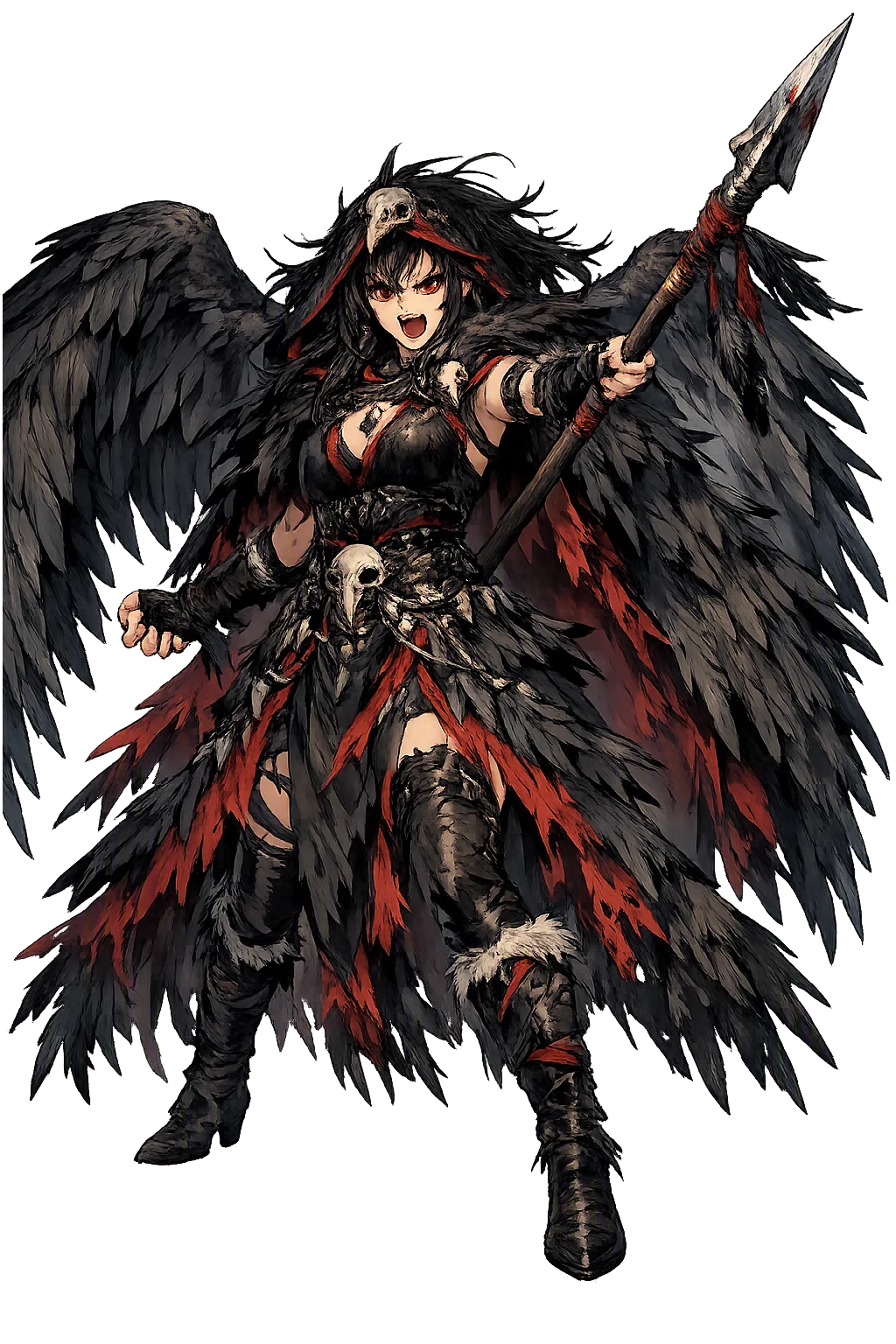
Badb is the Irish war-goddess whose name is her shape: badb, the scald-crow — the grey-and-black hooded crow that walks the battlefield when the spears have done their work. She is one of the three of war whom the Lebor Gabála calls the daughters of Ernmas — Badb, Macha, and Anand, the Morrígan — and the Táin gives her its most terrible sound: the shriek over the marching hosts that kills men with fear before a blow is struck. She never fights; she foretells, she panics, and she gathers what the battle leaves.

Badb in Later Traditions

Badb's clearest cross-border witness is Gaulish, and it is exact. An altar from Mieussy in Haute-Savoie dedicates to Cathubodua — *catu-*bodwā, 'battle-crow' — the precise reverse compound of Irish badb catha. Delamarre and Koch treat the two names as one formation across the Celtic languages: the crow of battle named in stone on the continent and in saga in Ireland. The Welsh corpus, by contrast, is silent on her — no figure of the Mabinogi continues the name, and the Brythonic silence is recorded rather than repaired. Typological comparison has set her beside the Norse valkyries, the raven-feeding choosers of the slain; the handbooks note the parallel without claiming descent. Within the lexicon her closest kin are her own sisters, [[morrigan|the Mórrígan]] and [[macha|Macha]], and the war she prophesied binds her to [[dagda|the Dagda]], [[lugh|Lugh]], and [[nuada|Nuadu]].

Modern Legacy

The crow of battle rode the Celtic revival in English dress. W. M. Hennessy's 'The Ancient Irish Goddess of War' (Revue Celtique, 1870) had already gathered the Morrígan material for scholars, and Lady Gregory's Gods and Fighting Men (1904) carried Cath Maige Tuired and its war-goddesses to a wide reading public, crow-form and prophecy complete. Modern fantasy and games have made the war-goddess's crow-shape one of the stock images of the genre, and contemporary pagan practice honors Badb among the three of the Morrígan. In the Irish language the word never needed reviving: badhbh has meant the hooded crow all along, and the grey bird on the battlefield needed no gloss for any Irish hearer. Across the water, the Scottish bean nighe kept her folk shape washing at the ford deep into the era of the great folklore collections.

Unicode Restoration as Cultural Act

Restoring Badb in a domain name is more than orthographic accuracy. It is a statement that the internet should recognize the full range of human writing — not only the ASCII keyboard.

05

Frequently Asked Questions

Common questions about Badb, Battle, Death, Crow, and Unicode restoration

01How do you pronounce Badb?

In reconstructed pronunciation, Badb is /ˈbaðβ/ — approximately 'BAH-dhuv' — one short syllable; let the d soften into the 'th' of 'this' and the final b melt into a light v. Modern Irish badhbh keeps the softening, and English ears often hear the word as something like 'bave'..

02What does Badb mean?

Badb means Crow, scald-crow in the celtic tradition.

03What are the symbols of Badb?

Badb is associated with The scald-crow (The hooded crow, grey and black — her name, her shape, and her retinue on every field), The shriek (Panic as a weapon: the sound that kills men with fear before the spear is thrown), The ford (The boundary between bank and bank, living and dead — the water where the doomed are read), The triad (Badb, Macha, Némain: the three of war, one terror in three voices), The washing of spoils (The harness and garments of the soon-dead, rinsed in the ford before the battle that will bloody them).

04Why restore Badb in Unicode?

Plain ASCII badb strips the stress, length, and script that make the name specific. Unicode restoration returns the name to its original written dignity.

05What is the most important myth about Badb?

The Lebor Gabála Érenn, Ireland's medieval book of invasions, gives the war-goddesses their pedigree: 'Badb and Macha and Anand, of whom are the Paps of Anu in Luachair, were the three daughters of Ernmas the she-farmer.' The verse recension sings the same family in another key — 'Badb and Macha, greatness of wealth, Morrígu, springs of craftiness, sources of bitter fighting, were the three daughters of Ernmas' — so that the tradition itself is of two minds: sometimes the Morrígan is the third sister, sometimes the single name for all three.The same book marries her into the house of the war-god. Neit son of Indui, the god of battle, had two wives — Badb and Nemain — and the pedigree records the slaying of the three of them at Ailech by the Fomorians. Cormac's Glossary had already fixed the marriage in the language of record: Neith, the god of battle among the pagan Gael, and Nemon his wife. Badb is never an isolated figure; she is a sister and a wife in a family whose whole business is war.

06

Scholarly Sources

The philological foundations of this restoration

Every claim on this page is grounded in established scholarship. The orthographic restorations follow disciplinary convention. The etymological chain follows the best available reference works. This is not invention — it is resurrection through scholarship.

Lexicography & Philology

  • Táin Bó Cúailnge
  • MacKillop

Primary Texts

  • The Immram Brain (Voyage of Bran); Tochmarc Étaíne; Cóir Anmann; medieval Irish saga literature.

Archaeology & Art History

  • Material evidence — iconography, inscriptions, and temple archaeology — for Badb and related cults.
  • Badb is a textual goddess: no ogham stone names her, no votive inscription invokes her, and Irish paganism generally left literature rather than dedications. Her manuscript witnesses are exact. The Táin Bó Cúailnge survives in its oldest recension in Lebor na hUidre, the Book of the Dun Cow (Royal Irish Academy, c. 1100), and in the twelfth-century Book of Leinster; Lebor Gabála Érenn likewise rests on the Book of Leinster and its sister codices; and Cath Maige Tuired survives uniquely in the sixteenth-century British Library MS Harley 5280, the basis of Gray's edition. The nearest epigraphic witness is continental: the altar from Mieussy in Haute-Savoie dedicating to Cathubodua, 'battle-crow', is the standing proof that the crow-of-battle compound is old Celtic and not an Irish literary invention — comparative evidence across the water, never an identification.

Religious Studies

  • Táin Bó Cúailnge, Recension 1, ed. and trans. Cecile O'Rahilly (Dublin Institute for Advanced Studies) — Badb, Bé Néit, and Némain shrieking over the hosts at Gáirech and Irgáirech
  • Lebor Gabála Érenn, ed. and trans. R. A. S. Macalister (Irish Texts Society) — the daughters of Ernmas; the two wives of Neit son of Indui
  • Cath Maige Tuired, ed. and trans. Elizabeth A. Gray, Irish Texts Society 52 (1982); also Stokes, 'The Second Battle of Moytura', Revue Celtique 12 (1891) — the ford of the Unius; the proclamation of victory and the prophecy of peace
  • Brislech Mór Maige Muirthemni (Aided Con Culainn), ed. Stokes, 'The Death of Cú Chulainn', Revue Celtique 3 (1877) — the scald-crows on the pillar-stone
  • Sanas Cormaic (Cormac's Glossary), s.v. Neth — 'the god of battle among the pagan Gael, and Nemon his wife'
  • Hennessy, W. M., 'The Ancient Irish Goddess of War', Revue Celtique 1 (1870) — the Morrígan-Badb material gathered for scholarship
  • Dictionary of the Irish Language (Dublin: Royal Irish Academy; electronic ed. eDIL), s.v. badb — 'scald-crow'; the war-goddess
  • Vendryes, Lexique étymologique de l'irlandais ancien, s.v. badb — the etymology and the Celtic cognates
  • Matasović, Etymological Dictionary of Proto-Celtic, s.v. *bodwo- 'battle, fighting'
  • Delamarre, Dictionnaire de la langue gauloise, s.v. catu-, boduā — Cathubodua, 'battle-crow'
  • Mac Cana, Celtic Mythology — the war-goddesses; the washer at the ford
  • Sjoestedt, Gods and Heroes of the Celts — the Irish war-goddesses and the triple figure
  • Koch, ed., Celtic Culture: A Historical Encyclopedia, s.v. Badb, Cathubodua, Mórrígan
Return

The Surface Awaits

You have traced the name from its earliest attestation to its Unicode restoration. Now return to the myth. The story is where the name lives.

Back to Lore
Badb mascot