
The Cult
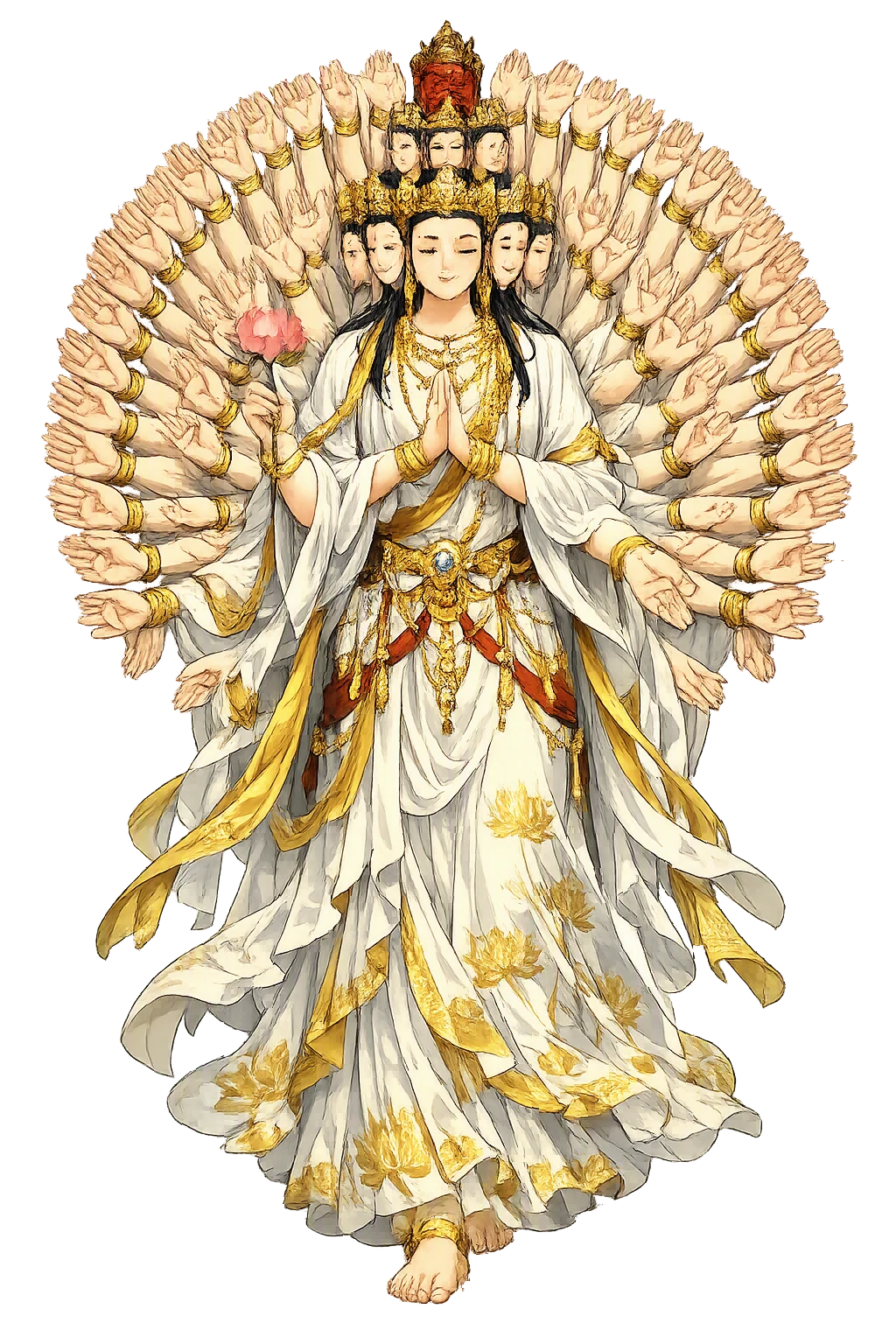
Avalokiteśvara's cult is practice before it is place. Its oldest stratum is textual: reciting the Lotus Sūtra's twenty-fifth chapter as a protective liturgy, a rite attested from early medieval China and still heard in East Asian temples, and copying the Great Compassion dhāraṇī for merit. The Kāraṇḍavyūha Sūtra added the six-syllable mantra — oṃ maṇi padme hūṃ — which in Tibet became the most recited formula on earth, turned by hand, wheel, and windmill. Sacred geography then claimed the name: Potalaka, his mountain home in Indian scripture, was identified in China by the ninth century with Mount Putuo off the Zhejiang coast, still the foremost Guanyin pilgrimage site, joined by Japan's Kannon temples and the circuits of thirty-three stations. Chinese communities marked his feast on the nineteenth day of the second lunar month. His votaries ranged from emperors commissioning thousand-armed icons to illiterate chanters whose entire liturgy was his name.