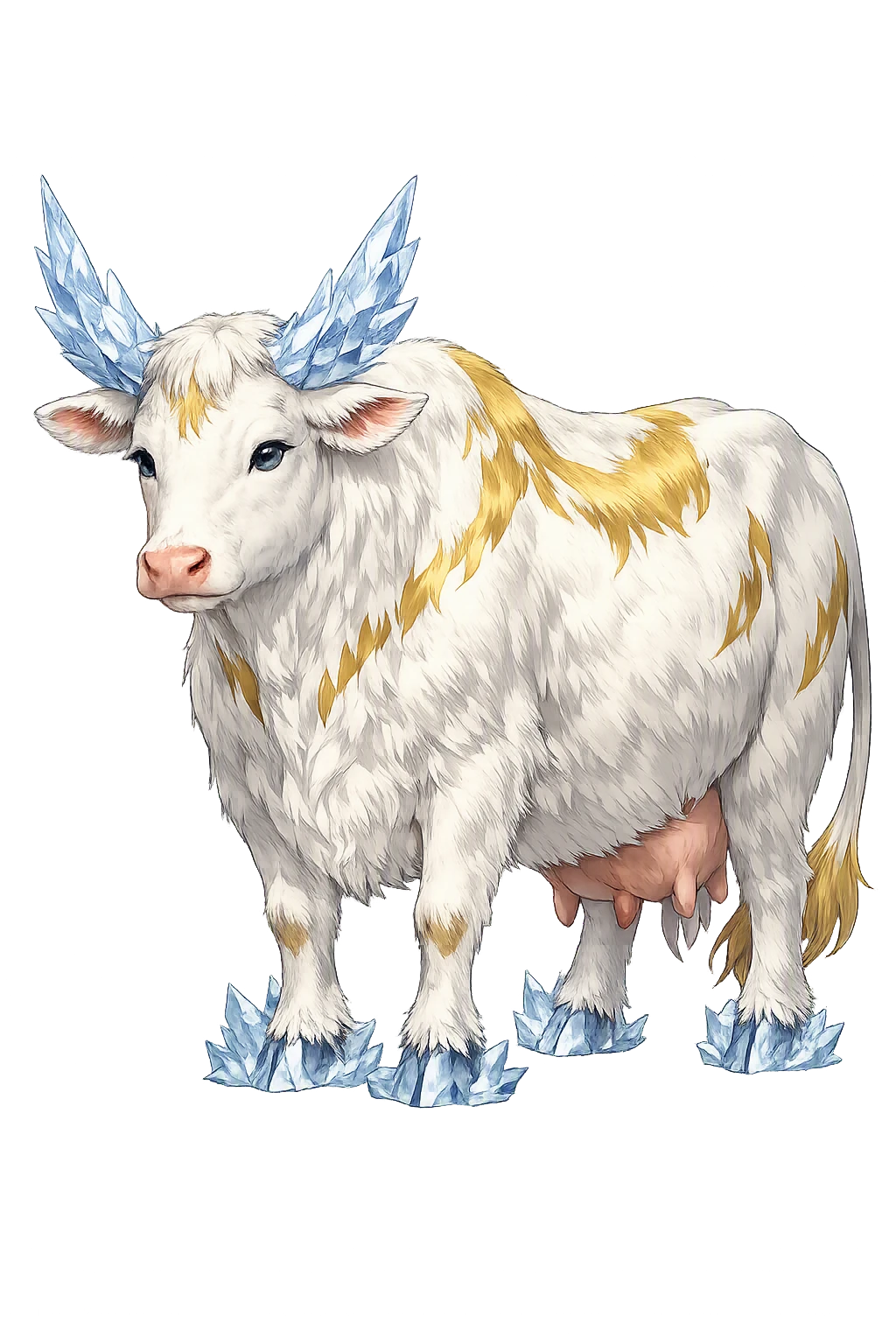
PuniCodex

Extended Lore

ᛅᚢᚦᚢᛘᛚᛅ Auðhumla

Etymology · Phonology · Orthography · Cultural Legacy · Primary Sources

Tier 1 Auðhumla.com
Auðhumla — Primeval Cow, Nourisher of Creation
01

Quick Facts

Essential information about Auðhumla, Primeval Cow, Nourisher of Creation

Original Scriptᛅᚢᚦᚢᛘᛚᛅ
Unicode RestorationAuðhumla
Reconstructed Pronunciation/ˈɔuðˌhum.la/
PantheonNorse
DomainPrimeval Cow, Nourisher of Creation
MeaningWealth-humla (primeval cow)
ClassificationTier 1
Primary DomainAuðhumla.com
Sacred SymbolsThe primeval cow, Salt rime-stones, Four milk-streams, The tongue that shapes
02

Etymology & Word Family

From original script to Unicode restoration

Original Script ᛅᚢᚦᚢᛘᛚᛅ Auðhumla — "Wealth-humla (primeval cow)"
Unicode Restoration Auðhumla Restored stress, length, and script
Modern ASCII audhumla Plain-ASCII fallback

Auðhumla is Tier 1 because the restored form preserves the distinctive ð (eth) and the diphthong auð — letters and sounds the ASCII form audhumla loses.

03

Unicode Character Breakdown

Character-by-character philological analysis

CharacterUnicodeNameBlockPhonetic Role
AU+0041Latin Capital Letter ABasic LatinSame, capitalized
uU+0075Latin Small Letter UBasic LatinSame
ðU+00F0Latin Small Letter EthLatin-1 SupplementEth: voiced dental fricative
hU+0068Latin Small Letter HBasic LatinSame
uU+0075Latin Small Letter UBasic LatinSame
mU+006DLatin Small Letter MBasic LatinSame
lU+006CLatin Small Letter LBasic LatinSame
aU+0061Latin Small Letter ABasic LatinSame

The Tier 1 classification reflects how much of the original phonology this restoration preserves — stress and vowel length for Greek names, distinctive letters and diacritics for every other tradition.

04

Cultural Significance

From ancient cult to modern Unicode

Ancient Domain

Auðhumla is the first being with a body of plenty in the Norse cosmos. While the frost giant Ymir feeds from her four streams of milk, she licks the salty rime-stones of Ginnungagap and frees Búri, the first of the gods. She is not a goddess in the usual sense but the living source from which the two lineages of the world — giant and god — draw their beginning.

Auðhumla in Later Traditions

Auðhumla has no direct foreign counterpart, but she belongs to a broad Indo-European motif: the primeval bovine whose milk or body nourishes the world. The Vedic cow Surabhi yields the ocean of milk; the Iranian Gōšūrun and the bovid figure of the Zoroastrian creation myth play analogous roles; and the Egyptian cow-goddess Hathor and Greek Io have sometimes been compared, though these are typological, not genealogical, parallels. Within Norse studies she is read as the female counterpart to Ymir — the nourishing body that balances his monstrous growth.

Modern Legacy

Auðhumla survives in every retelling of the Norse creation myth, from the Victorian Eddas to contemporary comics, games, and Heathen cosmology. Her image — a cow standing in the void, licking the first god out of ice — is one of the most vivid in the Norse corpus. Modern Ásatrú and Norse-pagan reconstruction often honor her as the first mother, the abundance that precedes every order. Restoring Auðhumla preserves the eth and diphthong that make her name sound like the cold, rich world she inhabits.

Unicode Restoration as Cultural Act

Restoring Auðhumla in a domain name is more than orthographic accuracy. It is a statement that the internet should recognize the full range of human writing — not only the ASCII keyboard.

05

Frequently Asked Questions

Common questions about Auðhumla, Primeval Cow, Nourisher of Creation, and Unicode restoration

01How do you pronounce Auðhumla?

In reconstructed pronunciation, Auðhumla is /ˈɔuðˌhum.la/ — approximately 'OWTH-hoom-la' — the first syllable has a diphthong like 'cow' followed by the soft 'th' of 'this'; stress falls on the first syllable..

02What does Auðhumla mean?

Auðhumla means Wealth-humla (primeval cow) in the norse tradition.

03What are the symbols of Auðhumla?

Auðhumla is associated with The primeval cow (The first animal, whose milk is the original nourishment of the cosmos), Salt rime-stones (The ice she licks for three days until Búri is freed), Four milk-streams (The rivers from her udders that sustain Ymir), The tongue that shapes (Her licking is the first creative act after the melting of ice — not speech, but patient touch).

04Why restore Auðhumla in Unicode?

Plain ASCII audhumla strips the stress, length, and script that make the name specific. Unicode restoration returns the name to its original written dignity.

05What is the most important myth about Auðhumla?

Snorri tells how the rivers of Élivágar, flowing out of Niflheim, hardened into ice in Ginnungagap. When the heat of Múspell met that ice, it melted and dripped; from the drips came Ymir, the first frost giant. A second dripping formed the cow Auðhumla. She fed Ymir with her milk, and she herself fed by licking the salty, hoar-frost-covered stones.

06

Scholarly Sources

The philological foundations of this restoration

Every claim on this page is grounded in established scholarship. The orthographic restorations follow disciplinary convention. The etymological chain follows the best available reference works. This is not invention — it is resurrection through scholarship.

Lexicography & Philology

  • Prose Edda
  • Cleasby-Vigfusson
  • Zoëga

Primary Texts

  • Snorri Sturluson, Prose Edda: Gylfaginning 5 (the primeval cow, Ymir, and the emergence of Búri)

Archaeology & Art History

  • Material evidence — iconography, inscriptions, and temple archaeology — for Auðhumla and related cults.
  • Auðhumla is an entirely textual figure. No runestone, image, or place-name can be securely identified with her. Her witness is the manuscript tradition of Snorri's Prose Edda — Codex Regius (GKS 2367 4to), Codex Wormianus, Codex Trajectinus, and the Uppsala Edda — which preserve Gylfaginning 5. The scene has, however, left a strong trace in later Scandinavian folk art and modern Norse-revival iconography.

Religious Studies

  • Cleasby–Vigfusson, An Icelandic-English Dictionary, s.v. auðr, Auðhumla
  • Zoëga, A Concise Dictionary of Old Icelandic, s.v. Auðhumla
  • Simek, Dictionary of Northern Mythology, s.v. Auðhumla
  • Lindow, Norse Mythology: A Guide, s.v. Auðhumla
Return

The Surface Awaits

You have traced the name from its earliest attestation to its Unicode restoration. Now return to the myth. The story is where the name lives.

Back to Lore
Auðhumla mascot