PuniCodex

Extended Lore

Ἄτροπος Átropos

Etymology · Orthography · Cult · Iconography · Reception · Sources

Tier 2 Átropos.com
Átropos — Cutter of Thread
01

Quick Facts

Essential information about Átropos, Cutter of Thread

Original ScriptἌτροπος
Unicode RestorationÁtropos
Reconstructed Pronunciation/á.tro.pos/
PantheonGreek
DomainCutter of Thread
MeaningInflexible, inevitable
ClassificationTier 2
Primary DomainÁtropos.com
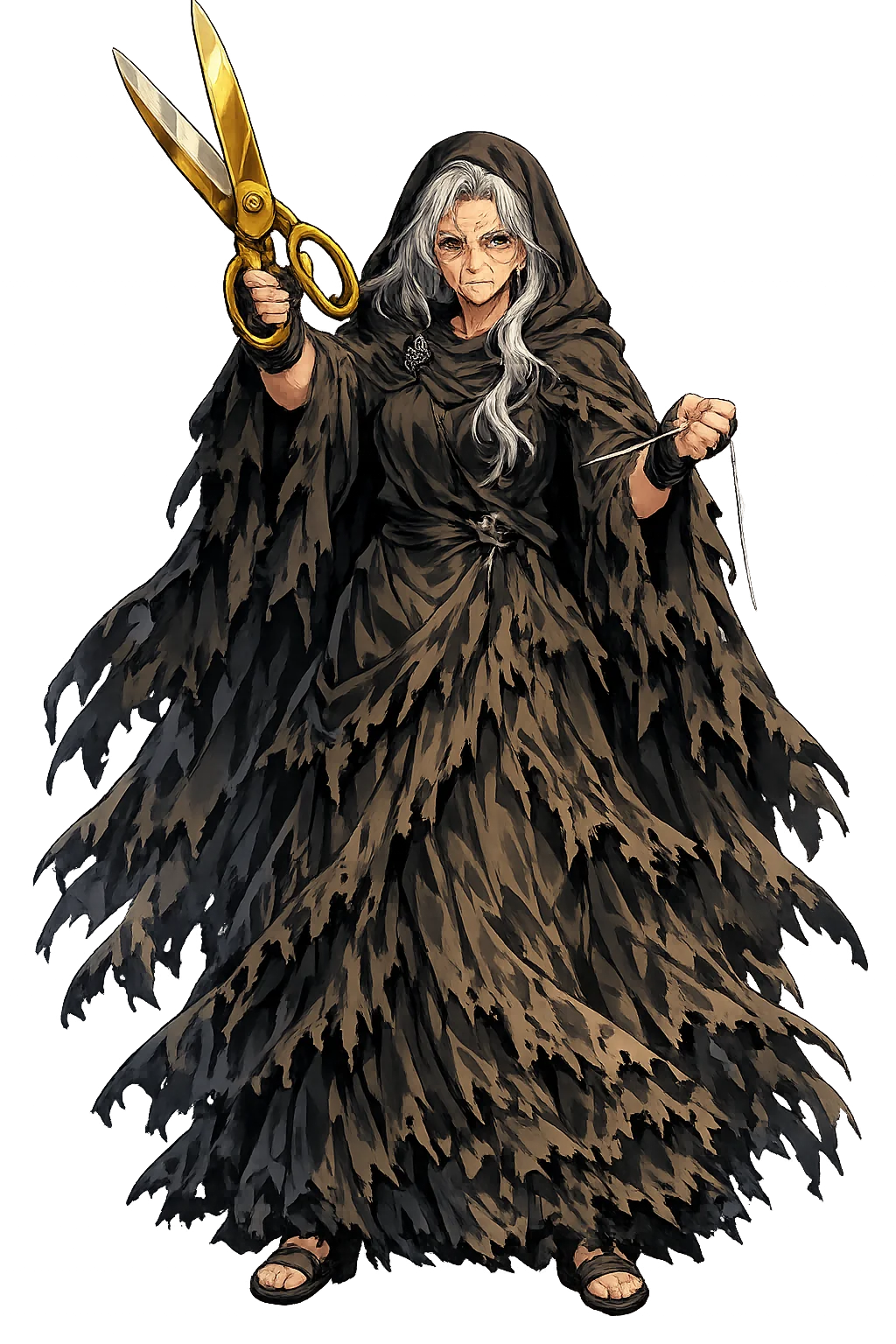
Sacred SymbolsThe shears, The thread, The scroll, The spindle of Anánkē
02

Etymology & Word Family

From original script to Unicode restoration

Original Script Ἄτροπος Átropos — "Inflexible, inevitable"
Unicode Restoration Átropos Restored stress, length, and script
Modern ASCII atropos Plain-ASCII fallback

The name Átropos carries the orthographic signature of the greek tradition: Ἄτροπος. Unicode restoration recovers what ASCII flattens.

03

Unicode Character Breakdown

Character-by-character philological analysis

CharacterUnicodeNameBlockPhonetic Role
ÁU+00C1Latin Capital Letter A with AcuteLatin-1 SupplementAcute on a
tU+0074Latin Small Letter TBasic Latint same
rU+0072Latin Small Letter RBasic Latinr same
oU+006FLatin Small Letter OBasic Latino same
pU+0070Latin Small Letter PBasic Latinp same
oU+006FLatin Small Letter OBasic Latino same
sU+0073Latin Small Letter SBasic Latins same

The Tier 2 classification reflects how much of the original phonology this restoration preserves — stress and vowel length for Greek names, distinctive letters and diacritics for every other tradition.

04

Cult & Worship

How the sacred was kept — rites, sanctuaries, remains

The Cult

Átropos has no temple, priesthood, or festival to her name, and the silence is itself the datum. The Moirai received one secure altar in mainland cult, at Lycosura in Arcadia beside the sanctuary of Despoina (Pausanias 8.37.1), while Zeús bore the cult title Moiragetēs, 'leader of the Fates.' Otherwise they are guests at other gods' rites — invoked at birth and carved on tombs — rather than mistresses of their own. Greek religion kept Necessity in the subjunctive: the sisters were worshipped as a collective and dreaded as individuals. No ancient source describes a single rite addressed to Átropos alone; her cult is the whole of Greek mortality, administered by no one.

In the Earth

The Moirai rarely received independent cult — Pausanias (8.37.1) records an altar of the Fates beside the sanctuary of Despoina at Lycosura, and the cult title Zeus Moiragetēs, “leader of the Fates,” is attested in Arcadian worship. Their true monument is funerary: Roman sarcophagi carved the Parcae with spindle, scroll, and shears as standard eschatological furniture, and Hellenistic gems show Átropos with her blades. The spindle-whorl dedications of spinning-women’s tools found in temple deposits tie the goddess’s craft to real women’s work.

05

Iconography

How Átropos was imaged across the ages

The Image

She enters art late and almost anonymously. Archaic and classical vase painting shows the three Moirai as dignified women — spinners and measurers without distinguishing attributes — and a single Átropos cannot be picked out before the Hellenistic period. Then the blades arrive: on gems and sealstones she becomes identifiable by her shears, and Roman sarcophagi complete the kit — Klōthṓ with spindle and scroll, Láchesis measuring, Átropos with the blades that end the span. Plato's cosmic spindle (Republic 617c) had already taught readers to picture the sisters enthroned, and sculptors of the Roman west followed the same grammar of wool, rod, and shears under the name Parcae. Her true portrait gallery was funerary: the image Greek and Roman households chose for the stone that marked an ending.

06

Reception & Transformation

The name after its own age — transmission, translation, survival

Afterlives

Homer left her a concept without a name; Hesiod gave the name; literature did the rest. Catullus stages the Parcae singing over the wedding of Peleus and Thetis (64.303ff) — the three at their work, chanting the bridegroom's future to the bridal couple — and Roman verse soon shorthand destiny itself as the Fates' thread. Fulgentius' Mythologiae allegorized the three, starting a medieval habit of reading them as one argument about necessity, and Boethius folded her into Providence in the Consolation — a distinction Latin readers rehearsed for a thousand years. Schiller's 'Lied der Parzen' (1797) returned the Greek chorus to European lyric, and Brahms set it as the Schicksalslied (Op. 54). Nineteenth-century scholarship separated the Homeric 'share' from the cosmic regents — Jane Ellen Harrison's Prolegomena (1903) read the Moirai with the anthropologist's eye. Linnaeus fixed her modern species in 1753: Atropa belladonna, and the alkaloid atropine, isolated in 1833, still carries the Inflexible into every resuscitation bay.

Identifications Across Traditions

Rome mapped her onto Morta of the Parcae (from mors, death), with Nona and Decuma spinning and measuring — though later poets reshuffled the names. The Latin poets from Catullus to Seneca use the Fates' cut as the fixed boundary of rhetoric itself: even Jove, they repeat, cannot unshear what is sheared.

Modern biology gave her a second immortality: the nightshade genus Atropa and its alkaloid atropine — the poison that stills the heart and the drug that restarts it — carry the name of the Inflexible into every emergency room.

Modern Legacy

Shakespeare's "thread of life" and every three-weird-sisters scene from Macbeth to modern fantasy descend from her triad. In philosophy she anchors the ancient debate on determinism: Chrysippus and the Stoics built their heimarmenē around the Moirai's decree, and Epicurus invented the atomic swerve partly to break Átropos' loom. Wherever an ending is shown as both just and unalterable, her shears are in the frame.

07

The Meditation

What Átropos means — beyond the dictionary

Átropos is the least frightening of the Fates once understood: she does not shorten the thread, she only confirms its measure. Every system that ends cleanly — a contract performed, a story resolved, a life fully spent — has passed through her hands. The terror belongs not to the cut but to the tangle.

There is a reason programmers, actuaries, and hospice workers all know her name without knowing it: every system that terminates correctly implements her. The thread that ends on schedule is not a tragedy but a design — the Moirai were never death-dealers but measure-keepers, and she is simply the sister who reads the measurement aloud. A culture that can name its ending honestly, the Greeks understood, is freer than one that cannot: the cut is only cruel when the weaving was dishonest.

So the philosophers made peace with her: the Stoics called her law, Epicurus built his swerve against her, and both schools agreed on the one thing the poets always knew — that the measured life is the only kind there is. The shears do not threaten; they define. What has no end has no shape, and what has no shape cannot be lived, only endured.

08

Frequently Asked Questions

Common questions about Átropos, Cutter of Thread, and Unicode restoration

01How do you pronounce Átropos?

In reconstructed pronunciation, Átropos is /á.tro.pos/ — approximately AH-tro-pos, stress on the first syllable; both o vowels short.

02What does Átropos mean?

Átropos means Inflexible, inevitable in the greek tradition.

03What are the symbols of Átropos?

Átropos is associated with The shears (The instrument of the cut — finality without malice), The thread (The spun and measured life she completes), The scroll (In Roman art the Parcae write as well as spin — fate as record), The spindle of Anánkē (The cosmic axis whose turning she and her sisters sing — fate as the music of the spheres (Plato, Republic 617c)).

04Why restore Átropos in Unicode?

Plain ASCII atropos strips the stress, length, and script that make the name specific. Unicode restoration returns the name to its original written dignity.

05What is the most important myth about Átropos?

“Daughters of Night” — the The Genealogy story that anchors the mythology of Átropos, told in full on the lore page.

09

Scholarly Sources

The philological foundations of this restoration

Every claim on this page is grounded in established scholarship. The orthographic restorations follow disciplinary convention. The etymological chain follows the best available reference works. This is not invention — it is resurrection through scholarship.

◈

Lexicography & Philology

  • Liddell, H. G., Scott, R., & Jones, H. S. A Greek-English Lexicon. Oxford: Clarendon Press, 9th ed. 1996.
◎

Primary Texts

  • Plato
  • Hesiod, Theogony 217, 904–906 (the two genealogies of the Moirai)
  • Homer, Iliad 22.179–185 (Zeus and the decree of Moira)
  • Bacchylides 5.94–154 and Hesiod, Catalogue of Women fr. 280 (Méleagros and the brand); Ovid, Metamorphoses 8.451ff
  • Plato, Republic 617c–d (the spindle of Necessity)
  • Apollodorus, Bibliotheca 1.9.15 (Apollo and Admetus); Hyginus, Fabulae 50
  • Pausanias 8.37.1 (altar of the Moirai at Lycosura)
◉

Archaeology & Art History

  • Material evidence — iconography, inscriptions, and temple archaeology — for Átropos and related cults.
✦

Religious Studies

  • Comparative studies of greek religion and the place of Átropos within it.
Return

The Surface Awaits

You have traced the name from its earliest attestation to its Unicode restoration. Now return to the myth. The story is where the name lives.

Back to Lore
Átropos mascot