
The Cult
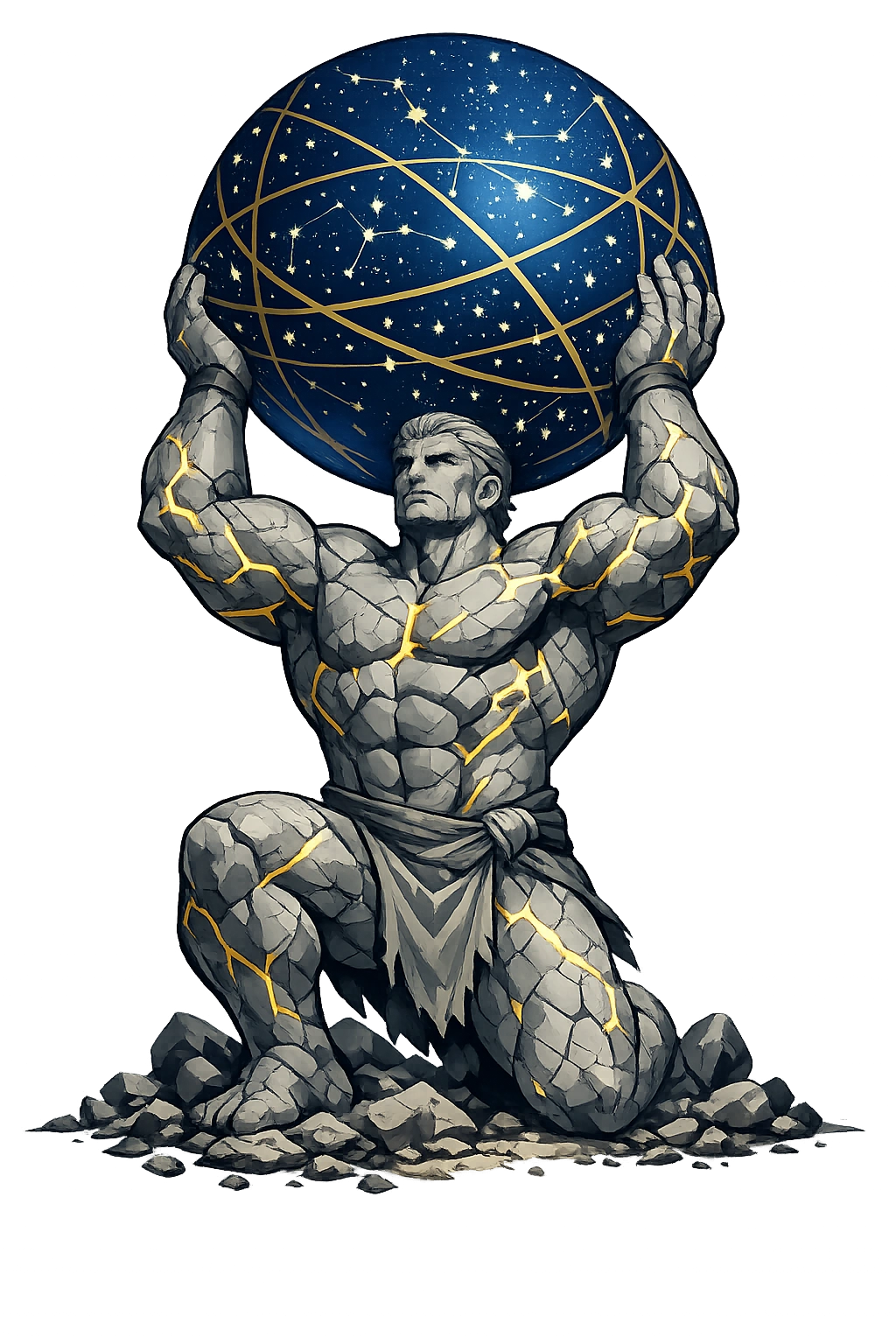
Atlas was venerated more often than he was worshipped: no Greek city is known to have kept a temple, priesthood, or festival of the Titan. His cult, such as it was, was architectural and topographic. Builders named the load-bearing male figure after him — the atlant, the masculine twin of the caryatid — and the colossal Atlas-like telamones of the Olympieion at Akragas (begun c. 480 BCE) set him permanently to work holding up a god's house; he is the only Titan who became a building element. In the far west his worship was the landscape itself: Herodotus (4.184) already peoples the Atlas massif with the 'Atlantes,' and Roman North Africa treated the range as the petrified Titan. No votive of the sky-bearer is recorded. His temple is the sky, and his congregation is everyone who has ever looked up.