PuniCodex

Extended Lore

Ἀθηνᾶ Athēnâ

Etymology · Phonology · Orthography · Cultural Legacy · Primary Sources

Tier 1 Athēnâ.com · Athēnā.com
Athēnâ — Wisdom, War Strategy, Crafts
01

Quick Facts

Essential information about Athēnâ, Wisdom, War Strategy, Crafts

Original ScriptἈθηνᾶ
Unicode RestorationAthēnâ
Reconstructed Pronunciation/a.tʰɛː́.naː/
PantheonGreek
DomainWisdom, War Strategy, Crafts
MeaningUnknown; possibly pre-Greek
ClassificationTier 1
Primary DomainAthēnâ.com
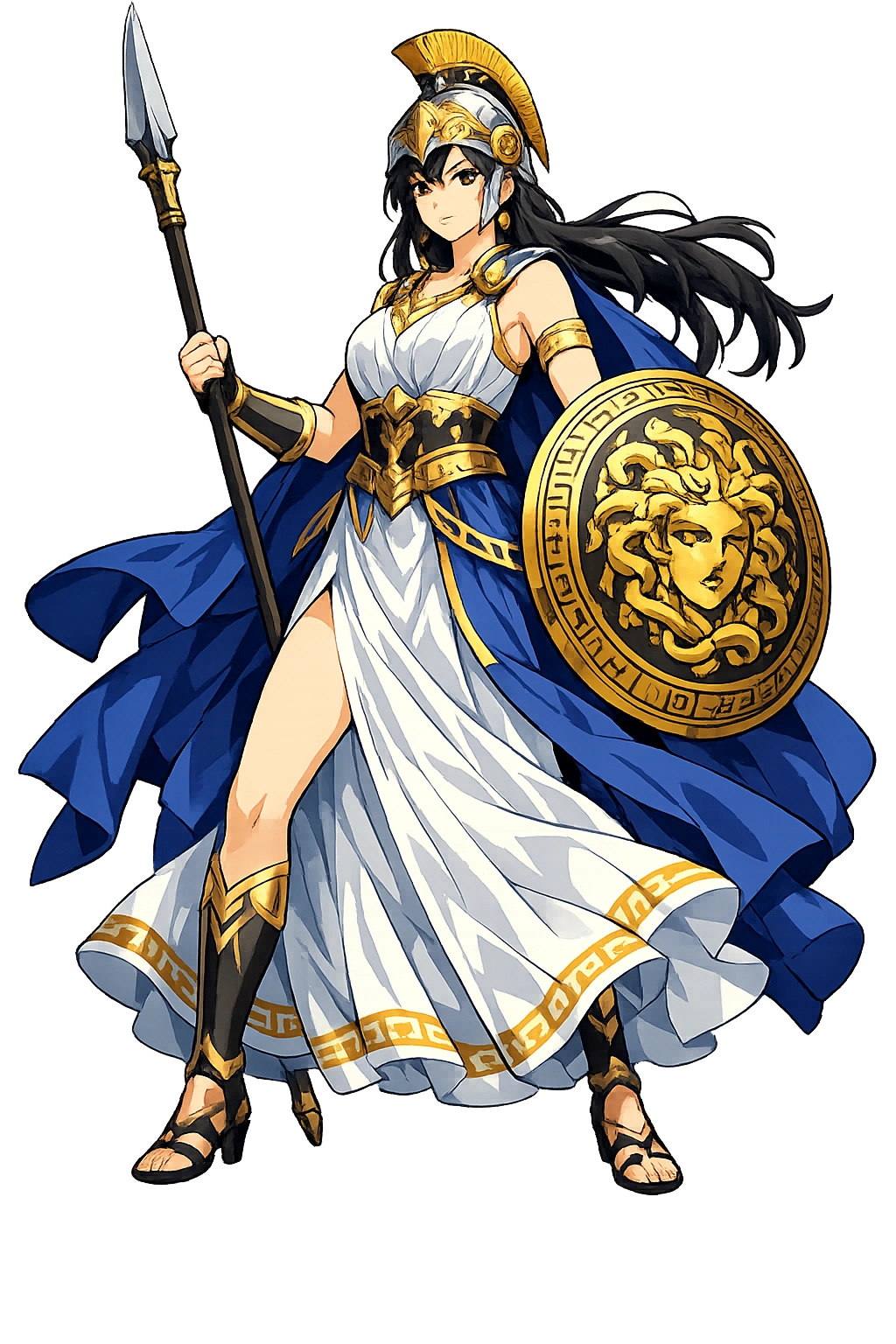
Sacred SymbolsOwl, Olive tree, Aegis, Helmet and spear, Gorgoneion
02

Etymology & Word Family

From original script to Unicode restoration

Proto-indo-european *h₂erǵ- to shine, white, silver
Original Script Ἀθηνᾶ Athēnâ — "Unknown; possibly pre-Greek"
Unicode Restoration Athēnâ Restored stress, length, and script
Modern ASCII athena Plain-ASCII fallback

Athénā is Tier 1 because the Greek Ἀθηνᾶ contains both stress (acute on the long η) and length (η plus long alpha with iota subscript). The restoration Athénā preserves the acute stress; Athēnā is the macron-only variant. The form Athēnē changes the final letter and is therefore used only when the domain requires it.

03

Unicode Character Breakdown

Character-by-character philological analysis

CharacterUnicodeNameBlockPhonetic Role
AU+0041Latin Capital Letter ABasic LatinSame, capitalized
tU+0074Latin Small Letter TBasic LatinSame
hU+0068Latin Small Letter HBasic LatinSame
ēU+0113Latin Small Letter E with MacronLatin Extended-AMacron: long eta
nU+006ELatin Small Letter NBasic LatinSame
âU+00E2Latin Small Letter A with CircumflexLatin-1 SupplementCircumflex: stress + length on the contracted final alpha (Ἀθηνᾶ)

The Tier 1 classification reflects how much of the original phonology this restoration preserves — stress and vowel length for Greek names, distinctive letters and diacritics for every other tradition.

04

Cultural Significance

From ancient cult to modern Unicode

Ancient Domain

Athénā is unique among the Olympians: a warrior who fights only for just causes, a virgin goddess who needs no consort to validate her power, and the patron of the practical arts that make city life possible. She is intelligence made divine.

Athēnâ in Later Traditions

The Romans identified Athénā with Minerva, a goddess already associated with crafts and strategy, so the equation was unusually smooth. In Egypt she was equated with Neith, the warrior-weaver goddess of Sais, and Hellenistic Jews identified her with Sophia, divine Wisdom. During the Renaissance she became the emblem of rational virtue; in modern Athens she remains the namesake and symbol of the city, her helmeted head on coins and official seals. The Parthenon, her temple, is the canonical image of Classical Greece.

Modern Legacy

Athénā is the divine patron of everything the Greeks most valued in civic life: wisdom, craft, disciplined courage, and strategic thought. The Athenian democracy claimed her protection; the Panathenaea was the city's greatest festival. In philosophy she became the emblem of reason; in art the model of dignified female power. Her owl, her olive, and her helmet are still instantly recognizable symbols of classical civilization. Restoring Athénā preserves the name under which the world's first democracy invoked its guiding intelligence.

Unicode Restoration as Cultural Act

Restoring Athēnâ in a domain name is more than orthographic accuracy. It is a statement that the internet should recognize the full range of human writing — not only the ASCII keyboard.

05

Frequently Asked Questions

Common questions about Athēnâ, Wisdom, War Strategy, Crafts, and Unicode restoration

01How do you pronounce Athēnâ?

In reconstructed pronunciation, Athēnâ is /a.tʰɛː́.naː/ — approximately 'ah-THAY-na' — the second syllable is pitched higher and drawn out; the final 'a' is long and pure..

02What does Athēnâ mean?

Athēnâ means Unknown; possibly pre-Greek in the greek tradition.

03What are the symbols of Athēnâ?

Athēnâ is associated with Owl (Wisdom, night-vision, and the bird sacred to Athens), Olive tree (Her gift to Athens, defeat of Poseidôn in the contest for the city), Aegis (The goat-skin fringed with serpents; worn by Zeús and Athena, it inspires terror), Helmet and spear (Warrior identity, but always disciplined and defensive), Gorgoneion (The severed head of Medousa on her breastplate, turning enemies to stone).

04What is the difference between Athēnâ.com and Athēnā.com?

Each is a historically defensible restoration. Athēnā.com is the macron-only form: LSJ convention: length only, no acute on epsilon.

05Why restore Athēnâ in Unicode?

Plain ASCII athena strips the stress, length, and script that make the name specific. Unicode restoration returns the name to its original written dignity.

06What is the most important myth about Athēnâ?

Zeús swallowed his pregnant first wife Mêtis, fearing a son who would overthrow him. Later, Hephaistos split Zeús's skull with an axe, and Athénā sprang forth fully armed with a shout that shook Olympus. She is therefore the only Olympian whose parent is purely paternal — intelligence born directly from sovereignty.

06

Scholarly Sources

The philological foundations of this restoration

Every claim on this page is grounded in established scholarship. The orthographic restorations follow disciplinary convention. The etymological chain follows the best available reference works. This is not invention — it is resurrection through scholarship.

Lexicography & Philology

  • Liddell, H. G., Scott, R., & Jones, H. S. A Greek-English Lexicon. Oxford: Clarendon Press, 9th ed. 1996.
  • Pape, W., & Benseler, G. E. Wörterbuch der griechischen Eigennamen. Braunschweig: Vieweg, 1884.
  • Beekes, R. S. P. Etymological Dictionary of Greek. Leiden: Brill, 2010.

Primary Texts

  • Homer, Iliad and Odyssey
  • Hesiod, Theogony
  • Aeschylus, Eumenides
  • Pausanias, Description of Greece

Archaeology & Art History

  • Material evidence — iconography, inscriptions, and temple archaeology — for Athēnâ and related cults.
  • The Athenian Acropolis preserves the Parthenon (447–432 BCE), Erechtheion, and Temple of Athena Nike, whose sculptural program celebrated Athena Polias, Parthenos, and Nikephoros. The colossal gold-and-ivory Athena Parthenos by Pheidias stood inside the Parthenon; fragments of its base survive. The Panathenaic frieze and pedimental sculptures show the goddess in birth and triumph. Outside Athens, the temple of Athena Alea at Tegea and the sanctuary at Lindos on Rhodes attest her wide civic cult.

Religious Studies

  • Comparative studies of greek religion and the place of Athēnâ within it.
Return

The Surface Awaits

You have traced the name from its earliest attestation to its Unicode restoration. Now return to the myth. The story is where the name lives.

Back to Lore
Athēnâ mascot