
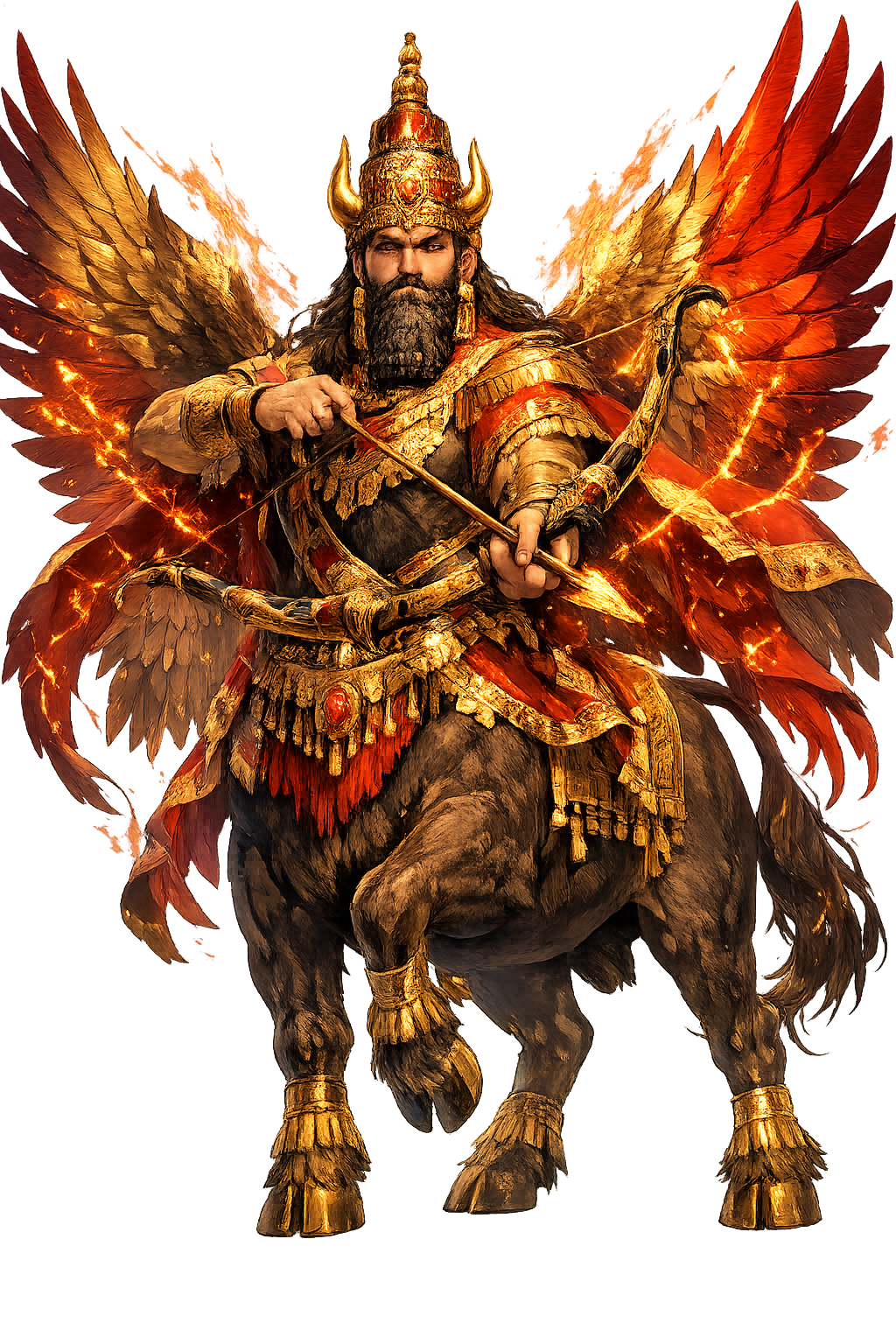
The canonical register: Aššur
The internet spells Aššur more ways than one, and only one of them is the name the sources wrote. This is the register's ruling — canonical, fallback, contested, and false, each in its proper place.
At a Glance
- Canonical form: Aššur
- Original script: 𒀭𒀸𒋩
- Pantheon: Mesopotamian
- Convention: Assyriological transliteration — š, ṣ, ṭ, ḫ as the sign lists require
- False forms on record: 2
- Contested forms: none attested
- Series: The Canonical Register, No. 59 of 546
The Canonical Form
The attested form is 𒀭𒀸𒋩, from the tradition's own record. The canonical transliteration is Aššur.
No diacritics are required here: the canonical form is the exactness of the spelling itself, the form Assyriological transliteration — š, ṣ, ṭ, ḫ as the sign lists require demands.
Where the Flattened Form Stands
The plain form ashur is not false — it is a fallback, and the register is exact about what that means. In systems that cannot carry diacritics (legacy databases, older tooling, parts of the address-bar pipeline) the flattened form is the accepted vehicle, and the rulebook names it explicitly as the final rung of the fallback hierarchy: full restoration first, circumflex where attested, macron-only by the academic standard, an attested variant, and only then plain ASCII.
What the fallback status forbids is promotion: ashur may carry the name where marks are impossible, but it may not represent the name where marks are possible. A fallback is a vehicle, never the primary.
The Register of False Forms
False form 1: Ashshur
Origin: the publisher compromise — older books and hurried websites that print the "English equivalent" as if it were the name itself.
Violation: every substitution here (š→sh) is a romanization of convenience, not an attested spelling — it teaches the reader to guess, not to read.
False form 2: Assur
Origin: the near-miss — a form that looks right at a glance and circulates on wikis and forums.
Violation: š is a hushing sibilant, not plain s — the whole Semitic consonant inventory depends on it.
The Contested Forms
No alternate form of this name carries documented scholarly support in the lexicon's record. The convention here — Assyriological transliteration — š, ṣ, ṭ, ḫ as the sign lists require — produces exactly one defensible transliteration: Aššur. Forms that differ from it are not contested; they are simply wrong.
The Convention's Own History
The oldest writing system on earth encodes its gods in wedge marks on clay, and its consonant system outruns the Latin alphabet: š is a hushing sibilant, ṣ and ṭ are emphatics produced deep in the mouth, ḫ is a rasp English lost centuries ago. When nineteenth-century decipherers built the transliteration conventions Assyriology still uses, they chose diacritics precisely so that none of those distinctions would be flattened. This register honors the same choice for the same reason: the tablets distinguish; so do we.
What the Address Bar Allows
IDNA 2008 permits the letters these restorations use — macrons, acutes, underdots, thorn, ogonek, the lot — and the DNS carries them as punycode (`xn--` labels). Two honest constraints remain. First, registrar inventory: the protocol permits a character; the registrar's stock decides whether the exact domain can be bought today. Second, combined marks: forms like Apṓllōn (acute stacked on a macron) are philologically ideal yet effectively untypeable on phones and unsupported across much of the registration system.
That is why the rulebook keeps a fallback hierarchy — full restoration first, then the circumflex when the source carries one, then the macron-only academic standard, then an attested variant, and only as a last resort the plain ASCII form. Every step down the ladder is still defensible; nothing on the ladder is a wrong mark. A fallback is a choice among attested forms. A false form is not on the ladder at all.
Where the Name Stood First
Aššur's primary cult center was the city of Assur (modern Qal'at Sherqat) on the Tigris, where German, Iraqi, and international teams excavated the Aššur temple, its ziggurat, and the surrounding palace and residential quarters. Royal inscriptions from Assur, Nimrud, Khorsabad, and Nineveh document repeated rebuilding of the temple and the deposition of booty. The wall reliefs of Neo-Assyrian palaces — lions, sieges, tribute processions — are visual propaganda of Aššur's empire. Foundation tablets, royal annals, and prism inscriptions from Nineveh's library preserve the theological claims that made Assyria a sacred project. The temple on the web is the newest of these addresses — the first one that fits in a pocket.
The Verdict
The register rules for Aššur, and the ruling is checkable: every mark sourced, every violation stated, every borderline form given its honest standing. ashur is the sanctioned fallback for systems without marks — a vehicle, never the scholarly primary. Anything else in circulation has its origin and its failure recorded above. That is the whole of the law on this name — and the temple at /ashur/ enforces it.
The docket for this ruling: 2 false forms ruled against, Ashshur first on the docket; no contested forms attested; the attestation rests on 9 cited sources — Chicago Assyrian Dictionary (CAD), Aššur, George, House Most High: The Temples of Ancient Mesopotamia, Black & Green, Gods, Demons and Symbols of Ancient Mesopotamia.
The Register Continues
The register holds 546 entries like this one — each temple with its own ruling. Read the temple's founding dispatch for the story, its Restoration File for the philology, its Resonance File for the industries, or the whole archive end to end.
Continue the register — previous entry: ꜥAsherah (read it) · next entry: Asía (read it).
The Canonical Register is written from the same canonical record as the lexicon itself. If a false form is missing from this page, it is because the evidence does not support calling it false — or because we have not seen it yet. Show us, with a citation, and the register will answer.