PuniCodex

Extended Lore

π’€­π’Œ“ π’Œ·π’€€π’Š‘π’…”π’ˆΎ Arinna

Etymology Β· Phonology Β· Orthography Β· Cultural Legacy Β· Primary Sources

Tier 2 Arinna
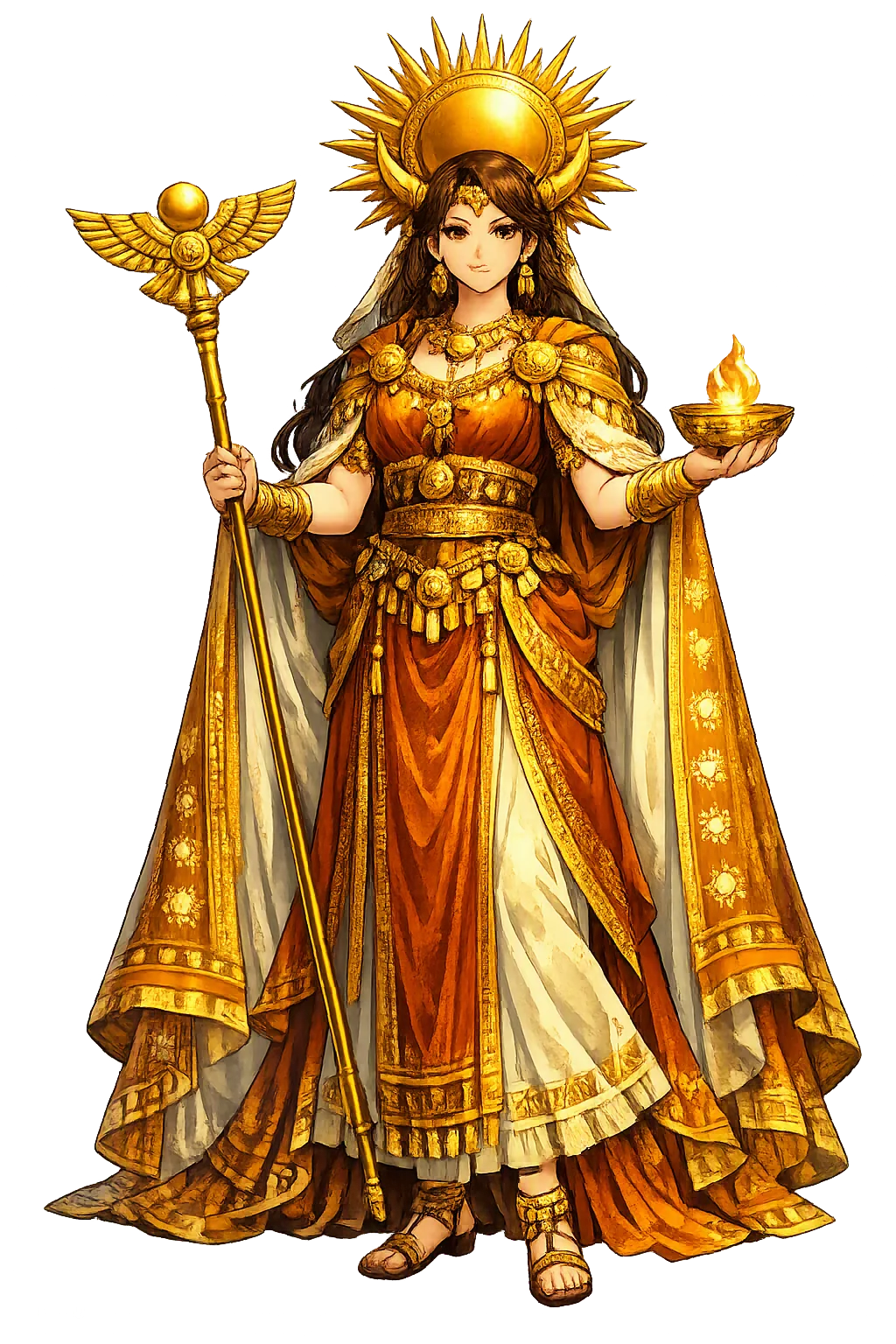
Arinna β€” Sun Goddess, Supreme
01

Quick Facts

Essential information about Arinna, Sun Goddess, Supreme

Original Scriptπ’€­π’Œ“ π’Œ·π’€€π’Š‘π’…”π’ˆΎ
Unicode RestorationArinna
Reconstructed Pronunciation/aˈrin.na/
PantheonHittite
DomainSun Goddess, Supreme
MeaningOf Arinna
ClassificationTier 2
Primary DomainArinna
Sacred SymbolsSun disk, Lion, Throne, Golden crown, Winged sun
02

Etymology & Word Family

From original script to Unicode restoration

Original Script π’€­π’Œ“ π’Œ·π’€€π’Š‘π’…”π’ˆΎ Arinna β€” "Of Arinna"
Unicode Restoration Arinna Restored stress, length, and script
Modern ASCII arinniti Plain-ASCII fallback

Arinna is Tier 2: the restored form preserves the scholarly citation shape but adds no distinctive diacritic; the ASCII form is a domain-name convenience; the cuneiform original is written in the Sumero-Akkadian syllabary.

03

Unicode Character Breakdown

Character-by-character philological analysis

CharacterUnicodeNameBlockPhonetic Role
AU+0041Latin Capital Letter ABasic LatinSame, capitalized
rU+0072Latin Small Letter RBasic LatinSame
iU+0069Latin Small Letter IBasic LatinSame
nU+006ELatin Small Letter NBasic LatinSame
aU+0061Latin Small Letter ABasic LatinSpecial character
β€”N/ADropped characterHittite orthographyDropped

The Tier 2 classification reflects how much of the original phonology this restoration preserves β€” stress and vowel length for Greek names, distinctive letters and diacritics for every other tradition.

04

Cultural Significance

From ancient cult to modern Unicode

Ancient Domain

Arinna is the Sun Goddess of Arinna, the supreme deity of the Hittite state pantheon. Her cult center at the city of Arinna made her the divine patron of Hittite kingship, and Hittite monarchs styled themselves her beloved son. Unlike the Hattian sun-god, she is a goddess of the sun disk whose warmth and radiance guarantee fertility, justice, and cosmic order. Prayers to her are among the most elaborate compositions in the Hittite language, showing a theology in which the king, the land, and the cosmos are bound together under one solar sovereign.

Arinna in Later Traditions

Arinna absorbed and transformed older Hattic and Mesopotamian solar traditions.

The Hattian sun-god Estan was originally male; in the Hittite state pantheon the solar deity of Arinna became female and supreme, probably under Hurrian and Syrian influence. She has been compared to the Mesopotamian sun-god Shamash, who also oversees justice, and to the Egyptian sun-god Re as a royal patron. Yet her theology is distinct: she is not primarily a warrior but a mother-queen whose radiance is the condition for ordered life. The shift from a male to a female supreme solar deity is one of the most striking features of Hittite religious history.

Modern Legacy

Arinna survives as a paradigm of sacred kingship and solar queenship.

Scholars of ancient Near Eastern religion study her cult to understand how a state creates a national deity, and feminist historians of religion note the unusual prominence of a supreme goddess in a major Bronze Age empire. Her name appears in studies of Hittite prayer, royal ideology, and comparative solar mythology. For PuniCodex, Arinna represents the restoration of a name that once stood at the center of an imperial state: the queen of heaven whose light was synonymous with legitimate rule.

Unicode Restoration as Cultural Act

Restoring Arinna in a domain name is more than orthographic accuracy. It is a statement that the internet should recognize the full range of human writing β€” not only the ASCII keyboard.

05

Frequently Asked Questions

Common questions about Arinna, Sun Goddess, Supreme, and Unicode restoration

01How do you pronounce Arinna?

In reconstructed pronunciation, Arinna is /aˈrin.na/ β€” approximately Scholarly reconstruction /aˈrin.na/; the exact ancient pronunciation is debated..

02What does Arinna mean?

Arinna means Of Arinna in the hittite tradition.

03What are the symbols of Arinna?

Arinna is associated with Sun disk (The radiant wheel of the sun, source of life and royal authority.), Lion (Her animal companion and symbol of sovereign power.), Throne (The seat of supreme kingship in heaven and on earth.), Golden crown (The solar diadem that marks her as queen of the gods.), Winged sun (The sun in motion across the sky, seeing all that happens below.).

04Why restore Arinna in Unicode?

Plain ASCII arinniti strips the stress, length, and script that make the name specific. Unicode restoration returns the name to its original written dignity.

05What is the most important myth about Arinna?

In the great prayer CTH 376 the Sun Goddess of Arinna is invoked as the supreme power who sees and hears everything on earth. She is the mother of the king, the mistress of the land of Hatti, and the one before whom both gods and humans appear. The text makes clear that Hittite kingship is not absolute: it is a delegated responsibility held under her gaze.

06

Scholarly Sources

The philological foundations of this restoration

Every claim on this page is grounded in established scholarship. The orthographic restorations follow disciplinary convention. The etymological chain follows the best available reference works. This is not invention β€” it is resurrection through scholarship.

β—ˆ

Lexicography & Philology

  • Hittite texts
  • CHD
β—Ž

Primary Texts

  • Primary sources in the hittite tradition for Arinna.
β—‰

Archaeology & Art History

  • Material evidence β€” iconography, inscriptions, and temple archaeology β€” for Arinna and related cults.
  • The texts that name Arinna were excavated from the Hittite royal archives at BoğazkΓΆy-Hattusa and related sites in central Anatolia, including temple storerooms and administrative buildings within the citadel. The tablets belong to the corpus of Hittite cuneiform literature preserved in the imperial chancery, with duplicates and parallels in Hurrian, Hattic, Luwian, and other Anatolian traditions. Many were written or copied during the Empire period (c. 1400–1180 BCE), though some compositions may descend from older oral or written sources. The clay tablets were baked, either deliberately or by the fire that destroyed the city, which helped preserve them for modern excavation and study.
✦

Religious Studies

  • CTH 376 β€” Prayer to the Sun Goddess of Arinna.
  • Singer, I., Hittite Prayers (2002).
  • Gurney, O. R., Some Aspects of Hittite Religion (1977).
  • Hoffner, H. A., Hittite Myths, 2nd ed. (1998).
  • Haas, V., Geschichte der hethitischen Religion (1994).
  • CHD (Chicago Hittite Dictionary), ed. GΓΌterbock, Hoffner, and van den Hout.
  • van den Hout, T. P. J., The Elements of Hittite (2011).
  • Kloekhorst, A., Etymological Dictionary of the Hittite Inherited Lexicon (2008).
Return

The Surface Awaits

You have traced the name from its earliest attestation to its Unicode restoration. Now return to the myth. The story is where the name lives.

Back to Lore
Arinna mascot