PuniCodex

Extended Lore

अर्हत् Arhat

Etymology · Orthography · Cult · Iconography · Reception · Sources

Tier 2 Arhat
Arhat — Worthy One, Saint
01

Quick Facts

Essential information about Arhat, Worthy One, Saint

Original Scriptअर्हत्
Unicode RestorationArhat
Reconstructed Pronunciation/ˈɐɾ.ɦɐt̪/
PantheonBuddhist
DomainWorthy One, Saint
Meaningan Arhat or superior divinity with the Jainas
ClassificationTier 2
Primary DomainArhat
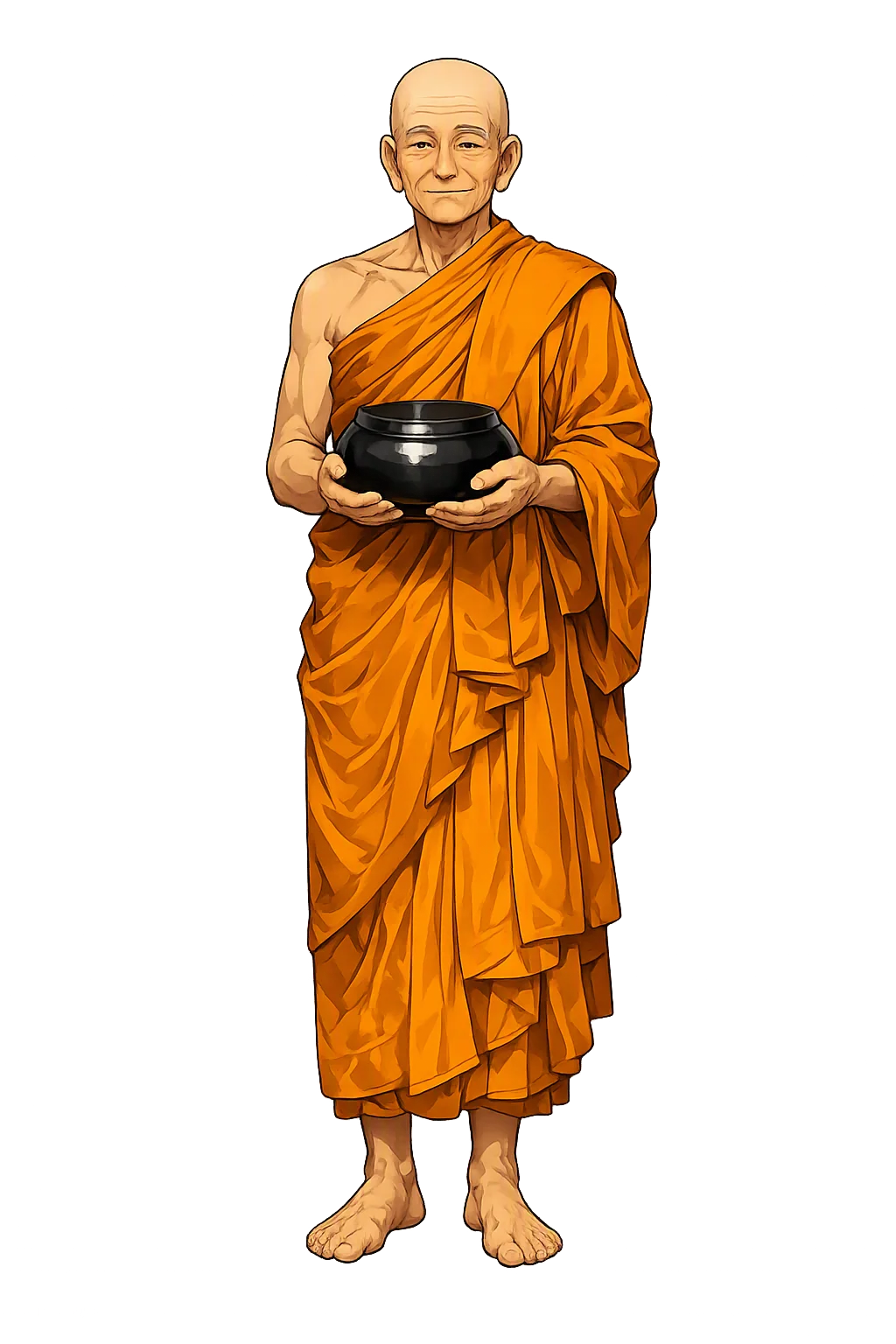
Sacred SymbolsThe begging bowl, The crutch and long eyebrows, The flame of the taints extinguished, The lion's roar of assurance, The assembly of elders
02

Etymology & Word Family

From original script to Unicode restoration

Original Script अर्हत् Arhat — "an Arhat or superior divinity with the Jainas"
Unicode Restoration Arhat Canonical scholarly spelling — ASCII-identical
Modern ASCII arhat Plain-ASCII fallback

The name Arhat reaches the modern world through scholarly transliteration of the buddhist tradition. Because the conventional spelling uses only Latin letters, its Unicode and ASCII forms coincide — the tradition it carries is in the name itself, not in diacritics.

03

Unicode Character Breakdown

Character-by-character philological analysis

CharacterUnicodeNameBlockPhonetic Role
AU+0041Latin Capital Letter ABasic LatinSame, capitalized
rU+0072Latin Small Letter RBasic LatinSame
hU+0068Latin Small Letter HBasic LatinSame
aU+0061Latin Small Letter ABasic LatinSame
tU+0074Latin Small Letter TBasic LatinSame

The Tier 2 classification here reflects fidelity to the attested tradition, not recovered diacritics: every character of Arhat already survives in ASCII. What the restoration preserves is the canonical spelling itself — the form scholarship standardised.

04

Cult & Worship

How the sacred was kept — rites, sanctuaries, remains

The Cult

The arhat is not worshipped but fed — and honored as the field in which generosity ripens. The canonical economy runs both ways: the laity gain merit by giving alms to the arhat, who in turn owes the world nothing, having finished the task. Around this exchange grew real institutions: the rain-retreat that settled the wandering monk into the monastery, the fortnightly uposatha confession, and the unbroken ordination lineages that still trace every Theravāda preceptor back through a chain of arhats to the Buddha himself. In East Asia the Sixteen Lohans received actual cult — lohan halls with incense and offerings, under the claim that these worthies wait in the mountains until Maitreya comes; Mahākāśyapa, said to sit in Kukkuṭapāda mountain guarding the Buddha's robe, drew pilgrims to Chicken-Foot Mountain in Yunnan. The worthy one is honored not with prayer but with the discipline of keeping the path walkable.

In the Earth

The arhat's archaeology is the archaeology of the aniconic saṅgha. The Bharhut and Sanchi reliefs (2nd–1st c. BCE) show the great disciples flanking the empty throne — identifiable by label in Brahmi inscriptions: Sāriputa, Mogalāna, Maha Kāsava. The earliest anthropomorphic saṅgha images come from Gandhāra and Mathurā (1st–3rd c. CE): monks in patched robes, each with his attribute. The lohans' gallery in Chinese art is documented from the Tang — Guanxiu's sixteen (c. 891–901) survive in the Tokyo Seikado and Imperial Household collections — and the Five Hundred Lohans halls of the Song and Ming (Jingshan, Biyun, Baoguang monasteries) preserve the type at monumental scale. In Pāli lands, the arhat leaves no relic-cults of his own by design: the finished one, the tradition says, leaves nothing to enshrine but the teaching.

05

Iconography

How Arhat was imaged across the ages

The Image

Learn to read an arhat by his ordinariness. Against the Buddha's thirty-two marks of perfection, the arhat is a monk — shaved head, patched robe, alms bowl, sometimes the wanderer's staff. Where the Buddha could not yet be shown in human form, the early reliefs at Bharhut and Sanchi gave the great disciples Brahmi name-labels beside the empty throne; Gandhāra and Mathurā sculpture of the first to third centuries CE then individualized them as heavy-jowled ascetics with their begging bowls. China's lohans turned the type into expressive portraiture — Guanxiu's Sixteen Arhats (c. 891–901) with their huge ears, long eyebrows, and foreign faces — and the Liao dynasty's Yixian luohans (c. 1000), polychromed clay giants now dispersed among the British Museum, the Metropolitan Museum, and the Musée Guimet, stand as the summit of the type. In Japan the rakan became a favorite of Zen ink painters.

06

Reception & Transformation

The name after its own age — transmission, translation, survival

Afterlives

The arhat's transmission is the transmission of the Pāli canon itself. The oral texts were committed to writing in Sri Lanka at Aluvihare in the first century BCE, and the verses of the finished saints — the Theragāthā and Therīgāthā — stand among the oldest first-person religious literature in the world. Dhammapāla's fifth- or sixth-century commentaries gave the verses their biographies; Buddhaghosa's Visuddhimagga (fifth century CE) mapped the arhat's path in systematic detail, and it remains the master manual of Theravāda practice. When Xuanzang translated Nandimitra's Record of the Duration of the Dharma in 654, the Sixteen Lohans stepped from Indian memory into East Asian cult. In the nineteenth century the Pali Text Society's editions carried the canon — and the arhat ideal with it — into European scholarship, where 'arahant' entered the modern study of religion as the name of a holiness defined as completable.

Identifications Across Traditions

The Jaina sister-tradition used the same title in parallel: every tīrthaṅkara is an arhat, and the two śramaṇa movements argued over who deserved the word — evidence that it belonged to the age, not to one sect. Mahāyāna sūtras, building the rival bodhisattva ideal, chastised the arhat's "selfish" release (the Lotus Sūtra likens the arhat vehicle to a burning house escaped too soon), yet kept the title for the Buddha himself and for Śāriputra, whose "future Buddhahood" the Lotus explicitly prophesies. In China the arhat became the lohan — an immortal in Taoist dress — and in Tibet the great arhats of the canon were painted as the Buddha's original saṅgha, the lineage every ordination renews. Modern vipassanā movements restored the word to practice: the arhat is again a goal, not a museum piece.

Modern Legacy

The arhat's afterlife is the afterlife of the Theragāthā — a book of verses by the first saints, still chanted in Pāli lands, among the oldest autobiographies in the world. Chinese temples fill halls with lohan: the Five Hundred Arhats of Beijing's Biyun Si and the sixteen of Hangzhou's Jingshan Si are national treasures; Guanxiu's originals survive in Japan, designated national treasures there too. In Sri Lanka and Southeast Asia the arhat remains the living summit of the path — every forest monastery's kammaṭṭhāna tradition claims the title's ladder, rung by rung. And in the modern West, where "saint" had grown vague, "arhat" arrived with its etymology intact: the worthy one — holiness defined as a task you can finish.

07

The Meditation

What Arhat means — beyond the dictionary

The arhat is the most austere ideal any major religion has proposed: not love, not justice, not obedience — completion. The canonical formula is brutal in its economy: done is what had to be done; there is no more of this. No god approves it, no history rewards it, no heaven awaits as payment. It is simply over.

That is why the Mahāyāna found it both admirable and insufficient, and why modern readers find it quietly devastating. The arhat does not save the world; the arhat leaves. Yet the tradition kept the begging bowl — the one object that binds the finished saint back to the unfinished crowd, who must feed him and so plant their own merit. Perfection, the bowl insists, is not private. The worthy one stands at the door precisely so that someone else can practice giving. The ideal of having nothing, it turns out, was always also a technology of connection.

08

Frequently Asked Questions

Common questions about Arhat, Worthy One, Saint, and Unicode restoration

01How do you pronounce Arhat?

In reconstructed pronunciation, Arhat is /ˈɐɾ.ɦɐt̪/ — approximately 'UHR-hut' — short vowels throughout; the h is a voiced breath between the syllables, and the final t is pure dental, not English 't'.

02What does Arhat mean?

Arhat means an Arhat or superior divinity with the Jainas in the buddhist tradition.

03What are the symbols of Arhat?

Arhat is associated with The begging bowl (The arhat's only possession — and the reason the laity feed him: the worthy one is a field of merit, and a donation ripens), The crutch and long eyebrows (The lohans' immortal attributes in Chinese art — longevity so extreme it needs support, and sight so deep it overgrows), The flame of the taints extinguished (Nirvāṇa as a fire gone out — the arhat is the one whose fuel (rāga, dosa, moha) is spent; nothing more burns), The lion's roar of assurance (The arhat's declaration 'there is no more coming to any state of being' — certainty spoken from completion, not faith), The assembly of elders (Sāriputta and Moggallāna flanking the Buddha — wisdom and powers as the twin pillars of the arhat ideal).

04Why restore Arhat in Unicode?

Arhat is written entirely in ASCII letters, so its restoration is about canonical fidelity rather than recovered diacritics: the temple fixes the name in its scholarly standard spelling, attested in the source tradition, instead of leaving it to drift.

05What is the most important myth about Arhat?

“Worthy of Gifts” — the The Word story that anchors the mythology of Arhat, told in full on the lore page.

09

Scholarly Sources

The philological foundations of this restoration

Every claim on this page is grounded in established scholarship. The orthographic restorations follow disciplinary convention. The etymological chain follows the best available reference works. This is not invention — it is resurrection through scholarship.

◈

Lexicography & Philology

  • Pali Canon
  • Buddhist texts
◎

Primary Texts

  • The Larger Sukhāvatī-vyūha Sūtra; the Smaller Sukhāvatī-vyūha Sūtra; the Amitāyurdhyāna Sūtra; the Lotus Sūtra.
◉

Archaeology & Art History

  • Material evidence — iconography, inscriptions, and temple archaeology — for Arhat and related cults.
✦

Religious Studies

  • Satipaṭṭhāna Sutta (MN 10)
  • Sāriputta Sutta (SN 47.19)
  • Kevaṭṭa Sutta (DN 11)
  • Etadagga Vagga (AN 1)
  • Theragāthā and Therīgāthā
  • Buddhaghosa, Visuddhimagga
  • Nandimitra, Record of the Duration of the Dharma (Xuanzang trans., 654)
Return

The Surface Awaits

You have traced the name from its earliest attestation to its Unicode restoration. Now return to the myth. The story is where the name lives.

Back to Lore
Arhat mascot