PuniCodex

Extended Lore

Ἄργος Árgos

Etymology · Orthography · Cult · Iconography · Reception · Sources

Tier 2 Árgos.com
Árgos — Vigilance, Hera's Watcher
01

Quick Facts

Essential information about Árgos, Vigilance, Hera's Watcher

Original ScriptἌργος
Unicode RestorationÁrgos
Reconstructed Pronunciation/ár.gos/
PantheonGreek
DomainVigilance, Hera's Watcher
MeaningShining, swift
ClassificationTier 2
Primary DomainÁrgos.com
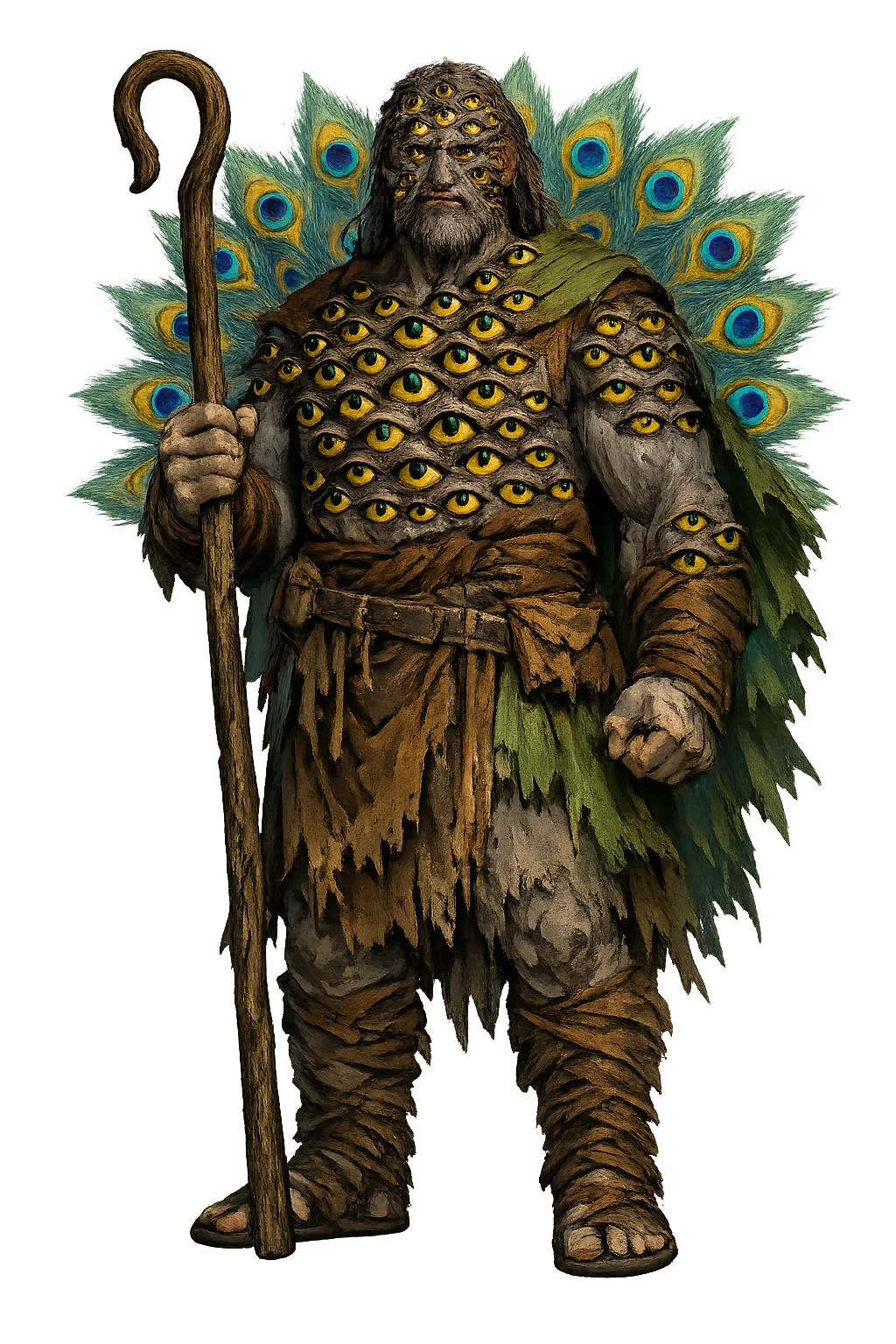
Sacred SymbolsThe hundred eyes, The peacock, The white cow, The herdsman's staff, The curved sword
02

Etymology & Word Family

From original script to Unicode restoration

Original Script Ἄργος Árgos — "Shining, swift"
Unicode Restoration Árgos Restored stress, length, and script
Modern ASCII argos Plain-ASCII fallback

The name Árgos carries the orthographic signature of the greek tradition: Ἄργος. Unicode restoration recovers what ASCII flattens.

03

Unicode Character Breakdown

Character-by-character philological analysis

CharacterUnicodeNameBlockPhonetic Role
ÁU+00C1Latin Capital Letter A with AcuteLatin-1 SupplementAcute on a
rU+0072Latin Small Letter RBasic Latinr same
gU+0067Latin Small Letter GBasic Lating same
oU+006FLatin Small Letter OBasic Latino same
sU+0073Latin Small Letter SBasic Latins same

The Tier 2 classification reflects how much of the original phonology this restoration preserves — stress and vowel length for Greek names, distinctive letters and diacritics for every other tradition.

04

Cult & Worship

How the sacred was kept — rites, sanctuaries, remains

The Cult

Árgos Panoptes was never worshipped: no altar or festival bears his name, and the Greeks treated him as primeval history, not cult. The cultus belongs to the figures around him. His mistress Hera held one of her greatest sanctuaries at the Argive Heraion, where the myth's landscape is set, and Io herself — in Apollodorus' telling a priestess of Hera at Argos — carried the story's cultic thread to Egypt, where Greek settlers identified her with Isis and honored her son Epaphos as a god. The peacock, whose tail carries his hundred eyes, was sacred to Hera rather than to him. His only devotees are linguistic: Hermes' epithet Argeiphontēs, slayer of Árgos, must once have attached to aetiological song or ritual drama, but no trace of its performance survives. He remains what the myth made him — an instrument honored, if at all, in the memorial of his own eyes.

In the Earth

Árgos Panoptes had no cult and no temple; the Greeks themselves knew him as a figure of the primeval Argolid, and his material presence is pictorial. Attic and South Italian vases of the fifth and fourth centuries BCE show him exactly as the poets describe — a herdsman whose body is seeded with eyes, standing guard over the cow Io, or falling beneath Hermês's sword. His landscape survives: the Heraion of Argos, the great sanctuary of his mistress, and the olive grove of Mycenae where the sources place his watch. The myth's honesty is part of its interest — the all-seeing watcher left nothing behind but pictures of his own watching.

05

Iconography

How Árgos was imaged across the ages

The Image

Árgos is a creature of Greek painting before sculpture: Attic and South Italian vases of the fifth and fourth centuries BCE show him as a bearded herdsman whose body is scattered with eyes, guarding the white cow or collapsing under Hermes' sword — the fullest dossier of his ancient imagery is catalogued in the modern Lexicon Iconographicum Mythologiae Classicae. Engraved gems carry the same scene to signet and seal. No monumental statue of him survives, or likely ever existed. Ovid's hundred eyes — some awake while others slept, in relays — became the governing text for every later image: medieval bestiaries moralized the peacock, and Renaissance emblem books made Argus the personification of Vigilance, watching from title pages. In baroque painting Mercury's sword found him at rest, the eyes closing one by one. The image froze where Ovid left it: eyes everywhere, and none of them fast enough.

06

Reception & Transformation

The name after its own age — transmission, translation, survival

Afterlives

Árgos' journey is short and mostly Ovidian. Homer preserves him only as an epithet — Argeiphontēs, the Argos-slayer, already formulaic in the Iliad — proof that the tale was archaic before any surviving text told it; Apollodorus later gave it its handbook form, and Ovid's Metamorphoses made it canonical, the jewel of its first book. The Middle Ages read Ovid morally, glossing the hundred eyes as worldly vigilance and Hermes' sword as eloquence itself; Renaissance editions with commentary carried the scene into every schoolroom, and printers, painters, and emblem-writers made Argus the standing figure of watchfulness, his peacock tail the badge of sleepless care. His modern afterlife is scholarly and lexical at once: Greek lexica and the modern iconographic catalogues fixed his ancient imagery, while his name detached into common noun and metaphor for any many-eyed watch — the oldest case of the mythic imagination turning an instrument, and not a god, into an eternal type.

Identifications Across Traditions

Árgos never became a god and was never identified with foreign deities; his afterlife is in the natural world and in language. Rome kept him as Argus — Ovid's account in the Metamorphoses is the fullest surviving version — and made the transfer of his eyes the aition, the explanatory myth, of the peacock's plumage. Later readers saw in his hundred eyes the starry sky itself, set as heaven's watchman over the world. His name also lives disguised in Hermês's oldest epithet: Argeiphontēs appears already in the Iliad, proof that the story of the slain watcher was archaic before Homer sang.

Modern Legacy

English keeps him in the phrase 'argus-eyed', watchful beyond fatigue. Newspapers across the English-speaking world took the name The Argus — the all-seeing press — and naturalists gave it to the argus pheasant, whose feathers are spotted with eyes in exact obedience to the myth. Every camera grid and sensor network re-enacts him: Árgos is the mythic ancestor of all surveillance, and his fate is its parable. The watcher who saw everything was undone by music and a story — the oldest recorded defeat of total vigilance by art. In the Argolid itself, his name still colors the landscape: the citadel of Árgos and the Heraion, sanctuary of his mistress, keep the shining root that named both the giant and the city.

07

The Meditation

What Árgos means — beyond the dictionary

There is a peculiar pathos in Árgos. He is the one figure in the Io story without desire: Zeús wants, Hera rages, Io suffers, but Árgos only watches. He is duty itself, a creature made of attention. The myth does not call him wicked; Hera's grief for him is real, and his memorial is beautiful. Yet the story knows that perfect vigilance is a kind of death-in-life — a mind with no interior, no sleep, no dream.

And so the manner of his fall matters. He is not overpowered; no hero wrestles him down. He is lulled — by music, and by a story about the music. The hundred eyes close one after another, like lamps in a city at midnight, and in the last of them the sword is already falling. It is the most civilized killing in Greek myth, and the most ominous: attention can be sung to sleep. Hera could preserve his eyes, but not his seeing. The peacock's tail is the most gorgeous surveillance apparatus in the world, and it watches nothing at all.

08

Frequently Asked Questions

Common questions about Árgos, Vigilance, Hera's Watcher, and Unicode restoration

01How do you pronounce Árgos?

In reconstructed pronunciation, Árgos is /ár.gos/ — approximately 'AR-goss' — two short syllables, stress forward, like a light snapping on.

02What does Árgos mean?

Árgos means Shining, swift in the greek tradition.

03What are the symbols of Árgos?

Árgos is associated with The hundred eyes (Vigilance that never wholly sleeps), The peacock (Hera's bird; the eyes on its tail are his memorial), The white cow (Io transformed, the charge he was set to guard), The herdsman's staff (His gear as a common cowherd on the roads of the Argolid), The curved sword (The harpē of Hermês, by which the watcher was finally put to sleep).

04Why restore Árgos in Unicode?

Plain ASCII argos strips the stress, length, and script that make the name specific. Unicode restoration returns the name to its original written dignity.

05What is the most important myth about Árgos?

“Hera Sets the Watch” — the The Appointment story that anchors the mythology of Árgos, told in full on the lore page.

09

Scholarly Sources

The philological foundations of this restoration

Every claim on this page is grounded in established scholarship. The orthographic restorations follow disciplinary convention. The etymological chain follows the best available reference works. This is not invention — it is resurrection through scholarship.

◈

Lexicography & Philology

  • Lexical and philological sources for Árgos.
◎

Primary Texts

  • Apollodorus
  • Ovid
  • Apollodorus, Library 2.1.3
  • Ovid, Metamorphoses 1.583–723
  • Aeschylus, Suppliants
  • Homer, Iliad 24.24
◉

Archaeology & Art History

  • Material evidence — iconography, inscriptions, and temple archaeology — for Árgos and related cults.
✦

Religious Studies

  • Beekes, Etymological Dictionary of Greek
Return

The Surface Awaits

You have traced the name from its earliest attestation to its Unicode restoration. Now return to the myth. The story is where the name lives.

Back to Lore
Árgos mascot