PuniCodex

Extended Lore

𓂝𓊪𓊪𓆓 ꜥꜣpp

Etymology · Orthography · Cult · Iconography · Reception · Sources

Tier 1 ꜥꜣpp.com · ꜥpp.com
ꜥꜣpp — Chaos, Darkness, Serpent
01

Quick Facts

Essential information about ꜥꜣpp, Chaos, Darkness, Serpent

Original Script𓂝𓊪𓊪𓆓
Unicode Restorationꜥꜣpp
Reconstructed Pronunciation/ʔaˈpeːp/
PantheonEgyptian
DomainChaos, Darkness, Serpent
MeaningHe who was spat out
ClassificationTier 1
Primary Domainꜥꜣpp.com
Sacred SymbolsGiant coiled serpent, Solar barque under attack, Knife and flames, Dark water or eclipse
02

Etymology & Word Family

From original script to Unicode restoration

Original Script 𓂝𓊪𓊪𓆓 ꜥꜣpp — "He who was spat out"
Unicode Restoration ꜥꜣpp Restored stress, length, and script
Modern ASCII apep Plain-ASCII fallback

The name ꜥꜣpp carries the orthographic signature of the egyptian tradition: 𓂝𓊪𓊪𓆓. Unicode restoration recovers what ASCII flattens.

03

Unicode Character Breakdown

Character-by-character philological analysis

CharacterUnicodeNameBlockPhonetic Role
ꜥU+A725Latin Small Letter Egyptological AinLatin Extended-DEgyptological ayin (𓂝)
ꜣU+A723Latin Small Letter Egyptological AlefLatin Extended-DEgyptological alef (𓄿)
pU+0070Latin Small Letter PBasic LatinSecond p of the skeleton
pU+0070Latin Small Letter PBasic LatinSame

The Tier 1 classification reflects how much of the original phonology this restoration preserves — stress and vowel length for Greek names, distinctive letters and diacritics for every other tradition.

04

Cult & Worship

How the sacred was kept — rites, sanctuaries, remains

The Cult

No temple ever worshipped Apophis; his cult was one of magical opposition, not adoration. Every New Kingdom royal tomb and major temple incorporated daily rites for his binding and destruction. The Book of Overthrowing Apophis, preserved most fully in the Bremner-Rhind papyrus in the British Museum, supplied the spells, and temple reliefs at Karnak, Edfu, and Dendera show the sun-god's bark accompanied by magicians who knifed, burned, and trampled the serpent. These apotropaic rites were performed by priests as a cosmic maintenance duty, ensuring that Ra's journey continued unbroken.

In the Earth

Apophis is depicted across the New Kingdom royal tombs of the Valley of the Kings — most completely in the burial chambers of Seti I, Tutankhamun, and Ramses VI, where the underworld books paint his nightly binding and decapitation. The Bremner-Rhind papyrus (BM EA 10188) preserves the fullest copy of the Book of Overthrowing Apophis, and temple walls at Karnak, Edfu, and Dendera show the daily ritual of destroying his wax image. Execration figures and inscribed red pots found at Thebes, Saqqara, and Mirgissa in Nubia attest the wider practice of magically neutralizing chaos by name and effigy.

05

Iconography

How ꜥꜣpp was imaged across the ages

The Image

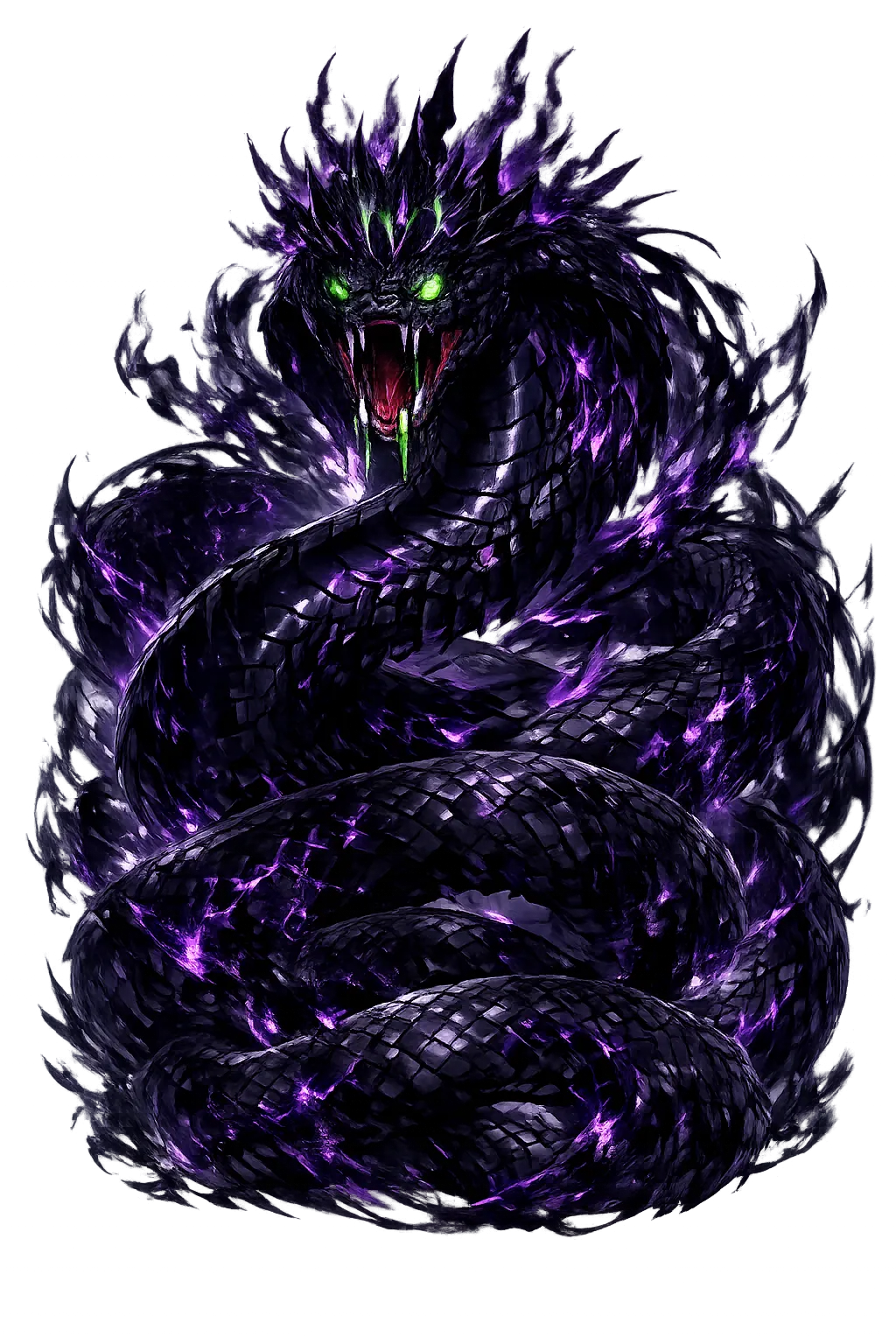
Apophis is the great coiled serpent of the underworld books, frozen in the moment of his defeat. In the royal tombs of the Valley of the Kings—especially those of Seti I, Tutankhamun, and Ramses VI—he appears as a massive snake pierced, bound, or decapitated by the solar deity. His body is often shown in multiple coils, sometimes containing the names of enemies. Unlike the protective uraeus, Apophis is never erect or crowned; his form is prone, tangled, and hostile, a visual declaration of chaos restrained.

06

Reception & Transformation

The name after its own age — transmission, translation, survival

Afterlives

Apophis remained a potent symbol of cosmic disorder long after pharaonic religion ceased to be a living cult. The Greek magical papyri and Gnostic texts absorbed the imagery of the bound serpent, and Christian and Islamic demonologies transmitted similar chaos-dragons across the Mediterranean, from the biblical Leviathan to medieval accounts of Satan as a dragon. Modern Egyptology returned him to scholarly attention through the publication of the royal tombs and the Bremner-Rhind papyrus, while psychology and fantasy literature have made him an enduring emblem of the primordial enemy that must be defeated anew each day.

Identifications Across Traditions

Apophis has no positive syncretisms; he is the anti-god against whom all order defines itself. The biblical Leviathan and the Gnostic chaos-dragon have often been compared to him, and Coptic tradition transmitted his name (as Apōph) alongside Christian demonology — though the Egyptian figure is cosmic and impersonal, more entropy than devil. In modern astronomy the asteroid 99942 Apophis, a near-Earth object once feared capable of impact, carries his name with exact appropriateness: a serpent whose approach must be calculated and warded off. Popular culture reduces him to a dragon-like villain, but his ancient precision survives: Apophis is not evil in the moral sense — he is the regression to non-being that creation must eternally refuse.

Modern Legacy

The name Apophis survives in Egyptology as the archetype of the chaos serpent, and the asteroid 99942 Apophis keeps him in the headlines of planetary defense. In fantasy literature, role-playing games, and comics he appears as a world-destroying serpent. For scholars, he remains the sharpest symbol of the Egyptian worldview: order is not a given but a daily achievement, requiring vigilance, ritual, and collective effort — a theology of maintenance rather than conquest, in which the greatest heroism is getting up every morning to defeat the same serpent again.

07

The Meditation

What ꜥꜣpp means — beyond the dictionary

Apophis is the serpent who teaches that entropy never sleeps. Every morning the sun rises because someone — the gods, the priests, the justified dead, the cosmos itself — has done the work of pushing chaos back. In our own time, climate change, political disorder, and personal despair all wear Apophis's face. To remember him is to remember that order is a practice, not a possession, and that dawn arrives only for those who refuse to let the dark swallow the light.

The Egyptians did not flinch from the corollary: the battle is never finally won. There is no Last Day on which Apophis dies forever, only an endless series of dawns, each one repurchased. That is a harder theology than most — but it is also the only one that has never been embarrassed by the news.

08

Screen & Culture

Where ꜥꜣpp echoes through film, television, and games — and how

09

Frequently Asked Questions

Common questions about ꜥꜣpp, Chaos, Darkness, Serpent, and Unicode restoration

01How do you pronounce ꜥꜣpp?

In reconstructed pronunciation, ꜥꜣpp is /ʔaˈpeːp/ — approximately ah-PAYP — start with a slight throaty catch, then a sharp double-p closure like the pop of a striking snake.

02What does ꜥꜣpp mean?

ꜥꜣpp means He who was spat out in the egyptian tradition.

03What are the symbols of ꜥꜣpp?

ꜥꜣpp is associated with Giant coiled serpent (The undifferentiated chaos that threatens to return creation to non-being; the largest monster in the Egyptian cosmos), Solar barque under attack (The nightly struggle between light and darkness; the boat itself, with its crew of gods and justified dead, is the emblem of order under threat), Knife and flames (The weapons of the temple ritual that destroys Apophis's body and scatters his soul), Dark water or eclipse (The moments when order seems closest to collapse — the serpent visible in the sun's blackened disk).

04Why restore ꜥꜣpp in Unicode?

Plain ASCII apep strips the stress, length, and script that make the name specific. Unicode restoration returns the name to its original written dignity.

05What is the most important myth about ꜥꜣpp?

“The Nocturnal Battle in the Duat” — the Underworld books story that anchors the mythology of ꜥꜣpp, told in full on the lore page.

10

Scholarly Sources

The philological foundations of this restoration

Every claim on this page is grounded in established scholarship. The orthographic restorations follow disciplinary convention. The etymological chain follows the best available reference works. This is not invention — it is resurrection through scholarship.

◈

Lexicography & Philology

  • Faulkner, R. O. A Concise Dictionary of Middle Egyptian. Oxford: Griffith Institute, 1962.
  • Wb
◎

Primary Texts

  • Amduat and Book of Gates (royal tombs of the New Kingdom)
  • Book of the Dead, Spell 17
◉

Archaeology & Art History

  • Material evidence — iconography, inscriptions, and temple archaeology — for ꜥꜣpp and related cults.
✦

Religious Studies

  • Book of Overthrowing Apophis (papyrus Bremner-Rhind, BM EA 10188)
  • Hornung, The Ancient Egyptian Books of the Afterlife
  • Ritner, The Mechanics of Ancient Egyptian Magical Practice
  • Pinch, Egyptian Mythology: A Guide to the Gods, Goddesses, and Traditions of Ancient Egypt
Return

The Surface Awaits

You have traced the name from its earliest attestation to its Unicode restoration. Now return to the myth. The story is where the name lives.

Back to Lore
ꜥꜣpp mascot