PuniCodex

Extended Lore

𓃢 ꜣnpw

Etymology · Orthography · Cultural Legacy · Reception · Primary Sources

Tier 1 ꜣnpw.com
ꜣnpw — Mummification, Afterlife, Jackals
01

Quick Facts

Essential information about ꜣnpw, Mummification, Afterlife, Jackals

Original Script𓃢
Unicode Restorationꜣnpw
Reconstructed Pronunciation/jaːˈnaː.paw/
PantheonEgyptian
DomainMummification, Afterlife, Jackals
MeaningEgyptian god of embalming and the necropolis; the name's etymology is uncertain (his epithet tpy-ḏw=f means He who is upon his mountain)
ClassificationTier 1
Primary Domainꜣnpw.com
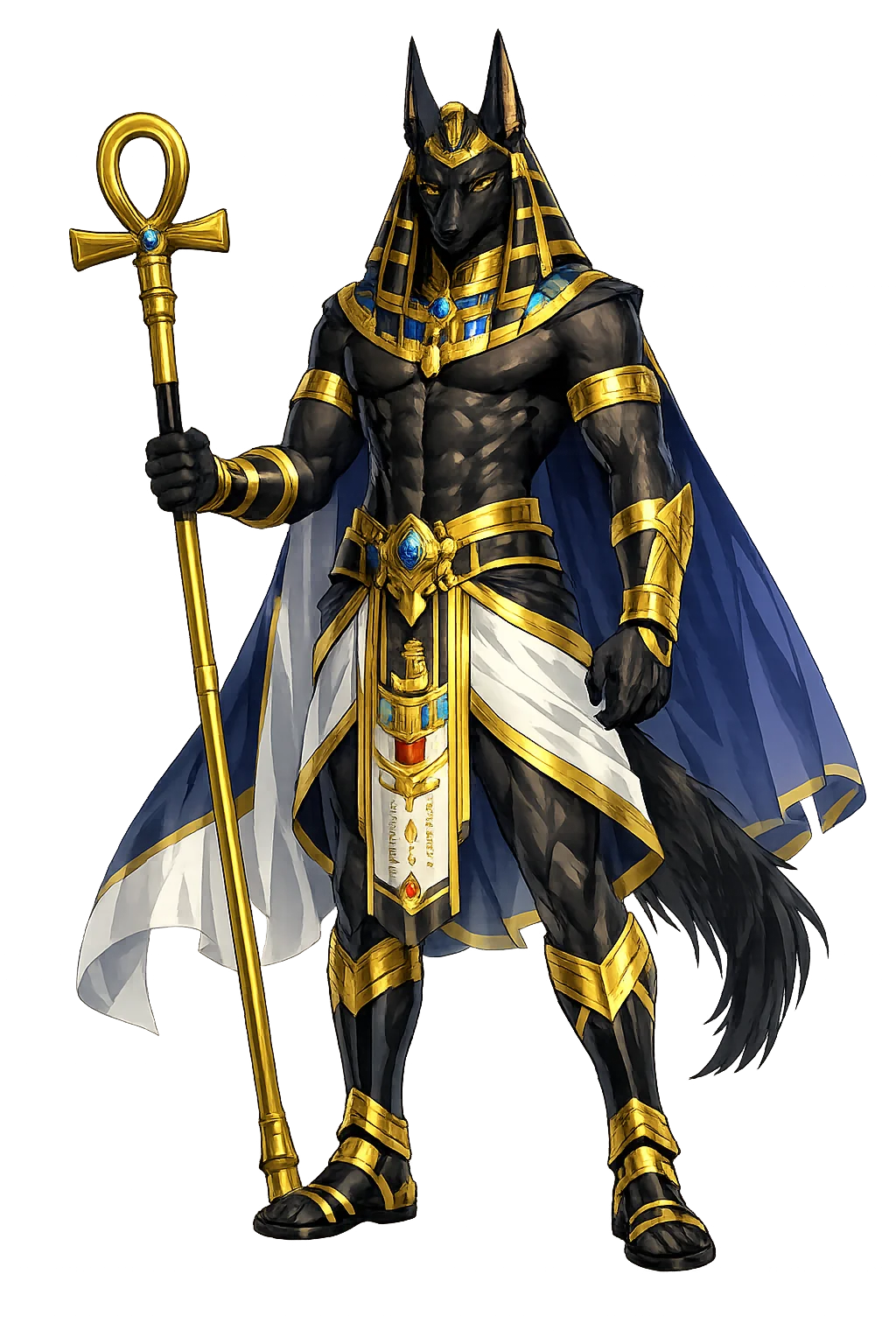
Sacred SymbolsThe black jackal, The flail, The scales, The imiut fetish, The embalmer's mask
02

Etymology & Word Family

From original script to Unicode restoration

Original Script 𓃢 ꜣnpw — "Egyptian god of embalming and the necropolis; the name's etymology is uncertain (his epithet tpy-ḏw=f means He who is upon his mountain)"
Unicode Restoration ꜣnpw Restored stress, length, and script
Modern ASCII anubis Plain-ASCII fallback

The name ꜣnpw carries the orthographic signature of the egyptian tradition: 𓃢. Unicode restoration recovers what ASCII flattens.

03

Unicode Character Breakdown

Character-by-character philological analysis

CharacterUnicodeNameBlockPhonetic Role
U+A723Latin Small Letter Egyptological AlefLatin Extended-DAlef ꜣ: glottal stop
nU+006ELatin Small Letter NBasic LatinSame
pU+0070Latin Small Letter PBasic LatinP: bilabial stop
N/ADropped characterEgyptian orthographyDropped: not in standard
wU+0077Latin Small Letter WBasic LatinW: bilabial glide
N/ADropped characterEgyptian orthographyDropped: final suffix

The Tier 1 classification reflects how much of the original phonology this restoration preserves — stress and vowel length for Greek names, distinctive letters and diacritics for every other tradition.

04

Cultural Significance

From ancient cult to modern memory

ꜣnpw in Later Traditions

The Greeks, finding a jackal-headed guide of souls, fused him at once with Hermês: Hermanubis — kerykeion in one paw, jackal head on his shoulders — received cult at Alexandria and in Rome, an identification so natural that Coptic speakers simply called the god-form Anoup. In the Isiac mysteries he served as mystagogue: Apuleius, initiated at Cenchreae, describes the grand procession in which Anubis, herald and messenger 'between the gods above and the gods below', walked before the goddess in gold and black (Metamorphoses 11.11). Early Coptic Christianity quietly absorbed his office into the archangel Michael — weigher and guide of souls — so that a jackal-god of the third millennium BCE ended, unbroken, as an angel with scales. Egyptomania later restored him to European consciousness through Belzoni's exhibitions and the decipherment of the hieroglyphs.

Modern Legacy

He is, for most of the world, the face of ancient Egypt: Tutankhamun's recumbent jackal shrine — black wood, gilded ears, guarding the royal canopic chest — is among the most reproduced objects on earth, and the mummy-genre of cinema, from Karloff's Imhotep to modern franchises, works entirely in his territory. The modern image of justice borrowed his instrument: every balanced beam in courthouse iconography unconsciously quotes his scales. Egyptology has spent two centuries correcting the horror-movie caricature — feared on screen as a monster, he was antiquity's most trusted guardian, the gentle final attendant of every Egyptian who could afford the rite. His jackal still patrols the edge of the desert at Saqqara, exactly where the watchers always stood.

In the Earth

Tutankhamun's tomb (KV62) yielded the Anubis shrine: a life-size black wooden jackal, gilded ears and collar, guarding the canopic equipment — now in Cairo. The Anubeion at Saqqara, excavated over decades, preserves catacombs of mummified dogs and jackals offered to him — estimates run to millions of animals across Egypt's canine catacombs. Vignettes of spell 125, with his hand on the scales, survive in hundreds of Books of the Dead, from the papyrus of Ani in the British Museum to the papyrus of Hunefer.

05

The Meditation

What ꜣnpw means — beyond the dictionary

ꜣnpw is the god of careful hands. At the two moments a human being is most helpless — the body's unmaking and the heart's examination — he is the one present who touches gently and reads honestly. Civilizations, the Egyptians believed, are judged by how they treat their dead; he is the god of that judgment in both senses, and his cult turned a despised trade into sacred office: the embalmers, the 'pure ones', served him.

His animal is the lesson. The desert canid digs at graves; the Egyptians saw it nightly at the desert's edge, doing exactly what everyone feared. The myth's answer was not to banish the fear but to enlist it: make the grave-digger the grave-guardian, the feared thing the trustworthy one. Few religions have made a cleaner statement about fear itself — that it is a power, and powers are better consecrated than denied.

06

Screen & Culture

Where ꜣnpw echoes through film, television, and games — and how

07

Frequently Asked Questions

Common questions about ꜣnpw, Mummification, Afterlife, Jackals, and Unicode restoration

01How do you pronounce ꜣnpw?

In reconstructed pronunciation, ꜣnpw is /jaːˈnaː.paw/ — approximately The name is a consonant skeleton: ꜣ-n-p-w; the Greeks vocalized it as Anubis.

02What does ꜣnpw mean?

ꜣnpw means Egyptian god of embalming and the necropolis; the name's etymology is uncertain (his epithet tpy-ḏw=f means He who is upon his mountain) in the egyptian tradition.

03What are the symbols of ꜣnpw?

ꜣnpw is associated with The black jackal (Black as the fertile Nile silt and the embalmed flesh — the colour of rebirth, not evil), The flail (His authority over the necropolis as its shepherd), The scales (Judgment made precise — his unwavering hand at the beam), The imiut fetish (The headless skin on a pole — the embalmer's ancient emblem, older than his myths), The embalmer's mask (The jackal-headed mask of the chief embalming priest — the rite performed by visibly divine hands).

04Why are there different spellings of ꜣnpw?

Each form is a historically attested restoration rather than a mistake: Anúbis is the alt-stress form (Acute on upsilon: alternate stress position). PUNICODEX registers the full set so the tradition is preserved under every defensible spelling.

05Why restore ꜣnpw in Unicode?

Plain ASCII anubis strips the stress, length, and script that make the name specific. Unicode restoration returns the name to its original written dignity.

06What is the most important myth about ꜣnpw?

“The First Embalming” — In the earliest religion ꜣnpw simply is the god of the dead; when the Osiris cycle rose, he was written into it — as embalmer, son, and guide — without ever losing his seniority at the grave. The full telling lives on the lore page.

08

Scholarly Sources

The philological foundations of this restoration

Every claim on this page is grounded in established scholarship. The orthographic restorations follow disciplinary convention. The etymological chain follows the best available reference works. This is not invention — it is resurrection through scholarship.

Lexicography & Philology

  • Faulkner, R. O. A Concise Dictionary of Middle Egyptian. Oxford: Griffith Institute, 1962.
  • Wb

Primary Texts

  • Pyramid Texts (Old Kingdom funerary corpus; Faulkner, The Ancient Egyptian Pyramid Texts)
  • Book of the Dead, spell 125 (the weighing of the heart, with vignettes)
  • Plutarch, De Iside et Osiride 12–14, 20 (the Osiris myth and Anubis' lineage)
  • Apuleius, Metamorphoses 11 (the Isiac procession and Hermanubis)

Archaeology & Art History

  • Material evidence — iconography, inscriptions, and temple archaeology — for ꜣnpw and related cults.

Religious Studies

  • Wilkinson, The Complete Gods and Goddesses of Ancient Egypt
Return

The Surface Awaits

You have traced the name from its earliest attestation to its Unicode restoration. Now return to the myth. The story is where the name lives.

Back to Lore
ꜣnpw mascot