PuniCodex

Extended Lore

𓇋𓏠𓈖 Ꜣmun

Etymology · Orthography · Cultural Legacy · Reception · Primary Sources

Tier 1 Ꜣmun.com
Ꜣmun — Wind, Kingship, Thebes
01

Quick Facts

Essential information about Ꜣmun, Wind, Kingship, Thebes

Original Script𓇋𓏠𓈖
Unicode RestorationꜢmun
Reconstructed Pronunciation/ʔaˈmuːn/
PantheonEgyptian
DomainWind, Kingship, Thebes
MeaningHidden One (Egyptian jmn; vocalized Ꜣmun)
ClassificationTier 1
Primary DomainꜢmun.com
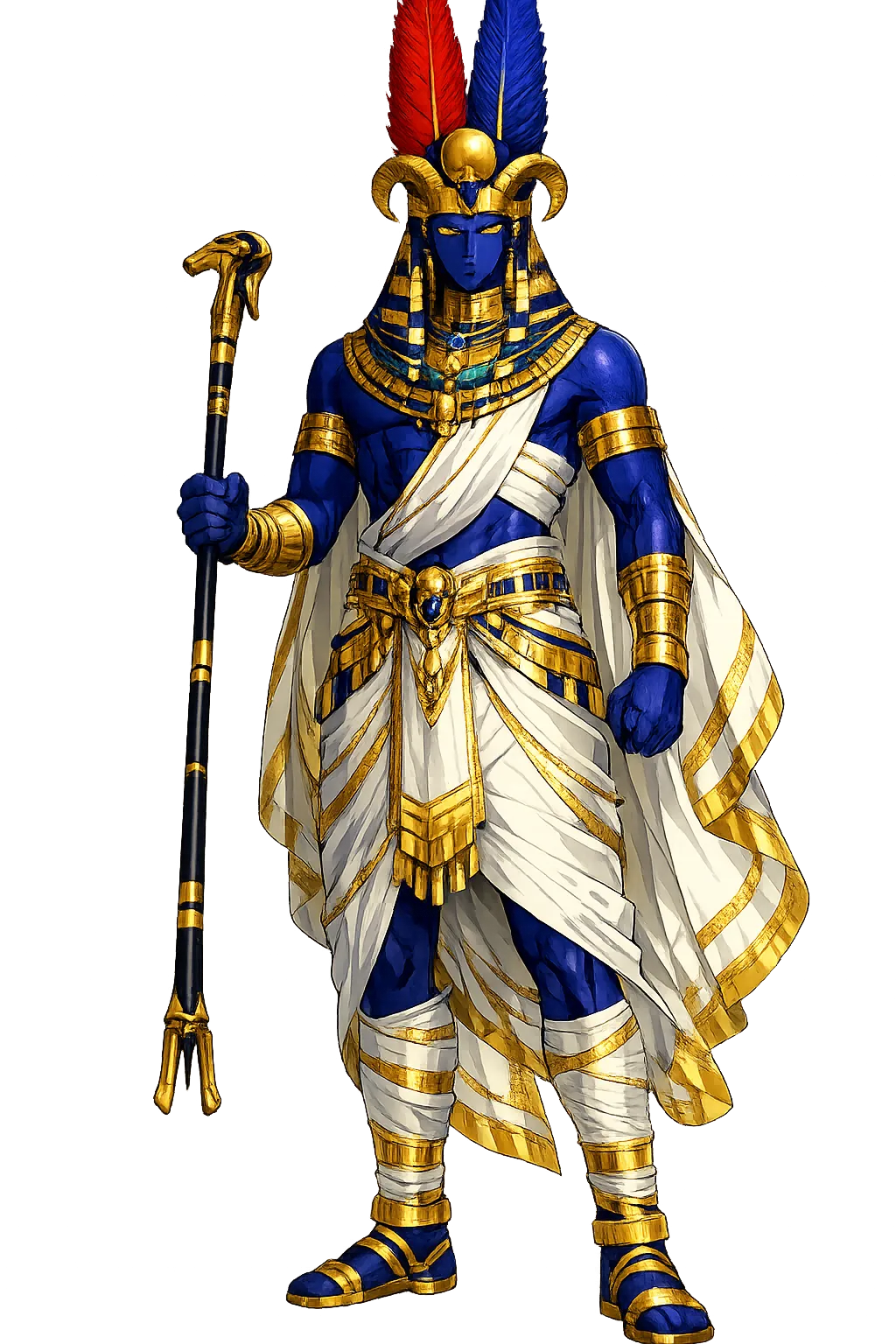
Sacred SymbolsTwo tall plumes, Ram with curved horns, Goose, Solar barque
02

Etymology & Word Family

From original script to Unicode restoration

Original Script 𓇋𓏠𓈖 Ꜣmun — "Hidden One (Egyptian jmn; vocalized Ꜣmun)"
Unicode Restoration Ꜣmun Restored stress, length, and script
Modern ASCII amun Plain-ASCII fallback

The name Ꜣmun carries the orthographic signature of the egyptian tradition: 𓇋𓏠𓈖. Unicode restoration recovers what ASCII flattens.

03

Unicode Character Breakdown

Character-by-character philological analysis

CharacterUnicodeNameBlockPhonetic Role
U+A722Latin Capital Letter Egyptological AlefLatin Extended-DEgyptological alef (Ꜣ): the initial reed-leaf consonant, read as alef in Demotic/vocalized tradition and supplied with the vowel a from Coptic Ⲁⲙⲟⲩⲛ / Greek Ἄμμων
mU+006DLatin Small Letter MBasic LatinSame
uU+0075Latin Small Letter UBasic LatinVowel supplied from Coptic Ⲁⲙⲟⲩⲛ / Greek Ἄμμων; Egyptian writing does not record vowels
nU+006ELatin Small Letter NBasic LatinSame

The Tier 1 classification reflects how much of the original phonology this restoration preserves — stress and vowel length for Greek names, distinctive letters and diacritics for every other tradition.

04

Cultural Significance

From ancient cult to modern memory

Ꜣmun in Later Traditions

Amun's greatest syncretism is Amun-Ra, the fusion of Theban invisibility with Heliopolitan solar power. He was also paired with Mut and Khonsu as the Theban triad, and with Min as Amun-Min, an ithyphallic fertility god. Greeks identified him with Zeus under the name Zeus Ammon, and his oracle at Siwa drew visitors from across the Mediterranean. In Nubia and Kush, Amun remained a royal god long after Egypt's pharaonic decline, and the kings of Meroë claimed his patronage.

Modern Legacy

The name Amun echoes in the Hebrew Amen, the Coptic liturgy, and the Greek Ammon. Karnak remains one of the largest religious complexes ever built, a stone testament to his prestige. In modern spirituality, Amun is invoked as a god of hidden knowledge, occult power, and the unseen forces that shape events. Egyptologists study his priesthood as an early example of a religious institution that accumulated wealth and political influence comparable to a state within a state.

In the Earth

Amun's principal sanctuary was Karnak in Thebes, a vast complex of temples, pylons, obelisks, and sacred lakes developed over more than a millennium. The temple of Luxor, the Khonsu temple, and the Mut precinct formed the southern counterpart. His oracular temple at Siwa in the Libyan desert attracted Greek and later Roman visitors. Ram statues line the processional way at Karnak, and temple inscriptions record Amun's oracular responses and royal legitimation. In Nubia, temples at Jebel Barkal and Meroë continued his cult into the first millennium CE.

05

The Meditation

What Ꜣmun means — beyond the dictionary

Amun is the god of what moves without being seen: the wind, the breath, the hidden cause behind visible events. In an age obsessed with surfaces, he asks us to attend to the invisible currents — economic, ecological, psychological — that shape our lives. To invoke Amun is to acknowledge that the most powerful forces are often the least visible, and that wisdom lies in learning to read what cannot be directly observed.

06

Screen & Culture

Where Ꜣmun echoes through film, television, and games — and how

07

Frequently Asked Questions

Common questions about Ꜣmun, Wind, Kingship, Thebes, and Unicode restoration

01How do you pronounce Ꜣmun?

In reconstructed pronunciation, Ꜣmun is /ʔaˈmuːn/ — approximately ah-MOON — begin with a soft glottal catch, then a long 'moon' without the final glide.

02What does Ꜣmun mean?

Ꜣmun means Hidden One (Egyptian jmn; vocalized Ꜣmun) in the egyptian tradition.

03What are the symbols of Ꜣmun?

Ꜣmun is associated with Two tall plumes (Amun's distinctive crown, combining the white crown of Upper Egypt with twin ostrich feathers), Ram with curved horns (His sacred animal, especially at Thebes and Nubia, symbolizing fertility and kingship), Goose (The 'great cackler' associated with Amun as a creator god who laid the cosmic egg), Solar barque (Amun-Ra as the hidden power steering the sun through the hours of night).

04Why are there different spellings of Ꜣmun?

Each form is a historically attested restoration rather than a mistake: Jmn is the alt form (Egyptological consonantal skeleton (reed-leaf j-m-n)); Amon is the alt form (Vocalized transliteration: Amon); Amen is the alt form (Vocalized transliteration: Amen). PUNICODEX registers the full set so the tradition is preserved under every defensible spelling.

05Why restore Ꜣmun in Unicode?

Plain ASCII amun strips the stress, length, and script that make the name specific. Unicode restoration returns the name to its original written dignity.

06What is the most important myth about Ꜣmun?

“The Hidden God Who Becomes King” — Amun's rise from provincial wind god to universal king is one of the great success stories of Egyptian religion. By the Middle Kingdom he is national; by the New Kingdom he is Amun-Ra, hidden lord of the cosmos; by the Late Period his oracles and priesthoods rival pharaonic power. His myths revolve around concealment, revelation, and the transmission of authority. The full telling lives on the lore page.

08

Scholarly Sources

The philological foundations of this restoration

Every claim on this page is grounded in established scholarship. The orthographic restorations follow disciplinary convention. The etymological chain follows the best available reference works. This is not invention — it is resurrection through scholarship.

Lexicography & Philology

  • Faulkner, R. O. A Concise Dictionary of Middle Egyptian. Oxford: Griffith Institute, 1962.
  • Wb
  • Allen

Primary Texts

Archaeology & Art History

  • Material evidence — iconography, inscriptions, and temple archaeology — for Ꜣmun and related cults.

Religious Studies

  • Faulkner, A Concise Dictionary of Middle Egyptian
  • Wb, jmn (Erman & Grapow)
  • Allen, Middle Egyptian: An Introduction to the Language and Culture of Hieroglyphs
  • Assmann, Egyptian Solar Religion in the New Kingdom
  • Papyrus Leiden I 350 (Great Amun Hymn)
  • Herodotus, Histories 2.42 (on the oracle of Ammon)
  • Arrian, Anabasis 3.3–4 (Alexander at Siwa)
  • Morkot, The Black Pharaohs: Egypt's Nubian Rulers
Return

The Surface Awaits

You have traced the name from its earliest attestation to its Unicode restoration. Now return to the myth. The story is where the name lives.

Back to Lore
Ꜣmun mascot