PuniCodex

Extended Lore

Altjira

Etymology · Phonology · Orthography · Cultural Legacy · Primary Sources

Tier 2 Altjira
Altjira — The Dreaming, Eternal
01

Quick Facts

Essential information about Altjira, The Dreaming, Eternal

Scholarly TransliterationAltjira
Unicode RestorationAltjira
Reconstructed Pronunciation/ˈaltjɪrə/
PantheonAboriginal
DomainThe Dreaming, Eternal
MeaningThe dreamtime
ClassificationTier 2
Primary DomainAltjira
Sacred SymbolsThe sky, Emu footprints, The Milky Way, Waterholes and ranges
02

Etymology & Word Family

From original script to Unicode restoration

Scholarly Transliteration Altjira Altjira — "The dreamtime"
Unicode Restoration Altjira Restored stress, length, and script
Modern ASCII altjira Plain-ASCII fallback

The name is Arrernte, not Greek or Sanskrit, so it has no 'original script' in the classical sense. The ASCII form altjira flattens the distinctive palatal cluster and removes the capital that marks a proper name; the restoration Altjira is the scholarly citation form.

03

Unicode Character Breakdown

Character-by-character philological analysis

CharacterUnicodeNameBlockPhonetic Role
AU+0041Latin Capital Letter ABasic LatinSame, capitalized
lU+006CLatin Small Letter LBasic LatinSame
tU+0074Latin Small Letter TBasic LatinSame
jU+006ALatin Small Letter JBasic LatinSame
iU+0069Latin Small Letter IBasic LatinSame
rU+0072Latin Small Letter RBasic LatinSame
aU+0061Latin Small Letter ABasic LatinSame

The Tier 2 classification reflects how much of the original phonology this restoration preserves — stress and vowel length for Greek names, distinctive letters and diacritics for every other tradition.

04

Cultural Significance

From ancient cult to modern Unicode

Ancient Domain

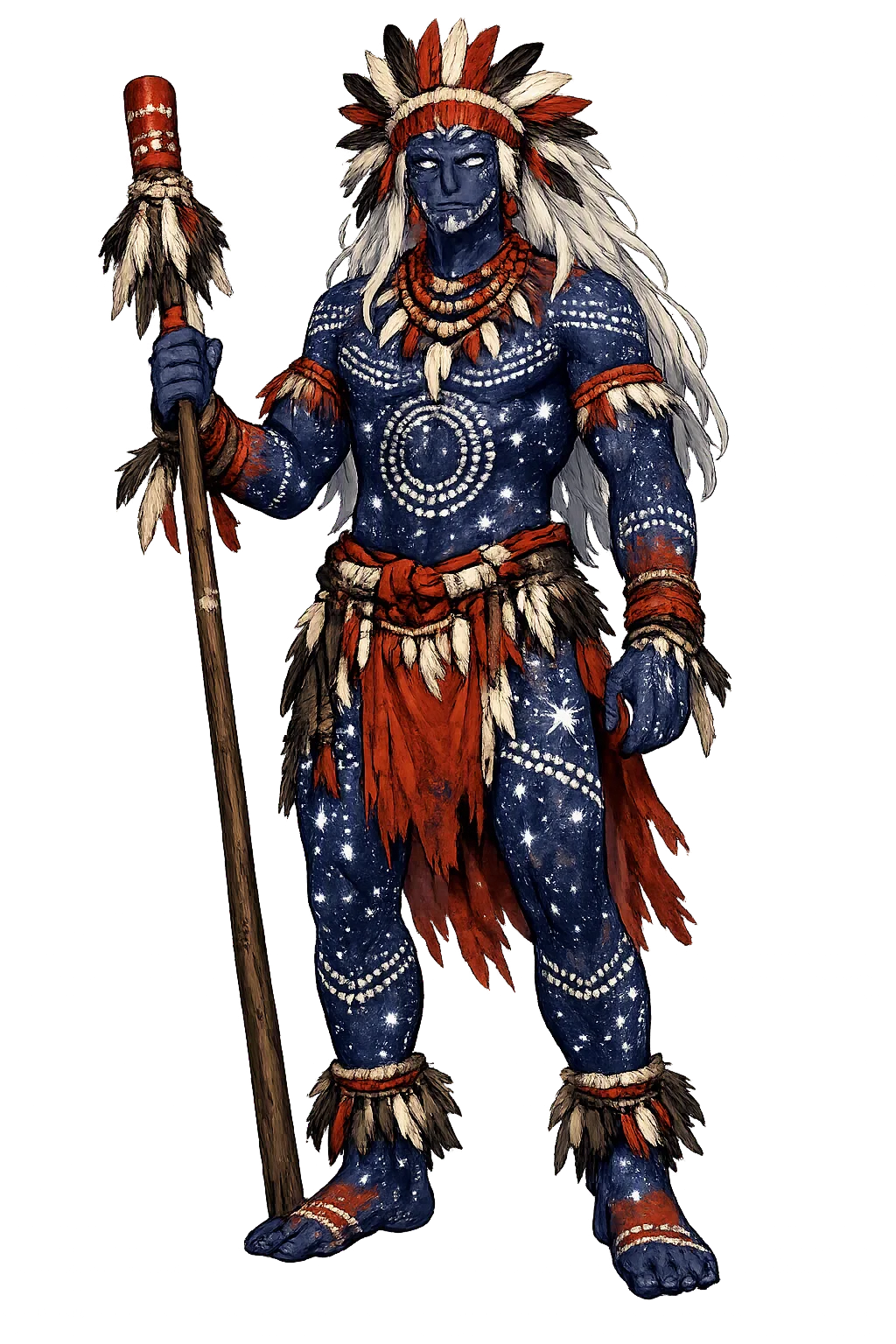
Altjira is the eternal sky being of the Arrernte peoples of Central Australia. In the early ethnographic record he is described as the uncreated creator: he made the earth, shaped its first features, and then withdrew to dwell forever in the sky. His feet are said to be like those of an emu, and he never needs to bend, because the sky is high and he is eternal. Behind the figure lies the deeper Arrernte concept of altjira — the Dreaming — the timeless ground of law, country, and ancestral identity.

Altjira in Later Traditions

Altjira entered Western scholarly discourse chiefly through the ethnographies of Spencer and Gillen and the Lutheran missionary Carl Strehlow. Early accounts tended to present Altjira as a 'high god' or creator, an interpretation that later Arrernte custodians and scholars have revised. T. G. H. Strehlow argued that altjira is better understood as the Dreaming itself — the eternal, sacred order — and not as an anthropomorphic deity comparable to the God of biblical monotheism. In popular and esoteric literature the term 'Alcheringa' has been borrowed widely, sometimes detached from its Arrernte roots. PuniCodex follows the scholarly consensus that respects both the early record and the later corrections offered by Arrernte tradition-bearers.

Modern Legacy

The word Alcheringa — the Dreaming — has become one of the most widely recognised Aboriginal English terms in the world. It names not only a cosmology but a legal, artistic, and environmental framework that continues to shape Aboriginal identity in Central Australia and beyond. The concept influenced Australian art movements, land-rights discourse, and interfaith dialogue. Altjira also appears as the name of an Aboriginal art centre (Altjira Aboriginal Art) and in creative works that draw on Arrernte themes. Its importance lies less in personal cult than in the enduring idea that the land is a living record of sacred law.

Unicode Restoration as Cultural Act

Restoring Altjira in a domain name is more than orthographic accuracy. It is a statement that the internet should recognize the full range of human writing — not only the ASCII keyboard.

05

Frequently Asked Questions

Common questions about Altjira, The Dreaming, Eternal, and Unicode restoration

01How do you pronounce Altjira?

In reconstructed pronunciation, Altjira is /ˈaltjɪrə/ — approximately 'AHLT-chi-ruh' — stress the first syllable, pronounce the 'tj' as the 'ch' in 'church', and let the final syllable relax..

02What does Altjira mean?

Altjira means The dreamtime in the aboriginal tradition.

03What are the symbols of Altjira?

Altjira is associated with The sky (The eternal canopy where Altjira dwells and from which creation descended.), Emu footprints (His feet are likened to those of an emu, a sign of his other-than-human nature and his connection to the Australian land.), The Milky Way (In Arrernte cosmology the sky river is camp and road for ancestral beings, linking earth and heaven.), Waterholes and ranges (Features of country created during the Dreaming and maintained through ceremony today.).

04Why restore Altjira in Unicode?

Plain ASCII altjira strips the stress, length, and script that make the name specific. Unicode restoration returns the name to its original written dignity.

05What is the most important myth about Altjira?

In the account recorded by Spencer and Gillen, Altjira is eternal: he was not born and will not die. In the beginning he made the earth and all that it contains — its hills, waterholes, plants, and animals — and then he rose into the sky, where he remains with his two sons. The earth was left for the ancestors who followed and for the human beings who would inherit their law.

06

Scholarly Sources

The philological foundations of this restoration

Every claim on this page is grounded in established scholarship. The orthographic restorations follow disciplinary convention. The etymological chain follows the best available reference works. This is not invention — it is resurrection through scholarship.

Lexicography & Philology

  • AIATSIS
  • Strehlow

Primary Texts

  • Primary sources in the aboriginal tradition for Altjira.

Archaeology & Art History

  • Material evidence — iconography, inscriptions, and temple archaeology — for Altjira and related cults.

Religious Studies

  • Spencer, Baldwin, and F. J. Gillen, The Native Tribes of Central Australia (1899)
  • Spencer, Baldwin, and F. J. Gillen, The Arunta: A Study of a Stone Age People, 2 vols. (1927)
  • Strehlow, Carl, Die Aranda- und Loritja-Stämme in Zentral-Australien (1907–1920)
  • Strehlow, T. G. H., Aranda Traditions (1947)
  • Berndt, Ronald M., and Catherine H. Berndt, The World of the First Australians (1964)
  • Elkin, A. P., The Australian Aborigines: How to Understand Them, 4th ed. (1974)
  • Australian Institute of Aboriginal and Torres Strait Islander Studies (AIATSIS)
Return

The Surface Awaits

You have traced the name from its earliest attestation to its Unicode restoration. Now return to the myth. The story is where the name lives.

Back to Lore
Altjira mascot