PuniCodex

Extended Lore

𒀭𒀀𒆷𒇻 Alalu

Etymology Β· Phonology Β· Orthography Β· Cultural Legacy Β· Primary Sources

Tier 2 Alalu
Alalu β€” Primordial King, Heaven
01

Quick Facts

Essential information about Alalu, Primordial King, Heaven

Original Script𒀭𒀀𒆷𒇻
Unicode RestorationAlalu
Reconstructed Pronunciation/ˈa.la.lu/
PantheonHittite
DomainPrimordial King, Heaven
MeaningUnknown
ClassificationTier 2
Primary DomainAlalu
Sacred SymbolsThrone, Nine years, Dark earth, Divine determinative, Succession chain
02

Etymology & Word Family

From original script to Unicode restoration

Original Script 𒀭𒀀𒆷𒇻 Alalu β€” "Unknown"
Unicode Restoration Alalu Restored stress, length, and script
Modern ASCII alalu Plain-ASCII fallback

Alalu is Tier 2: the restored form Alalu preserves only the capital A and the Latin alphabet; it carries no distinctive diacritic or non-ASCII letter. The name's Hittite/Hurrian pronunciation is unknown, and the plain form is the most defensible display.

03

Unicode Character Breakdown

Character-by-character philological analysis

CharacterUnicodeNameBlockPhonetic Role
AU+0041Latin Capital Letter ABasic LatinSame, capitalized
lU+006CLatin Small Letter LBasic LatinSame
aU+0061Latin Small Letter ABasic LatinSame
lU+006CLatin Small Letter LBasic LatinSame
uU+0075Latin Small Letter UBasic LatinSame

The Tier 2 classification reflects how much of the original phonology this restoration preserves β€” stress and vowel length for Greek names, distinctive letters and diacritics for every other tradition.

04

Cultural Significance

From ancient cult to modern Unicode

Ancient Domain

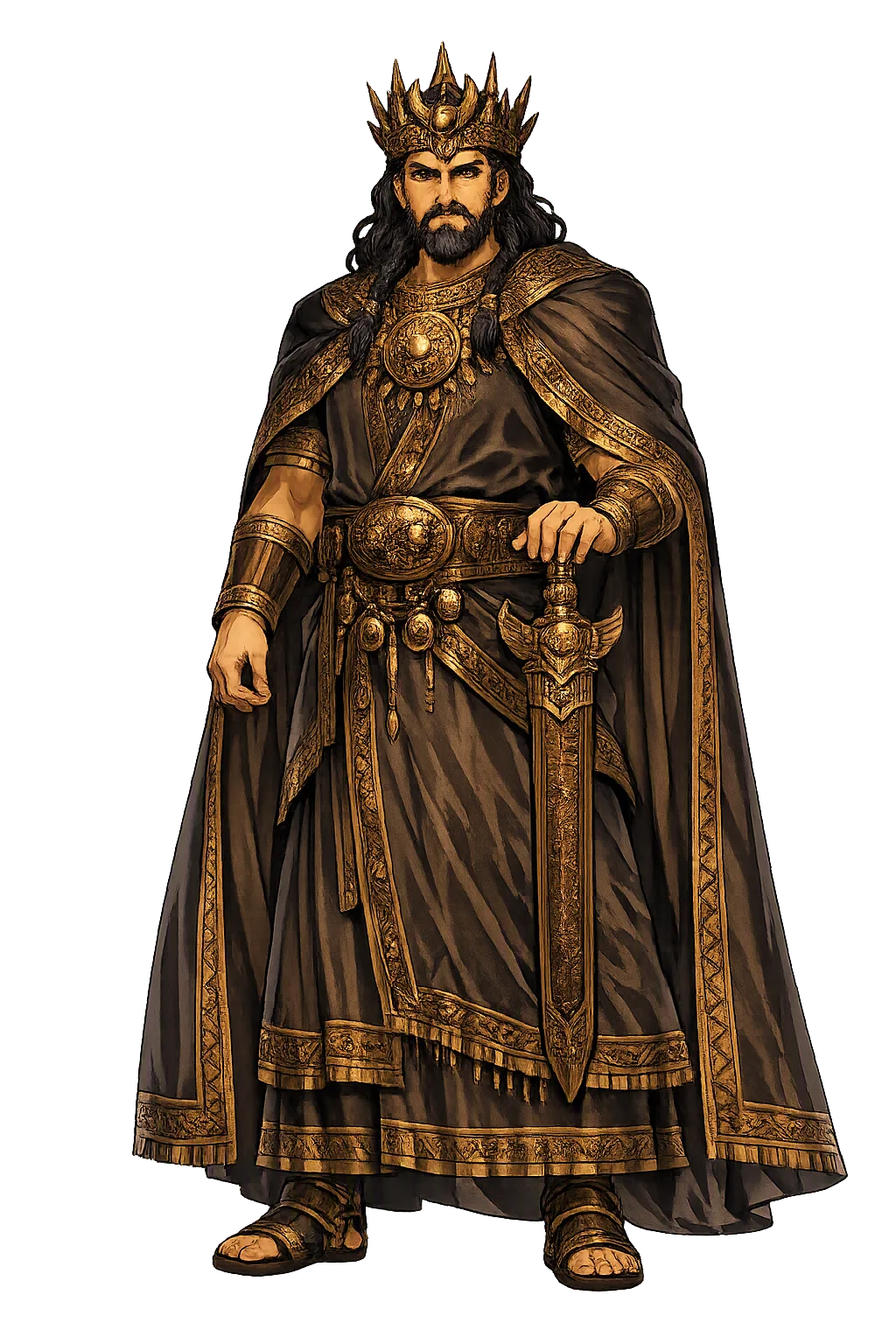
Alalu is the first king of the gods in Hittite and Hurrian mythology, the original occupant of the celestial throne before Anu the sky-god and long before the storm-god TeΕ‘Ε‘ub. His reign is narrated in the 'Kingship in Heaven' myth, a Near Eastern succession story that parallels the Greek sequence of Ouranos, Kronos, and Zeus. For nine years Alalu rules in heaven; then his servant Anu rises against him, and Alalu flees to the dark earth below. The kingship he loses becomes the inheritance that shapes the entire Hittite pantheon.

This temple treats Alalu as the archetype of primordial sovereignty: the ruler whose authority is ancient, legitimate, and yet destined to be overthrown. He is not a storm-god or a creator; he is the first holder of the mandate of heaven, the figure against whom every later king defines himself.

Alalu in Later Traditions

Alalu belongs to a widespread ancient Near Eastern and Mediterranean pattern of primordial king-gods who are overthrown by their successors.

The closest parallel is the Greek succession Ouranos β†’ Kronos β†’ Zeus: Ouranos, like Alalu, is the first sky/celestial ruler who is deposed by a younger power and withdraws from the active cosmos. The Hittite-Hurrian version, however, makes the process explicit and contractual: each king rules for nine years before being replaced. Roman Saturnus preserves a memory of the golden-age king deposed by Jupiter. In Mesopotamian tradition, the succession of divine kingship from Anu to Enlil and later to Marduk follows a comparable logic, though Alalu himself is foreign to Sumerian and Akkadian sources. The name Alalu has no secure etymology; it may be Hurrian, Hattic, or a substrate survival from an earlier Anatolian layer.

Modern Legacy

Alalu survives chiefly as a comparative-mythological type: the first king of heaven.

Modern scholars cite the 'Kingship in Heaven' text as a key witness for the Near Eastern background of Greek theogony, and Alalu is regularly compared to Ouranos and Saturnus. He appears in encyclopedias of mythology and in studies of Hittite religion, but has little direct afterlife in popular culture β€” precisely because his myth is about abdication and memory rather than heroic action. For PuniCodex, Alalu is a restoration of the origin-point of kingship: the name that marks where the mandate of heaven begins. The name still means: the throne before the throne.

Unicode Restoration as Cultural Act

Restoring Alalu in a domain name is more than orthographic accuracy. It is a statement that the internet should recognize the full range of human writing β€” not only the ASCII keyboard.

05

Frequently Asked Questions

Common questions about Alalu, Primordial King, Heaven, and Unicode restoration

01How do you pronounce Alalu?

In reconstructed pronunciation, Alalu is /ˈa.la.lu/ β€” approximately 'AH-lah-loo' β€” three even syllables; the Hittite/Hurrian original is irrecoverable, so the reconstruction is conservative..

02What does Alalu mean?

Alalu means Unknown in the hittite tradition.

03What are the symbols of Alalu?

Alalu is associated with Throne (The first seat of divine kingship in heaven), Nine years (The fixed term of Alalu's reign and the cyclic rhythm of succession), Dark earth (The underworld or chthonic realm to which the fallen first king withdraws), Divine determinative (The cuneiform dingir (π’€­) that marks Alalu as a god in Hittite texts), Succession chain (Alalu β†’ Anu β†’ Kumarbi β†’ TeΕ‘Ε‘ub, the Hittite parallel to Greek Ouranos β†’ Kronos β†’ Zeus).

04Why restore Alalu in Unicode?

Plain ASCII alalu strips the stress, length, and script that make the name specific. Unicode restoration returns the name to its original written dignity.

05What is the most important myth about Alalu?

The Hittite 'Kingship in Heaven' myth (CTH 344) opens with Alalu seated on the throne in heaven. He is the first to hold kingship among the gods, and for nine years his word is law. The text, translated from a Hurrian original, presents kingship not as eternal but as a rotating office: even the highest god may be replaced when his term is fulfilled. Alalu's reign is therefore the prototype of legitimate rule, not its negation.

06

Scholarly Sources

The philological foundations of this restoration

Every claim on this page is grounded in established scholarship. The orthographic restorations follow disciplinary convention. The etymological chain follows the best available reference works. This is not invention β€” it is resurrection through scholarship.

β—ˆ

Lexicography & Philology

  • Hittite texts
  • CHD
β—Ž

Primary Texts

  • Primary sources in the hittite tradition for Alalu.
β—‰

Archaeology & Art History

  • Material evidence β€” iconography, inscriptions, and temple archaeology β€” for Alalu and related cults.
  • The 'Kingship in Heaven' myth is preserved in Hittite cuneiform tablets excavated at BoğazkΓΆy-Hattusa, the Hittite capital, notably KUB 33.120 with its duplicate and continuation. The tablets belong to the archives of the Hittite royal citadel and represent a Hittite translation or adaptation of a Hurrian original. No independent Hurrian manuscript has survived, so the Hittite copies are the sole direct witnesses to Alalu's myth.
✦

Religious Studies

  • Kingship in Heaven (CTH 344)
  • CHD (Chicago Hittite Dictionary)
  • Hoffner, Hittite Myths
  • Haas, Geschichte der hethitischen Religion
  • KUB 33.120 (+) 33.119 β€” Hittite tablets preserving the myth
Return

The Surface Awaits

You have traced the name from its earliest attestation to its Unicode restoration. Now return to the myth. The story is where the name lives.

Back to Lore
Alalu mascot