
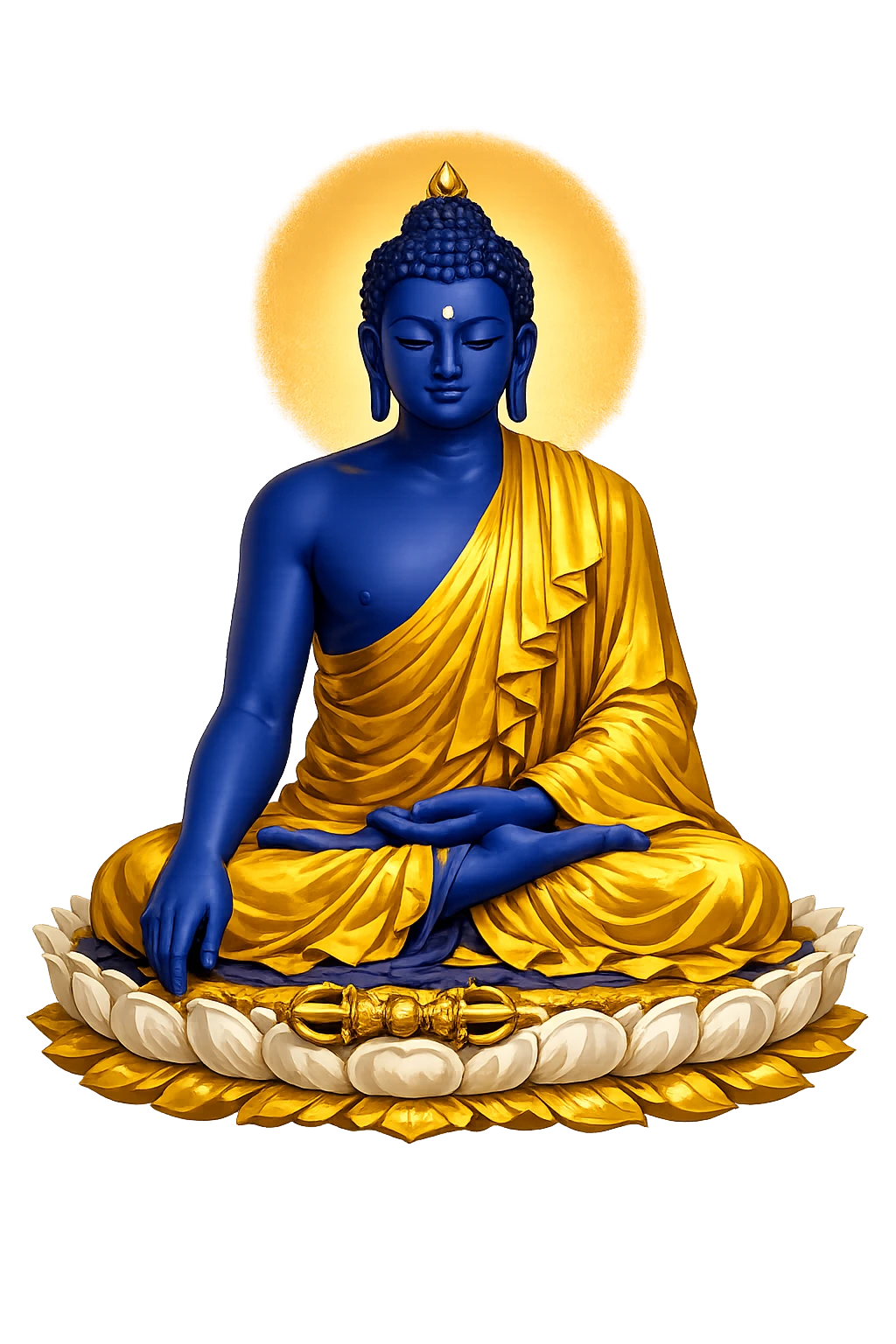
The Cult
Akṣobhya's worship has always run through text and mandala rather than a temple cult dedicated to him alone. His sūtra, the Akṣobhya-vyūha, is among the very first Buddhist scriptures translated into Chinese — Lokakṣema's version of about 186 CE — evidence that devotion to the Buddha of Abhirati reached Central Asia and China within three centuries of the Buddha's death. Practice centers on his vow and his land: rebirth in Abhirati is sought through merit and recollection of Akṣobhya, and in the esoteric traditions he is invoked by his seed-syllable HŪṀ, heart of the vajra family. Tibetan ritual manuals prescribe Mi bskyod pa's rites at deaths and dedications of merit; in Japan the Shingon and Tendai schools enshrine Ashuku in the eastern quarter of the Taizōkai and Kongōkai mandalas, invoked at fire-offerings. No separate priesthood serves him — he is worshipped through the living liturgies of Mahāyāna and Vajrayāna.