PuniCodex

Extended Lore

Αἴγυπτος Aígyptos

Etymology · Phonology · Orthography · Cultural Legacy · Primary Sources

Tier 1 Aígyptos.com
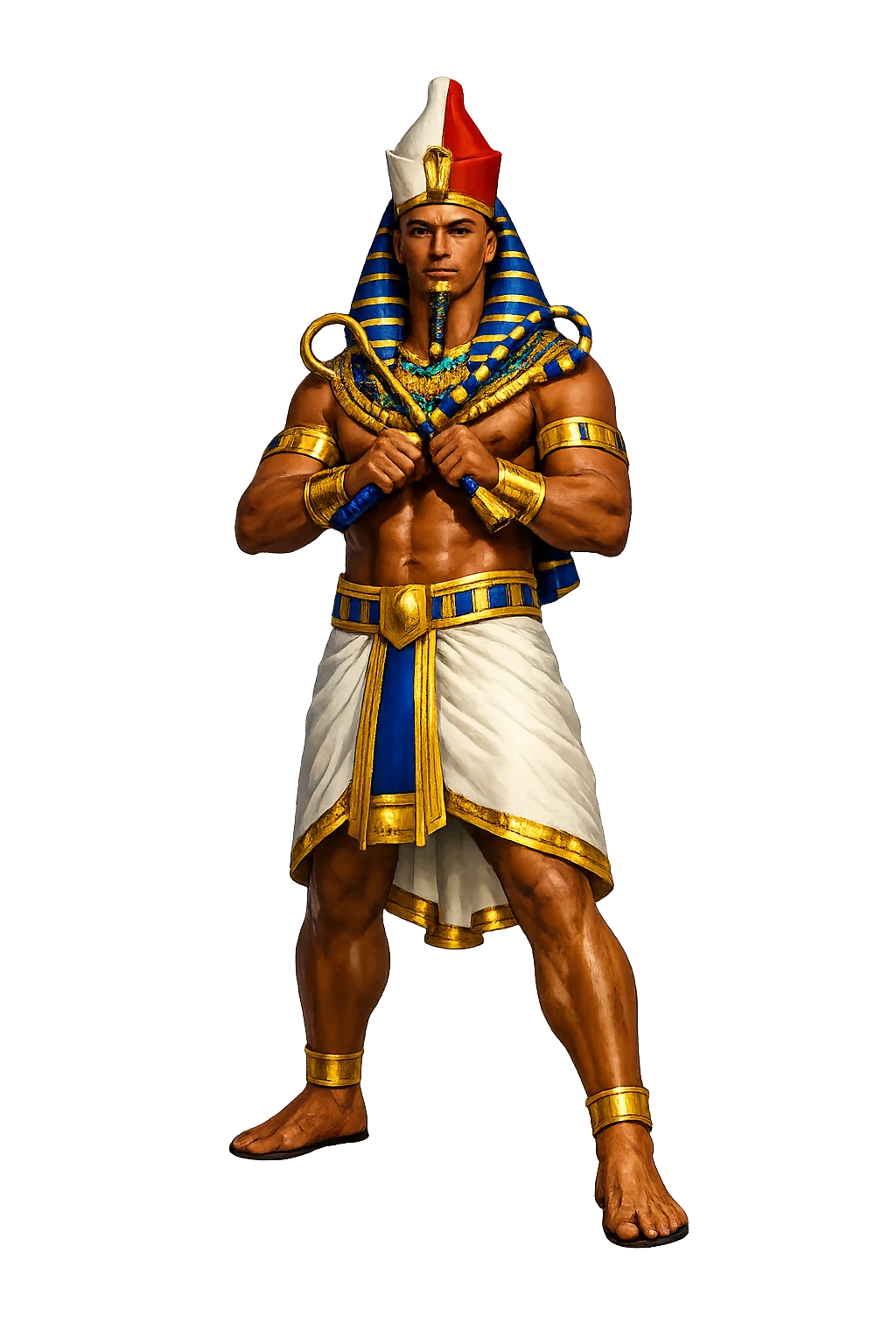
Aígyptos — Personified Egypt, the Black Land
01

Quick Facts

Essential information about Aígyptos, Personified Egypt, the Black Land

Original ScriptΑἴγυπτος
Unicode RestorationAígyptos
Reconstructed Pronunciation/aɪ̯ˈɡyp.tos/
PantheonGreek Location
DomainPersonified Egypt, the Black Land
MeaningFrom Egyptian Ḥwt-kꜣ-ptḥ ("House of the Ka of Ptah")
ClassificationTier 1
Primary DomainAígyptos.com
Sacred SymbolsNile flood (ḥꜥpy), Pyramidion, Papyrus scroll, Isiac sistrum, Lotus and papyrus columns
02

Etymology & Word Family

From original script to Unicode restoration

Proto-afro-asiatic *ḥwt-kꜣ-ptḥ temple of the ka of Ptah
Original Script Αἴγυπτος Aígyptos — "From Egyptian Ḥwt-kꜣ-ptḥ ("House of the Ka of Ptah")"
Unicode Restoration Aígyptos Restored stress, length, and script
Modern ASCII aigyptos Plain-ASCII fallback

Greek Aígyptos is a Tier-1 restoration: the acute on the first syllable marks stress, and the αι diphthong it falls on is long, so the original Αἴγυπτος carries both stress and vowel length. The original Egyptian name was consonantal and had no Greek-style accent; the acute records only how Greek speakers pronounced the loan.

03

Unicode Character Breakdown

Character-by-character philological analysis

CharacterUnicodeNameBlockPhonetic Role
AU+0041Latin Capital Letter ABasic LatinAlpha
íU+00EDLatin Small Letter I with AcuteLatin-1 SupplementAcute on iota (diphthong ai)
gU+0067Latin Small Letter GBasic LatinGamma
yU+0079Latin Small Letter YBasic LatinUpsilon
pU+0070Latin Small Letter PBasic LatinPi
tU+0074Latin Small Letter TBasic LatinTau
oU+006FLatin Small Letter OBasic LatinShort omicron
sU+0073Latin Small Letter SBasic LatinSigma

The Tier 1 classification reflects how much of the original phonology this restoration preserves — stress and vowel length for Greek names, distinctive letters and diacritics for every other tradition.

04

Cultural Significance

From ancient cult to modern Unicode

Ancient Domain

As a personified land, Aígyptos gathers what the Greeks saw when they looked south: the black silt of the Nile, the temple-name of Memphis fossilized in the country's name, the reputed wisdom of its priests, and the annual flood that re-enacted creation.

Aígyptos in Later Traditions

Greek religion met Egypt not by replacing its gods but by translating them. Herodotus already reads the Nile's theology through Greek names — Amun as Zeus, Isis as Demeter, Ptah as Hephaestus — the interpretatio graeca that made Egypt legible to outsiders. The Ptolemies institutionalized the exchange: Sarapis, the composite cult fashioned under Ptolemy I from the Osirian-Apis tradition and Greek anthropomorphic form, became the dynastic god of Alexandria, and Plutarch preserves the story of his deliberate introduction. Isis followed the trade winds: her sanctuaries stood on Delos, at the Piraeus, and at Pompeii, and her mysteries supply the climax of Apuleius' Metamorphoses. After 30 BCE the name itself changed register, as Aegyptus became the emperors' personal province — the land Greek wonder had made famous now administered from Rome. The ram-horned Zeus Ammon of the western desert belongs to the same translation, continued at the neighboring temple of Libyē.

Modern Legacy

The name endures in place names, scholarly vocabulary, modern fiction, and the ongoing recovery of ancient Greek culture through archaeology and philology. Restoring Aígyptos in Unicode preserves the name's cultural specificity against the flattening force of plain ASCII. Beyond scholarship, Aígyptos remains a byword for antiquity and enigma, from Renaissance Egyptomania to modern museums crowded with mummies and papyri. The Unicode form invites viewers to see the name not as a modern country label but as a Greek act of wonder before the Nile.

Unicode Restoration as Cultural Act

Restoring Aígyptos in a domain name is more than orthographic accuracy. It is a statement that the internet should recognize the full range of human writing — not only the ASCII keyboard.

05

Frequently Asked Questions

Common questions about Aígyptos, Personified Egypt, the Black Land, and Unicode restoration

01How do you pronounce Aígyptos?

In reconstructed pronunciation, Aígyptos is /aɪ̯ˈɡyp.tos/ — approximately 'eye-GOO-ptoss' — the first syllable glides like 'eye', the second keeps a tight, rounded 'oo' before the crisp 'ptoss'..

02What does Aígyptos mean?

Aígyptos means From Egyptian Ḥwt-kꜣ-ptḥ ("House of the Ka of Ptah") in the greek-location tradition.

03What are the symbols of Aígyptos?

Aígyptos is associated with Nile flood (ḥꜥpy) (The annual inundation that turned the 'black land' fertile and recreated the cosmos), Pyramidion (The Benben-like capstone symbolising eternal kingship and solar ascent), Papyrus scroll (Egypt as the classical storehouse of primeval writing and priestly wisdom), Isiac sistrum (The rattle of Isis, carried across the Mediterranean as Egypt's best-known cult emblem), Lotus and papyrus columns (Architectural emblems of the Two Lands united under divine kingship).

04Why restore Aígyptos in Unicode?

Plain ASCII aigyptos strips the stress, length, and script that make the name specific. Unicode restoration returns the name to its original written dignity.

05What is the most important myth about Aígyptos?

In the Greek genealogical tradition preserved by Hesiod and later mythographers, Aígyptos is named after Aígyptos the son of Bēlos and the brother of Danaos. Their fifty sons and fifty daughters—the Aigyptioi and Danaïdes—were betrothed in a mass wedding that ended in blood. On their wedding night, the Danaïdes, led by Hypermnēstrā, slew all but one of the Aigyptioi, and their punishments became a fixture of the underworld. This myth turns Egypt into a land born from a fratricidal exodus, linking the Black Land forever to stories of exile, vengeance, and dynastic strife.

06

Scholarly Sources

The philological foundations of this restoration

Every claim on this page is grounded in established scholarship. The orthographic restorations follow disciplinary convention. The etymological chain follows the best available reference works. This is not invention — it is resurrection through scholarship.

Lexicography & Philology

  • Liddell, H. G., Scott, R., & Jones, H. S. A Greek-English Lexicon. Oxford: Clarendon Press, 9th ed. 1996.
  • Herodotus

Primary Texts

  • Homer. Iliad and Odyssey; Hesiod. Theogony and Works and Days.
  • Diodorus Siculus, Bibliotheca historica Book 1 (Egyptian antiquities and the Nile)
  • Plato, Timaeus (Egyptian priests and the story of Solon)
  • Plutarch, De Iside et Osiride (Greek treatise on Egyptian religion)

Archaeology & Art History

  • Material evidence — iconography, inscriptions, and temple archaeology — for Aígyptos and related cults.
  • No cult or temple of the personified Aígyptos is attested; the name served geography and genealogy, not worship. The material record belongs to the land that bore the name. At Memphis, modern Mit Rahina, stand the remains of the great enclosure of Ptah whose Egyptian title — Ḥwt-kꜣ-ptḥ — Greek borrowed as the country's name; colossal statuary and the alabaster sphinx still mark the ground. Naukratis in the western Delta, the licensed Greek trading post under Amasis in the sixth century BCE, preserves the earliest permanent Greek footprint in Egypt: potteries, temples of Aphrodite and the Dioskouroi, and a scarab factory, first uncovered by Petrie in 1884–85.

Religious Studies

  • Beekes, R. S. P. Etymological Dictionary of Greek. Leiden: Brill, 2010.
  • Material evidence from the Greek world — inscriptions, sanctuaries, votive deposits, and literary papyri — anchors the name in historical cult.
Return

The Surface Awaits

You have traced the name from its earliest attestation to its Unicode restoration. Now return to the myth. The story is where the name lives.

Back to Lore
Aígyptos mascot