PuniCodex

Extended Lore

Aganjú

Etymology · Orthography · Cult · Iconography · Reception · Sources

Tier 1 Aganjú.com
Aganjú — Wilderness, Earth, Diaspora Volcano
01

Quick Facts

Essential information about Aganjú, Wilderness, Earth, Diaspora Volcano

Scholarly TransliterationAganjú
Unicode RestorationAganjú
Reconstructed Pronunciation/à.gà.ɲú/
PantheonYoruba
DomainWilderness, Earth, Diaspora Volcano
MeaningThe uninhabited place
ClassificationTier 1
Primary DomainAganjú.com
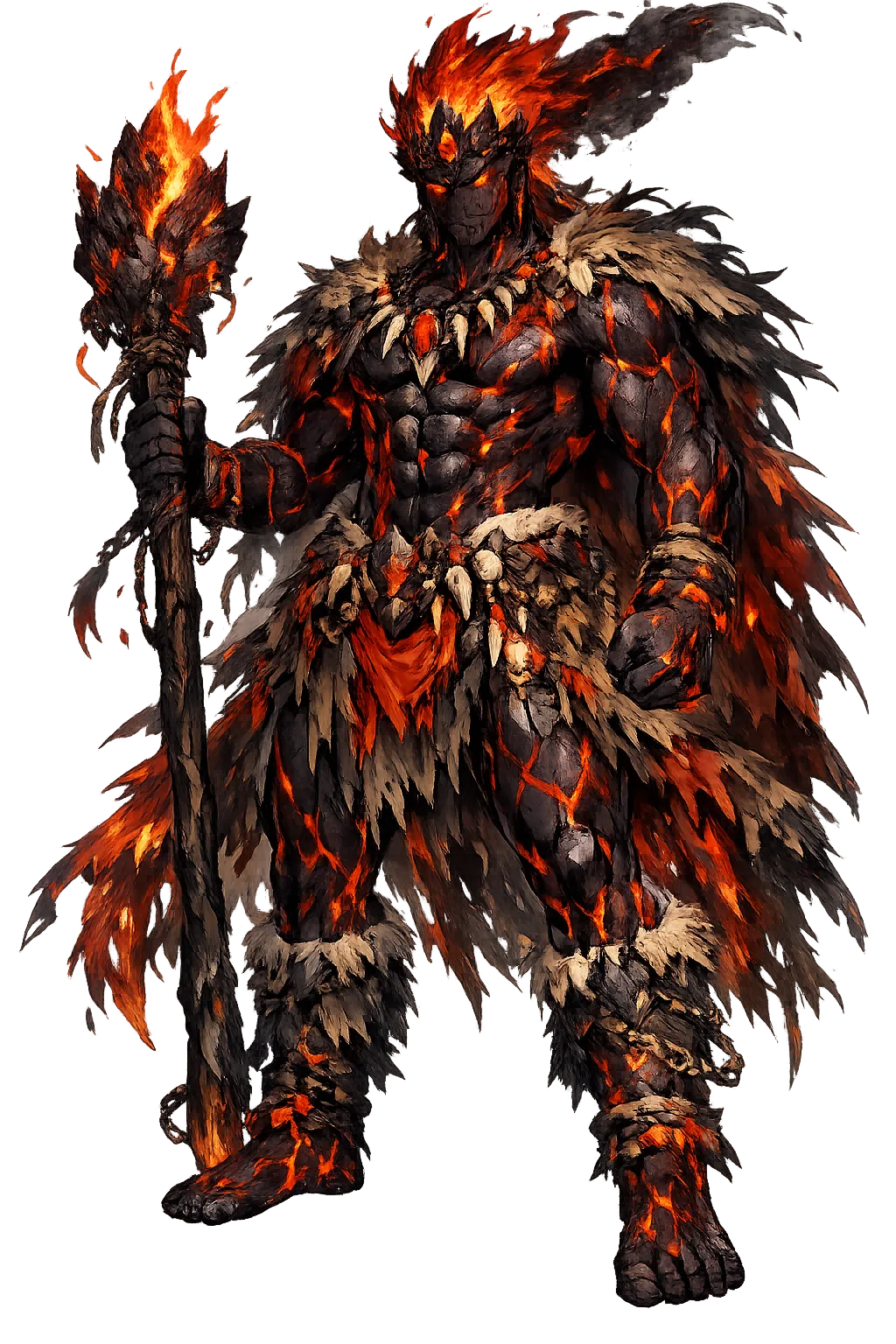
Sacred SymbolsVolcanic stone, Palm frond fan, Red and brown beads, Giant's staff
02

Etymology & Word Family

From original script to Unicode restoration

Scholarly Transliteration Aganjú Aganjú — "The uninhabited place"
Unicode Restoration Aganjú Restored stress, length, and script
Modern ASCII aganju Plain-ASCII fallback

The name Aganjú carries the orthographic signature of the yoruba tradition. Unicode restoration recovers what ASCII flattens.

03

Unicode Character Breakdown

Character-by-character philological analysis

CharacterUnicodeNameBlockPhonetic Role
AU+0041Latin Capital Letter ABasic LatinSame, capitalized
gU+0067Latin Small Letter GBasic LatinSame
aU+0061Latin Small Letter ABasic LatinSame
nU+006ELatin Small Letter NBasic LatinSame
jU+006ALatin Small Letter JBasic LatinSame
úU+00FALatin Small Letter U with AcuteLatin-1 SupplementStress on u

The Tier 1 classification reflects how much of the original phonology this restoration preserves — stress and vowel length for Greek names, distinctive letters and diacritics for every other tradition.

04

Cult & Worship

How the sacred was kept — rites, sanctuaries, remains

The Cult

Aganjú's ancient cult is real but thinly documented. Oral tradition and Johnson's History of the Yorubas remember him as a deified Aláàfin of Oyo — an apotheosized king — which points to a royal cult at Oyo rather than a network of public temples; unlike Ṣàngó, he left no famous shrine-town. His fullness came in exile. In Cuban Santería, Aggayú Solá is among the most lavishly served orishas: devotees receive him in the kariocha initiation, keep his stones and iron implements in a consecrated tureen, and offer palm oil, smoked fish, and aguardiente. In Brazilian Candomblé his assentamento of volcanic and iron-bearing stones sits low on the floor of the ceremonial house. No ancient temple of his survives or is recorded; the living temple is the diaspora ritual house itself.

In the Earth

Direct archaeological attestation of Aganjú is sparse because Yoruba orixá cults were transmitted orally and through ritual objects rather than temple inscriptions. In Yorubaland, volcanic-stone implements, iron slag from early smelting, and boundary markers in uncultivated bush mark the zones over which such wilderness orishas preside. The diaspora, by contrast, keeps a dense material record: the assentamento — the stone-and-metal altar of Candomblé houses — regularly includes volcanic and iron-bearing stones for Aganjú, his palm-frond fan, and beadwork in his red and brown colors. Cuban ilé-orishá shelves hold similar offerings, and chalk-drawn firmas diagram his volcano in Lucumí practice. The orisha who owns uncarved wilderness lives on in carved, kept, and beaded objects.

05

Iconography

How Aganjú was imaged across the ages

The Image

Aganjú never had a canonical face. Yoruba religion served orishas through emblem and object rather than cult statue, and the wilderness orisha left no sculptural type of his own. His identity is carried by attributes: volcanic and iron stones, the palm-frond fan that cools his heat, the giant's staff, beads in red and iron brown. In Cuba the oar became his signature emblem — the oarsman who bears the world's weight — and it appears among his consecrated tools. Catholic chromolithographs of Saint Christopher carrying the Christ child serve as his popular devotional image in botánicas. Verger's mid-century photographs record his most vivid living iconography: the possessed devotee whose gait becomes heavy, swaying, and slow, as if the ground itself had stood up to walk.

06

Reception & Transformation

The name after its own age — transmission, translation, survival

Afterlives

Aganjú's transmission is the story of the Middle Passage completing a god. In Yorubaland he remained, into the twentieth century, a sparsely documented orisha at the edge of the pantheon — recorded mainly in Ifá divination verses and in the memory of a deified Oyo king preserved by Samuel Johnson (1921). The Atlantic crossing re-centered him: in Cuba he became Aggayú Solá, one of the great orishas of the Lucumí religion, and the name's swelling transformation is itself a document of transmission. Twentieth-century scholarship then carried him into print: Bascom's recordings of Ifá, Idowu's synthesis of Yoruba theology, Verger's bilingual documentation of the orisha cults on both sides of the Atlantic, Lydia Cabrera's El Monte (1954) for Cuban practice, and Mason's studies of New World ritual. Robert Farris Thompson's Flash of the Spirit (1983) taught a generation to read the heavy step of his dancers as a Yoruba text in motion, and UNESCO's 2008 proclamation of Ifá as heritage lifted the whole corpus — Aganjú included — into global visibility.

Identifications Across Traditions

In Brazilian Candomblé, Aganjú is syncretised with Saint Christopher, the giant who carries the Christ child across water. In Cuban Santería he becomes Aggayú Solá, often paired with the thunder-god Ṣàngó as complementary powers of sky-fire and earth-fire. The identification with Saint Christopher preserves the theme of colossal bearing strength, while the pairing with Ṣàngó maps the volcanic interior onto the stormy sky. Christianity gave him a new face but kept his scale.

Modern Legacy

Aganjú remains one of the less domesticated orixás. He is not the god of the marketplace or the bedroom; he is the god of what lies beneath and beyond. In an age of ecological awareness, his mythology reads like a warning: the ground we build on is alive, slow, and capable of overwhelming any city. His colors — red, brown, and iron — appear in Candomblé and Santería altars, and his giant stride survives in the heavy, deliberate dance of his possessed devotees.

07

The Meditation

What Aganjú means — beyond the dictionary

Aganjú teaches that stillness is not absence. The volcano sleeps for centuries; the desert seems empty; the earth beneath the pavement does not speak. And yet all of them hold forces that could reshape the world in a single day. Aganjú is the god of that withheld power.

To meditate on him is to remember that human institutions are thin crust on a molten sphere. He does not hate the city, but he does not need it. His gift is perspective: from the rim of a volcano or the centre of a desert, the anxieties of the town shrink to their proper size. He asks only that we do not mistake our maps for the territory.

08

Frequently Asked Questions

Common questions about Aganjú, Wilderness, Earth, Diaspora Volcano, and Unicode restoration

01How do you pronounce Aganjú?

In reconstructed pronunciation, Aganjú is /à.gà.ɲú/ — approximately ah-gah-NYOO — start low on 'ah', stay low on 'gah', then rise sharply to 'NYOO'.

02What does Aganjú mean?

Aganjú means The uninhabited place in the yoruba tradition.

03What are the symbols of Aganjú?

Aganjú is associated with Volcanic stone (His seat and his bones; cooled lava is placed on altars to ground his presence.), Palm frond fan (Used to cool and direct his immense heat during ritual possession.), Red and brown beads (The colors of iron-rich earth, dried blood, and scorched clay.), Giant's staff (The walking stick of the world-bearer, marking his stride across deserts.).

04Why restore Aganjú in Unicode?

Plain ASCII aganju strips the stress, length, and script that make the name specific. Unicode restoration returns the name to its original written dignity.

05What is the most important myth about Aganjú?

“Son of Odùduwà and Ọbatalá” — the Lineage story that anchors the mythology of Aganjú, told in full on the lore page.

09

Scholarly Sources

The philological foundations of this restoration

Every claim on this page is grounded in established scholarship. The orthographic restorations follow disciplinary convention. The etymological chain follows the best available reference works. This is not invention — it is resurrection through scholarship.

◈

Lexicography & Philology

  • Bascom
  • Idowu
◎

Primary Texts

  • The Ifá divination corpus; ọ̀rọ̀ àṣà and oríkì traditions; Abraham’s Dictionary of Modern Yoruba.
◉

Archaeology & Art History

  • Material evidence — iconography, inscriptions, and temple archaeology — for Aganjú and related cults.
✦

Religious Studies

  • Bascom, Ifa Divination: Communication Between Gods and Men in West Africa
  • Idowu, Olódùmarè: God in Yoruba Belief
  • Johnson, The History of the Yorubas (1921)
  • Mason, Four New World Yoruba Rituals
  • Verger, Notes sur le Culte des Orisa et Vodun
  • Murphy, Santería: African Spirits in America
Return

The Surface Awaits

You have traced the name from its earliest attestation to its Unicode restoration. Now return to the myth. The story is where the name lives.

Back to Lore
Aganjú mascot