
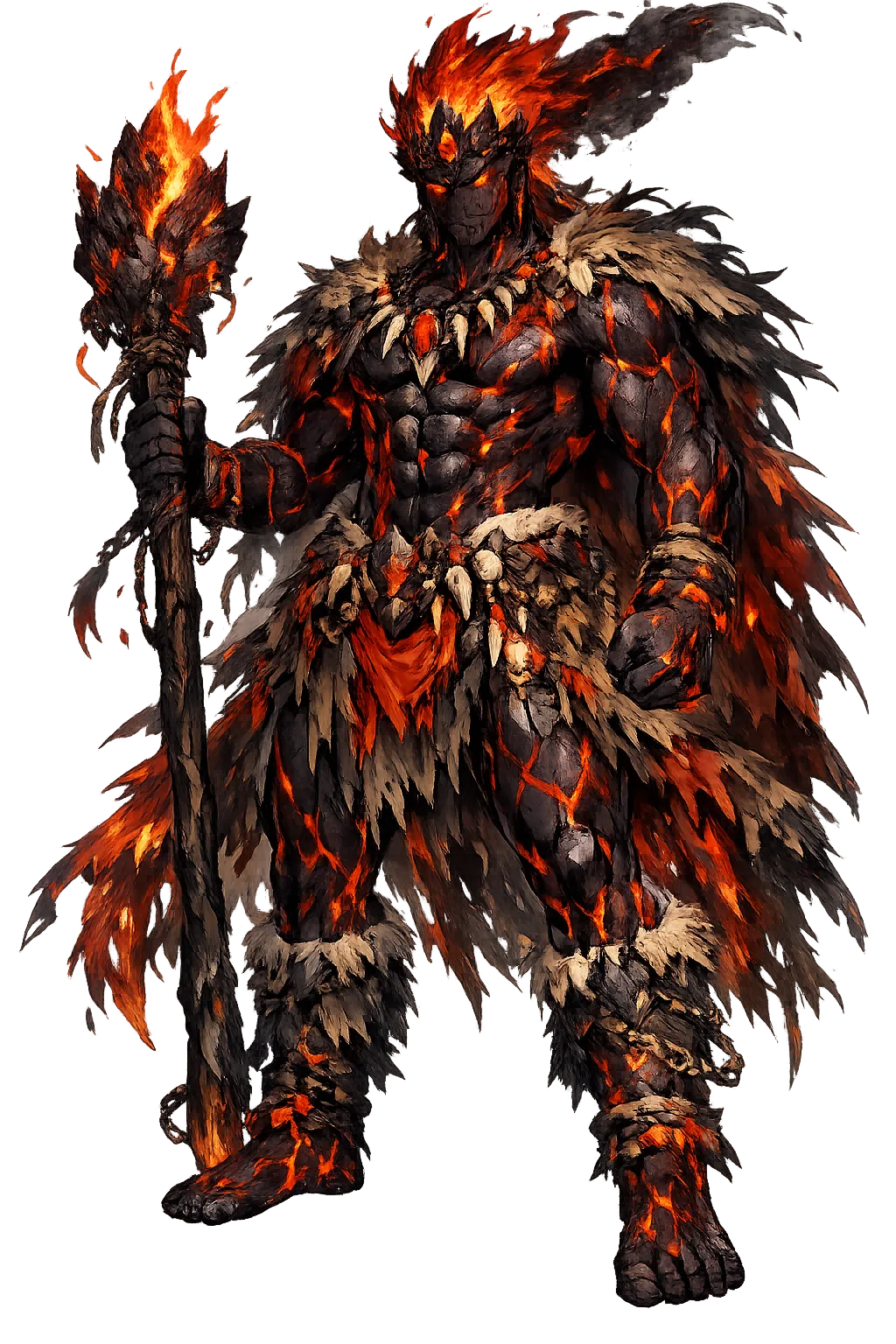
The provenance file on Aganjú
The provenance file for Aganjú. Nothing here is unsourced; that is what the file is for.
Provenance
1. The attestation. —, from the tradition's own record. On record: Bascom, Ifa Divination: Communication Between Gods and Men in West Africa, Idowu, Olódùmarè: God in Yoruba Belief, Johnson, The History of the Yorubas (1921), Mason, Four New World Yoruba Rituals.
2. The preserved evidence. u → ú (Stress on u) — absent from the ASCII form aganju, present in the restoration, verifiable against the sources above.
3. The narrative record. Son of Odùduwà and Ọbatalá — Aganjú's birth is a statement of his character: he arrives from the union of the two powers that divide the Yoruba cosmos. In many lineages he is counted a son of Odùduwà, the royal ancestor who founded the earth's cities, and of Ọbatalá, the white-clothed sculptor of human bodies; the genealogies vary — oral tradition keeps several versions, and no single Ifá corpus settles the question. The King Who Became the Volcano — A second tradition makes Aganjú not a god from birth but a king who became one. Samuel Johnson's History of the Yorubas (1921), the great early record of Oyo tradition, preserves the memory of an Aláàfin — a king of the old Ọ̀yọ́ empire — remembered as Aganjú, whose rule ended in apotheosis: his name passed to the orisha of the wilderness, and the royal cult and the wilderness cult folded into one figure.
4. The physical record. Direct archaeological attestation of Aganjú is sparse because Yoruba orixá cults were transmitted orally and through ritual objects rather than temple inscriptions. In Yorubaland, volcanic-stone implements, iron slag from early smelting, and boundary markers in uncultivated bush mark the zones over which such wilderness orishas preside. The diaspora, by contrast, keeps a dense material record: the assentamento — the stone-and-metal altar of Candomblé houses — regularly includes volcanic and iron-bearing stones for Aganjú, his palm-frond fan, and beadwork in his red and brown colors. Cuban ilé-orishá shelves hold similar offerings, and chalk-drawn firmas diagram his volcano in Lucumí practice. The orisha who owns uncarved wilderness lives on in carved, kept, and beaded objects.
5. The current holding. The temple at /aganju/, classified Tier 1. Tier-1 is not a compliment; it is a measurement. This restoration keeps something the ASCII form provably loses, and the measurement is repeatable.
6. The documented resonances. Forestry, Conservation & Outdoor Industries, Thermal, Geothermal & Fire Energy, Environmental & Climate Services — seats argued and weighted in the pattern atlas, read through the myths in this temple's Resonance File.
7. The primary sources. Nigerian Studies — The Orisha Myths — the library this file answers to, open at the Sacred Texts collection.
8. The continuing record. Aganjú remains one of the less domesticated orixás. He is not the god of the marketplace or the bedroom; he is the god of what lies beneath and beyond.
At a Glance
- Restored name: Aganjú
- ASCII form: aganju
- Meaning: "The uninhabited place"
- Domain of influence: Wilderness, Earth, Diaspora Volcano
- Pantheon: Yoruba
- Classification: Tier 1
- Original script: —
- Series: The Restoration Files, No. 10 of 546
The File Continues
Read the founding dispatch for the name's full story, the Resonance File for the archetype at work — or the whole archive in one sitting.
Continue the series — previous file: Aḗr (read it here) · next file: Ahriman (read it here).
The Restoration Files are written from the same canonical record as the temples themselves: the lexicon, the lore catalog, the pattern atlas, and the cited scholarly sources. If a file ever disagrees with its temple, the temple is right — tell us, and the file will be corrected.