PuniCodex

Extended Lore

Aengus

Etymology · Phonology · Orthography · Cultural Legacy · Primary Sources

Tier 2 Aengus
Aengus — Love, Youth, Poetry
01

Quick Facts

Essential information about Aengus, Love, Youth, Poetry

Scholarly TransliterationAengus
Unicode RestorationAengus
Reconstructed Pronunciation/ˈoːŋ.ɡus/
PantheonCeltic
DomainLove, Youth, Poetry
MeaningOne vigor, true strength
ClassificationTier 2
Primary DomainAengus
Sacred SymbolsBrú na Bóinne, The swan-shape, The dream (aisling), The day and the night, The crystal bower
02

Etymology & Word Family

From original script to Unicode restoration

Scholarly Transliteration Aengus Aengus — "One vigor, true strength"
Unicode Restoration Aengus Restored stress, length, and script
Modern ASCII aengus Plain-ASCII fallback

Aengus is Tier 2 by the mechanical rule: the temple form is plain ASCII, with no diacritic and no distinctive letter for the restoration to rescue. The normalized Old Irish Óengus does carry a fada, but the project follows the unaccented Middle Irish Aengus, and the mechanical rule judges the restored form, not the manuscript one. The capital alone distinguishes the temple form from the input; the god's standing in the tradition is beside the point.

03

Unicode Character Breakdown

Character-by-character philological analysis

CharacterUnicodeNameBlockPhonetic Role
AU+0041Latin Capital Letter ABasic LatinSame, capitalized
eU+0065Latin Small Letter EBasic LatinSame
nU+006ELatin Small Letter NBasic LatinSame
gU+0067Latin Small Letter GBasic LatinSame
uU+0075Latin Small Letter UBasic LatinSame
sU+0073Latin Small Letter SBasic LatinSame

The Tier 2 classification reflects how much of the original phonology this restoration preserves — stress and vowel length for Greek names, distinctive letters and diacritics for every other tradition.

04

Cultural Significance

From ancient cult to modern Unicode

Ancient Domain

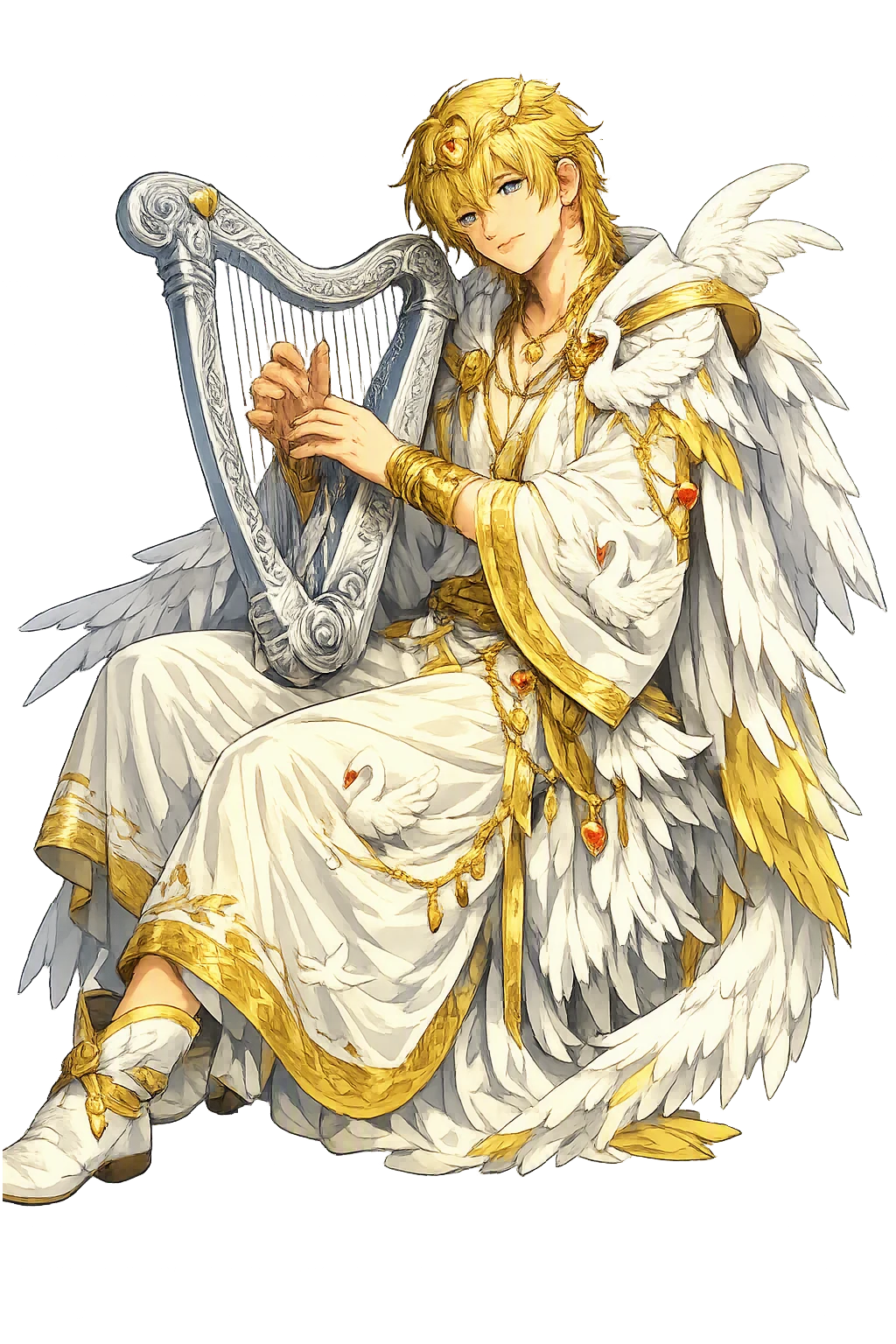
Aengus — Old Irish Óengus, the mac ind Óc, 'son of the young' — is the ever-young god of the Túatha Dé Danann, son of [[dagda|the Dagda]] and Bóand, the goddess of the Boyne. His dossier is the strangest kind of power in the Irish corpus: not the club or the spear, but the dream, the bargain, and the unaging house. He was conceived and born in a single day the sun was made to hold still; he won the greatest mound in Ireland on a quibble of grammar; he loved a girl he had seen only in sleep, and found her by searching every lake in Ireland for a year. Where his father's strength is provision, his is patience: the young god who waits out time itself.

Aengus in Later Traditions

The comparison the handbooks prefer for Óengus runs to Gaul and Wales rather than to Rome. The Gaulish Maponos, 'the Divine Son' — known from dedications to Apollo Maponus in the Roman north of Britain and from the Ravenna Cosmography's locus Maponi — is the same figure-type: the ever-young son of a greater divine parent. Mac Cana and Sjoestedt set Maponos beside both Óengus and the Welsh Mabon ap Modron, 'Son son of Mother', the hunter-youth of Culhwch ac Olwen whose name is built on the same Proto-Celtic words *makwos, 'son', and *mātīr, 'mother'. The popular handbooks go further and call Óengus 'the Irish Eros'; the medieval texts give a stranger and more specific figure — a god of dream, youth, and cunning whose love-story is won by patience and shape-changing rather than by arrows. The comparisons are structural and instructive; no inscription identifies him, and the identification of Maponos with Mabon is itself a scholarly argument, not a fact.

Modern Legacy

No Irish god had a better literary afterlife than the young one. W. B. Yeats made him a byword for longing itself in 'The Song of Wandering Aengus' (1899) — the hazel wand, the fire in the head, the glimmering girl with apple blossom in her hair who called his name and ran — a poem that poured the Aislinge into the bloodstream of modern English verse. James Stephens gave him speaking parts and moods in The Crock of Gold (1912), where Angus Og wanders the Irish countryside being wise and young. In the later Gaelic tradition he never faded: the Fenian tale of Diarmaid and Gráinne keeps him at Brú na Bóinne as Diarmaid's fosterer and protector, and Irish folklore kept the Brug as his house into the modern period. His name took a second, quieter path: worn to Angus, it became one of the most familiar masculine names in Scotland — a theonym hiding in plain sight on every map of Angus and in every roll of Scottish kings. And his address became the most visited prehistoric site in Ireland: Newgrange, where five thousand winters of sun have entered the chamber the tales assigned to the son of the young.

Unicode Restoration as Cultural Act

Restoring Aengus in a domain name is more than orthographic accuracy. It is a statement that the internet should recognize the full range of human writing — not only the ASCII keyboard.

05

Frequently Asked Questions

Common questions about Aengus, Love, Youth, Poetry, and Unicode restoration

01How do you pronounce Aengus?

In reconstructed pronunciation, Aengus is /ˈoːŋ.ɡus/ — approximately 'OHN-gus' — one long open 'oh', the ng of 'singer', a hard g, and a short unstressed 'us'. Modern Irish Aonghus and Scottish Aonghas have worn it toward 'AYN-guhs' — the Anglicized Angus..

02What does Aengus mean?

Aengus means One vigor, true strength in the celtic tradition.

03What are the symbols of Aengus?

Aengus is associated with Brú na Bóinne (The Brug on the Boyne, his unaging house — the síd the tales call síd in Broga and the world calls Newgrange), The swan-shape (The form he takes at Samain on Loch Bél Dracon to win Caer Ibormeith — love answered in kind, shape for shape), The dream (aisling) (The maiden's nightly visit with her timpán — desire that arrives before its object, and must be pursued into the waking world), The day and the night (The quibble that holds the Brug forever — time itself parsed as a loan without a term), The crystal bower (The grianán he built at the Brug for Étaín in her fly-shape — shelter given to a hunted woman when no one else could hold her).

04Why restore Aengus in Unicode?

Plain ASCII aengus strips the stress, length, and script that make the name specific. Unicode restoration returns the name to its original written dignity.

05What is the most important myth about Aengus?

The Dagda desired Bóand, the wife of Elcmar of the Brug, and sent Elcmar away on a day's errand to Bres. To hide what followed, the tale says, the Dagda made the sun stand still: nine months passed, and the world reckoned it a single day — so the child was conceived and born within one day, and Elcmar came home none the wiser. They named the boy Óengus, but the story gave him the name that stuck: mac ind Óc, 'the son of the young', because young was the day that bore him.The episode fixes the god's signature before he can speak: he is a child of bent time. Bóand, the Boyne itself made goddess, is his mother; the Dagda, the All-Father, his sire; and his first house is the river-bend his father stole a day to give him. The fosterage that followed — with Midir of Brí Léith — placed him among the proudest of the Túatha Dé Danann and set up every tale that came after.

06

Scholarly Sources

The philological foundations of this restoration

Every claim on this page is grounded in established scholarship. The orthographic restorations follow disciplinary convention. The etymological chain follows the best available reference works. This is not invention — it is resurrection through scholarship.

Lexicography & Philology

  • Lebor Gabála
  • MacKillop

Primary Texts

  • The Immram Brain (Voyage of Bran); Tochmarc Étaíne; Cóir Anmann; medieval Irish saga literature.

Archaeology & Art History

  • Material evidence — iconography, inscriptions, and temple archaeology — for Aengus and related cults.
  • Aengus is a textual god — no ogham stone names him and no votive inscription invokes him — but his mythic address is the single most famous piece of prehistoric architecture in Ireland. Brú na Bóinne, the palace of the Boyne, is a UNESCO World Heritage landscape, and the passage tomb of Newgrange (c. 3200 BCE), older than Stonehenge and the pyramids, has been identified with the tales' síd in Broga, Óengus's Brug, since the medieval topographical tradition. The mound's roof-box, which admits the rising sun into the chamber on the mornings around the winter solstice, was excavated and documented by Michael J. O'Kelly (1962–1975), who observed the phenomenon in 1967 — a real alignment behind the mythology of a god born of a stopped sun. The witnesses to the texts are exact: Tochmarc Étaíne is preserved in the twelfth-century Lebor na hUidre and later manuscripts; Aislinge Óenguso survives in the fifteenth-century British Library MS Egerton 1782, the basis of Shaw's edition. For the comparative figure, the material record is Romano-British: altars dedicated to Apollo Maponus from the military north, including the Corbridge series, with the Ravenna Cosmography's locus Maponi completing the map of the Divine Son's cult — comparative evidence, never identification.

Religious Studies

  • Tochmarc Étaíne (The Wooing of Étaín), ed. and trans. Bergin and Best, Ériu 12 (1938) — the birth of Óengus; the day the sun stood still; the bower of the purple fly
  • Aislinge Óenguso (The Dream of Óengus), ed. Francis Shaw (1934) — the dream-maiden; the search of the three; Caer Ibormeith and the swans of Loch Bél Dracon
  • De Gabáil in t-Sída (The Taking of the Síd), ed. Hull, ZCP 19 (1933) — the division of the mounds; the day-and-night winning of Brú na Bóinne
  • Cath Maige Tuired (The Second Battle of Mag Tuired), ed. and trans. Elizabeth A. Gray — Óengus's counsel in the Cridenbél affair
  • Lebor Gabála Érenn, ed. and trans. R. A. S. Macalister — the Túatha Dé Danann framework; the Dagda's line
  • Dictionary of the Irish Language (eDIL), s.v. óengus, gus; Vendryes, Lexique étymologique de l'irlandais ancien, s.v. gus — óen 'one' + gus 'vigor'
  • Mac Cana, Celtic Mythology; Sjoestedt, Gods and Heroes of the Celts — the Maponos / Mabon comparison and the ever-young son
  • MacKillop, A Dictionary of Celtic Mythology, s.v. Aengus, Óengus
  • Koch, ed., Celtic Culture: A Historical Encyclopedia, s.v. Óengus
  • Jackson, A Celtic Miscellany — the Dream of Óengus in translation
Return

The Surface Awaits

You have traced the name from its earliest attestation to its Unicode restoration. Now return to the myth. The story is where the name lives.

Back to Lore
Aengus mascot