PuniCodex

Extended Lore

Ἄδωνις Ádōnis

Etymology · Phonology · Orthography · Cultural Legacy · Primary Sources

Tier 1 Ádōnis.com
Ádōnis — Beauty, Desire, Renewal
01

Quick Facts

Essential information about Ádōnis, Beauty, Desire, Renewal

Original ScriptἌδωνις
Unicode RestorationÁdōnis
Reconstructed Pronunciation/ˈa.doː.nis/
PantheonGreek
DomainBeauty, Desire, Renewal
MeaningLord (from Semitic ʾādōn)
ClassificationTier 1
Primary DomainÁdōnis.com
Sacred SymbolsAnemone, Myrrh tree, Boar, Hunter's gear
02

Etymology & Word Family

From original script to Unicode restoration

Original Script Ἄδωνις Ádōnis — "Lord (from Semitic ʾādōn)"
Unicode Restoration Ádōnis Restored stress, length, and script
Modern ASCII adonis Plain-ASCII fallback

The Greek form Ἄδωνις reproduces the Semitic title ʾādōn ('lord') with Greek inflection. The restoration Ádōnis preserves both the acute stress and the long omega.

03

Unicode Character Breakdown

Character-by-character philological analysis

CharacterUnicodeNameBlockPhonetic Role
ÁU+00C1Latin Capital Letter A with AcuteLatin-1 SupplementAlpha
dU+0064Latin Small Letter DBasic LatinDelta
ōU+014DLatin Small Letter O with MacronLatin Extended-AOmega: long omicron
nU+006ELatin Small Letter NBasic LatinNu
iU+0069Latin Small Letter IBasic LatinIota
sU+0073Latin Small Letter SBasic LatinSigma

The Tier 1 classification reflects how much of the original phonology this restoration preserves — stress and vowel length for Greek names, distinctive letters and diacritics for every other tradition.

04

Cultural Significance

From ancient cult to modern Unicode

Ancient Domain

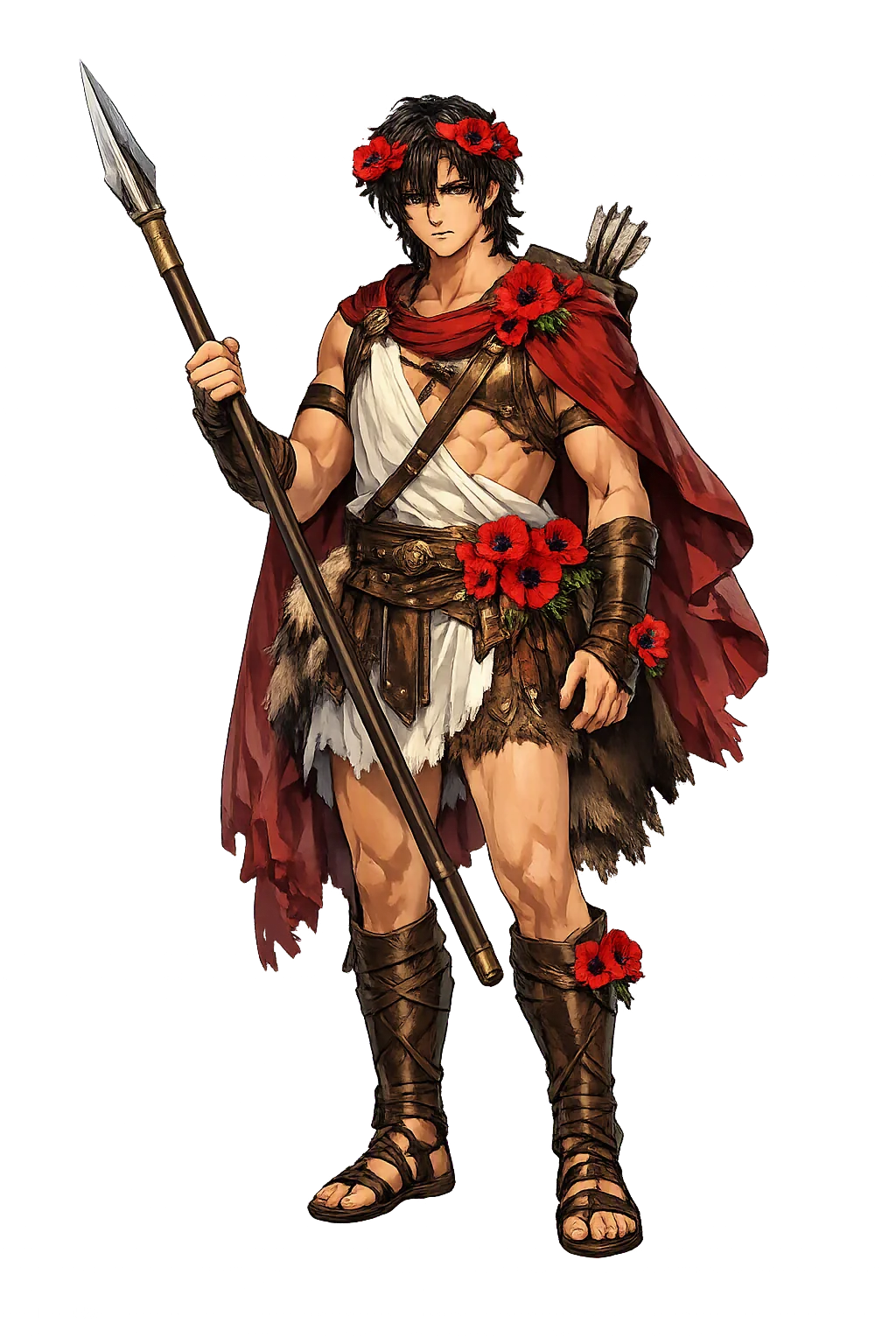
Ádōnis is the beautiful youth whom love and death divide. Born from the grief of Myrrha and the myrrh tree, desired by Aphrodítē and Persephonē alike, he embodies the fragile glory of spring: flowers that bloom brilliantly and die young. His cult spread across the Greek East as a women's rite of lament and rebirth.

Ádōnis in Later Traditions

Ádōnis is transparently the Greek adaptation of the Semitic Tammuz (Sumerian Dumuzi), the dying-and-rising vegetation god mourned by women in Mesopotamia and the Levant. The name itself comes from the Canaanite/Phoenician ʾādōn, 'lord'. In Roman poetry he becomes a byword for youthful male beauty — Venus and Adonis is a staple of Ovid and later painters. The figure also overlaps with Near Eastern dying-god typologies studied by Frazer, though modern scholars resist collapsing every vegetation deity into a single pattern.

Modern Legacy

Ádōnis survives in the anemone, in the phrase 'Adonis' applied to handsome young men, and in the long Western tradition of Venus and Adonis from Ovid to Shakespeare to Titian. His cult is one of the clearest cases of religious borrowing across the Aegean and Levant, and the Adṓnia gives rare evidence for women's religious practice in classical Greece. In modern wellness and beauty branding, his name still signals youth, desire, and the fleeting bloom of physical perfection.

Unicode Restoration as Cultural Act

Restoring Ádōnis in a domain name is more than orthographic accuracy. It is a statement that the internet should recognize the full range of human writing — not only the ASCII keyboard.

05

Frequently Asked Questions

Common questions about Ádōnis, Beauty, Desire, Renewal, and Unicode restoration

01How do you pronounce Ádōnis?

In reconstructed pronunciation, Ádōnis is /ˈa.doː.nis/ — approximately 'AH-doh-nis' — pitch falls on the first syllable, and the middle vowel is long..

02What does Ádōnis mean?

Ádōnis means Lord (from Semitic ʾādōn) in the greek tradition.

03What are the symbols of Ádōnis?

Ádōnis is associated with Anemone (The flower that sprang from Ádōnis's blood, red and short-lived), Myrrh tree (His mother Myrrha's metamorphosis; the tree from whose bark he was born), Boar (The animal that killed him in the hunt), Hunter's gear (Spear and nets; the masculine pursuit that leads to his death).

04Why restore Ádōnis in Unicode?

Plain ASCII adonis strips the stress, length, and script that make the name specific. Unicode restoration returns the name to its original written dignity.

05What is the most important myth about Ádōnis?

Myrrha, daughter of King Kinyras, conceived an incestuous passion for her father. When she was transformed into a myrrh tree as punishment, the tree split open after ten months and Ádōnis was born. Aphrodítē, pierced by Eros's arrow, hid the infant in a chest and gave him to Persephonē to raise.

06

Scholarly Sources

The philological foundations of this restoration

Every claim on this page is grounded in established scholarship. The orthographic restorations follow disciplinary convention. The etymological chain follows the best available reference works. This is not invention — it is resurrection through scholarship.

Lexicography & Philology

  • Apollodorus
  • Ovid
  • Liddell, H. G., Scott, R., & Jones, H. S. A Greek-English Lexicon. Oxford: Clarendon Press, 9th ed. 1996.
  • Pape, W., & Benseler, G. E. Wörterbuch der griechischen Eigennamen. Braunschweig: Vieweg, 1884.
  • Beekes, R. S. P. Etymological Dictionary of Greek. Leiden: Brill, 2010.

Primary Texts

  • Apollodorus, Bibliotheca
  • Ovid, Metamorphoses

Archaeology & Art History

  • Material evidence — iconography, inscriptions, and temple archaeology — for Ádōnis and related cults.

Religious Studies

  • Burkert, Greek Religion
Return

The Surface Awaits

You have traced the name from its earliest attestation to its Unicode restoration. Now return to the myth. The story is where the name lives.

Back to Lore
Ádōnis mascot